If you’ve ever stood in the baking aisle squinting at three nearly identical Watkins bottles — wondering what “clear,” “pure,” and “alcohol-free” actually mean and whether any of them can substitute for the others — you’re in the right place. Vanilla extract, at its most basic, is a solution of flavor compounds drawn from real vanilla beans, typically dissolved in alcohol. “Pure” means those flavor compounds come entirely from real vanilla beans. “Imitation” means the flavor is synthesized rather than extracted from beans — most often from a compound called vanillin. “Alcohol-free” means the carrier solvent has been changed so the product is suitable for people who avoid alcohol for dietary, religious, or health reasons. Watkins makes one of each type, and they behave meaningfully differently in the kitchen. This article walks through all three side by side: what’s in each bottle, where each one excels, where it falls short, and which one makes the most sense for your specific use case.
| EDITOR'S PICKWatkins Pure Vanilla Extract | Mid-tierWatkins Pure Vanilla Extract | Budget pickWatkins Organic Pure Vanilla Al… | |
|---|---|---|---|
| Type | Pure Extract | Pure Extract | Alcohol-Free |
| Size | 16 oz | 11 oz | 2 oz |
| Vanilla Beans | — | ✓ | — |
| Non-GMO | — | ✓ | — |
| Kosher | — | ✓ | — |
| Price | $29.99 | $19.65 | $12.99 |
| See on Amazon → | See on Amazon → | See on Amazon → |
What’s Actually in Each Bottle
Understanding the Watkins lineup starts with reading the label carefully — because the three products aren’t just different strengths of the same thing. They’re structurally different formulations.
Watkins Pure Vanilla Extract
Watkins Pure Vanilla Extract is the straightforward one. It contains vanilla bean extractives in a base of water and alcohol, which is the standard FDA-regulated formula for anything labeled “pure vanilla extract” in the United States. Per FDA standards (Code of Federal Regulations, Title 21, Part 169), pure vanilla extract must contain at least 35% alcohol and 13.35 ounces of vanilla beans per gallon. Watkins meets that standard. The alcohol presence in Watkins Pure reads as noticeably more integrated than in many generic store-brand extracts — meaning it tastes vanilla-forward rather than ethanol-forward even before it hits the oven. For everyday baking at volume, this bottle is the workhorse of the three.
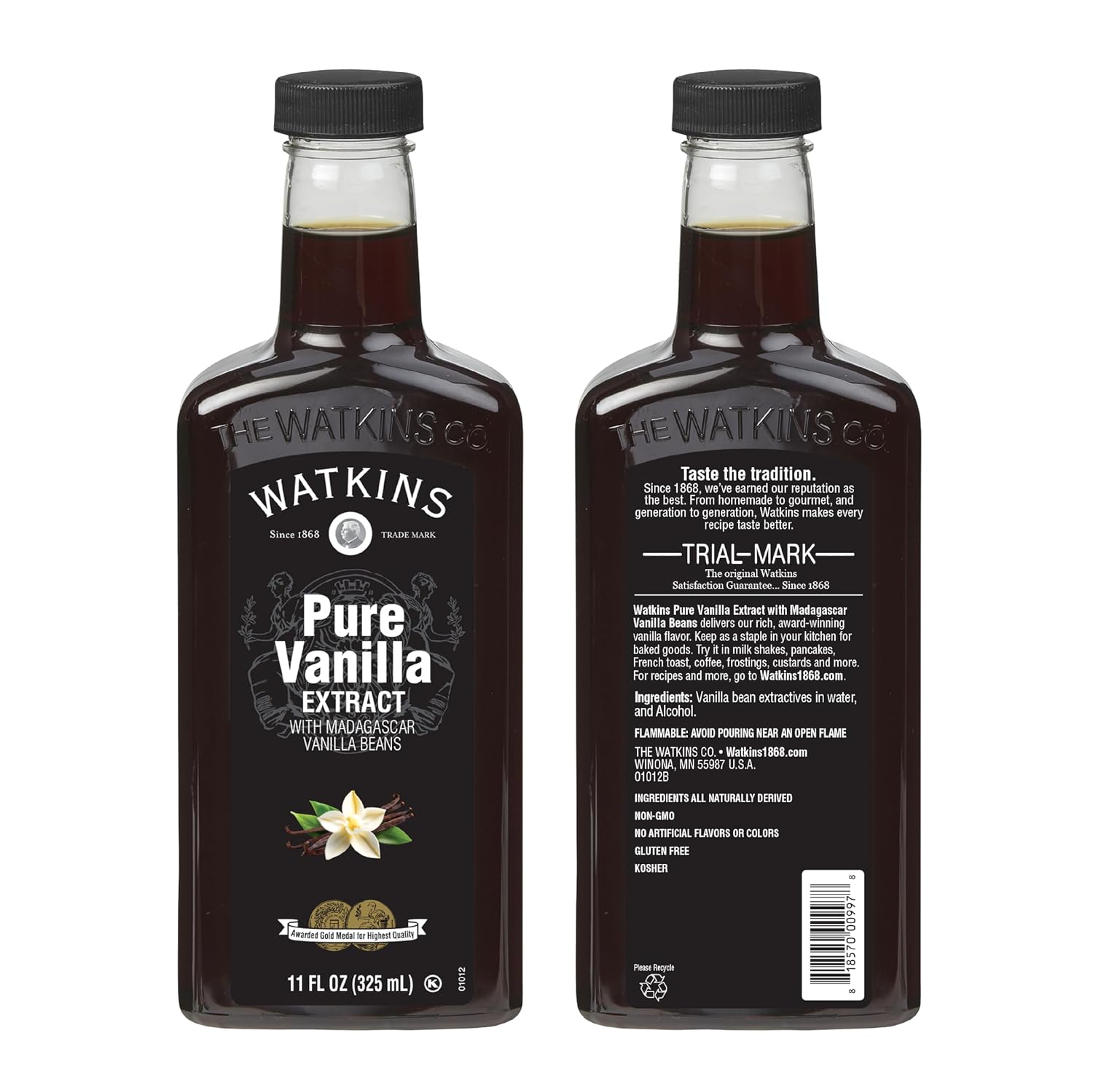
Watkins
$19.65
In stock on Amazon
Check price on AmazonWatkins Clear Imitation Vanilla
Watkins Clear Imitation Vanilla is the one that surprises people. It looks like water, it’s labeled imitation, and it costs significantly less — but it earns a specific and real place in professional baking. The “clear” quality isn’t cosmetic vanity: it’s the functional point of the product. Standard vanilla extract — pure or imitation — is brown, because the color compounds from vanilla beans (or artificial flavoring bases) tint everything they touch. For white buttercream, bright fondant, or pastel frostings where color accuracy matters, brown extract is a genuine problem.
The Kitchn’s overview of vanilla flavoring types notes that clear imitation vanilla is specifically designed for applications where visual purity is non-negotiable. Wedding cake decorators and competition bakers reach for this product by name when they need white-white buttercream for tiered cakes, where even a few drops of brown extract would muddy the finish. Serious Eats’ guide to vanilla extract notes that in heavily sweetened frostings and buttercreams, imitation vanilla — vanillin-based — can perform comparably to pure vanilla because the surrounding sugar and fat mask the aromatic complexity that pure vanilla offers in simpler, flavor-forward applications. Where the clear imitation underperforms is in recipes where vanilla is the star: custards, ice cream bases, plain vanilla cake layers where the flavor carries the whole dish. In those applications, synthetic vanillin reads as flatter than the full compound profile of real vanilla beans.
Watkins
$12.99
In stock on Amazon
Check price on AmazonWatkins Organic Alcohol-Free Vanilla
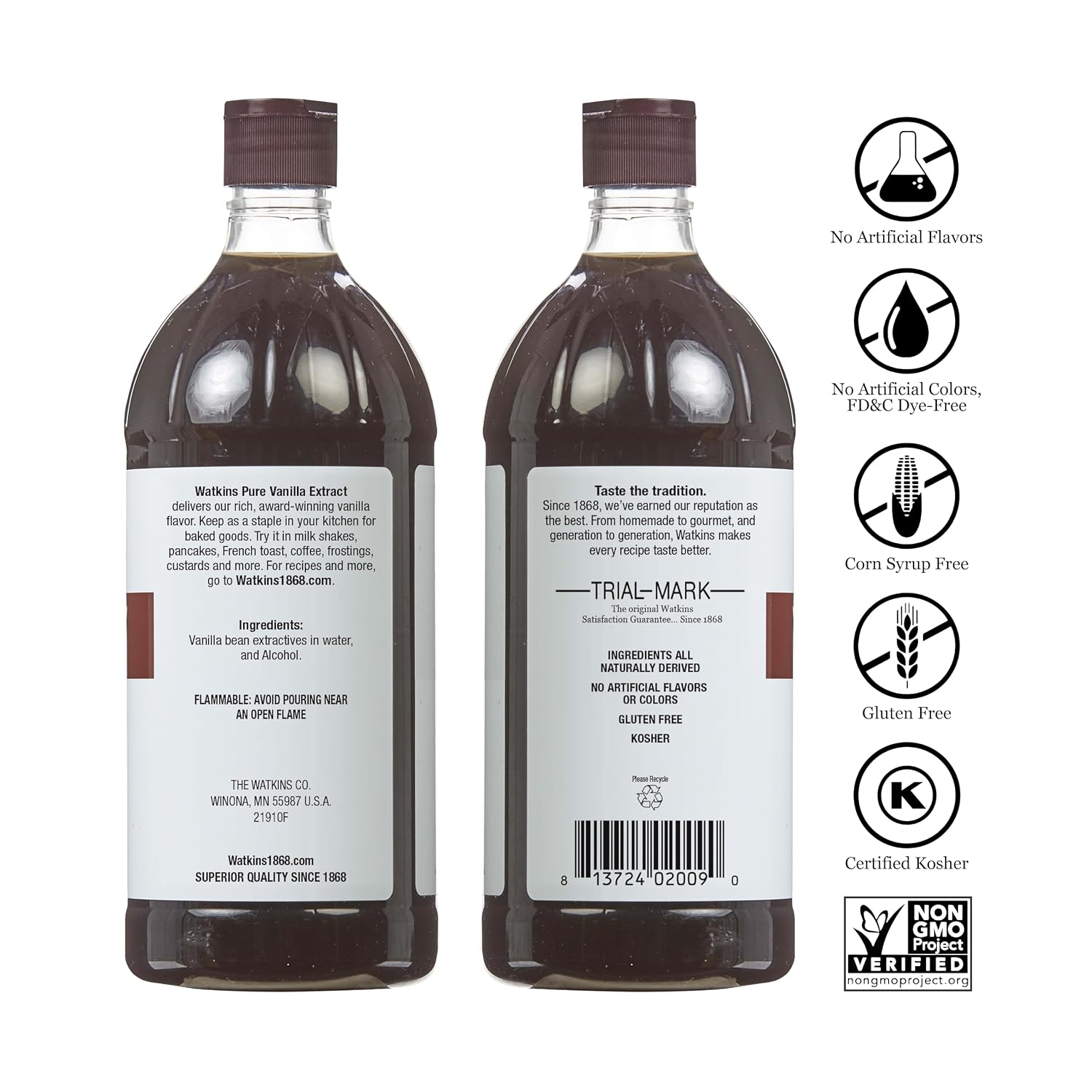
Watkins Organic Alcohol-Free Vanilla removes the ethanol carrier entirely, using glycerin — a plant-derived, slightly sweet liquid — as the solvent instead. This makes it suitable for households observing alcohol restrictions: halal dietary practices, certain religious observances, pediatric baking, and recovery-sensitive households. Organic certification adds a layer of sourcing transparency that matters to some buyers.
The tradeoff is worth naming plainly. Glycerin-based extracts can carry slightly less volatile aroma in high-heat baking than their alcohol-based counterparts, because alcohol evaporates quickly in a hot oven and carries aromatic compounds with it in a burst — glycerin doesn’t evaporate the same way. But in no-bake or low-heat applications — puddings, custards, frostings, whipped cream, cold-process candy fillings — that difference is minimal or undetectable. Owners consistently report that this is where the alcohol-free version shines: the gentler, more sustained release is actually an advantage when heat isn’t doing the work of volatilizing aromatics for you.
Watkins
$29.99
In stock on Amazon
Check price on AmazonThe Performance Tradeoffs, Named Plainly
Here’s where the decision frame matters. Each bottle has a real use case and a real weak spot.
Watkins Pure Vanilla Extract is the workhorse. It performs predictably across baked goods, is cost-effective at its standard bottle sizes, and satisfies the “pure” requirement when that label matters to your customers or your own sourcing standards. It is not the most complex pure vanilla on the market. Cook’s Illustrated’s vanilla extract taste test places mid-tier pure extracts behind premium single-origin options in blind tasting for complexity — a finding consistent with what buyers report when comparing Watkins Pure against single-origin options like Heilala or Nielsen-Massey’s Madagascar Bourbon line. For everyday baking where you’re going through significant volume, Watkins Pure delivers clean, recognizable vanilla flavor at a price that doesn’t create inventory anxiety. For high-stakes, vanilla-forward applications, stepping up to a single-origin product is worth the cost difference.
Watkins Clear Imitation Vanilla earns its place specifically in color-critical applications. If your recipe involves white or near-white frosting — especially for wedding cakes or decorated sugar cookies where clients expect true white — the clear format is a genuine technical solution, not a compromise. King Arthur Baking Company’s guide on vanilla extract versus imitation vanilla reinforces the core principle: the gap between pure and imitation matters most in simple, vanilla-forward recipes and least in complex, heavily flavored or sweetened preparations. In a Swiss or American buttercream loaded with butter and sugar, the flavor complexity gap narrows considerably — and the visual result from clear imitation is cleaner. Where it genuinely underperforms is in recipes where vanilla is the featured flavor and the dish is otherwise simple, because vanillin alone doesn’t replicate the full aromatic profile of real bean extractives.
Watkins Organic Alcohol-Free Vanilla occupies a specific and valuable niche. Its best use cases, based on what owners consistently report, are no-bake or low-heat preparations: mousse, panna cotta, buttercream frosting, whipped ganache, cold-process candy fillings. One practical frustration that surfaces in reviews: the standard size available is small relative to its price-per-ounce. For professional or high-volume users, this is worth factoring into cost calculations before committing to it as a regular pantry staple.
By the Numbers
| Product | Type | Alcohol | Best Use | Key Limitation |
|---|---|---|---|---|
| Watkins Pure Vanilla Extract | Pure (real bean) | Yes (~35%) | Everyday baking, cookies, cakes | Less complex than single-origin premium |
| Watkins Clear Imitation Vanilla | Imitation (synthetic) | Yes | White/pale frostings, wedding cakes | Flat in flavor-forward applications |
| Watkins Organic Alcohol-Free | Pure (glycerin base) | No | No-bake, custards, frostings | Small sizes; milder aroma in high heat |
How to Choose: The If-Then Decision Frame
This is the part that cuts through the comparison paralysis. Map your primary use case to the right bottle.
If you’re building a white or ivory-colored buttercream — especially for a wedding cake or competition entry where the client expects true white — use Watkins Clear Imitation Vanilla. The color argument is decisive. You’ll lose some flavor complexity, but in a Swiss or American buttercream loaded with butter and sugar, that gap is smaller than you’d expect in a blind tasting. The visual result is cleaner, and that’s what the application demands.
If you’re baking a vanilla-forward recipe where the extract flavor carries the whole dish — a vanilla bean cheesecake, a custard tart, a simple pound cake — the pure extract is the right choice. For occasional, high-stakes applications, consider stepping up to a Nielsen-Massey or Heilala single-origin for this category. Watkins Pure is honest everyday vanilla; it’s not designed to be a sensory centerpiece in a recipe that asks it to be one.
If the household or client has a genuine alcohol restriction — dietary, religious, medical, or pediatric — reach for the Watkins Organic Alcohol-Free. Use it in no-bake and low-heat applications where its strengths live: frostings, puddings, custards, candy fillings. Be aware of the size-to-price ratio and plan your quantities accordingly if you’re sourcing for volume production.
If you’re sourcing for a professional kitchen or small bakery and need pure vanilla at volume — Watkins Pure works at scale, but at the professional level it’s worth comparing per-ounce pricing against bulk suppliers where gallon-size pure vanilla extracts can shift your cost-per-batch calculation meaningfully.
Frequently Asked Questions
Is Watkins clear vanilla actually imitation or pure? It is imitation vanilla. The “clear” descriptor refers to its colorless appearance, not its ingredients. The flavoring comes from synthetic vanillin, not real vanilla beans. This is stated on the label. It performs well for color-sensitive applications, but it is not a pure vanilla extract and should not be represented as one to clients who specify pure ingredients.
Does the alcohol-free version taste as strong as the regular extract? Owners generally report that it delivers adequate flavor strength in no-bake and low-heat applications. In high-heat baking, it can read as slightly softer. The glycerin base doesn’t carry volatile aromatics the same way alcohol does, so the aromatic burst in a hot oven is gentler. For frostings, puddings, and custards, the difference is minimal to undetectable.
Which Watkins bottle is the best value per ounce? The Pure Vanilla Extract in its larger bottle sizes offers the best per-ounce value across the Watkins line. The Organic Alcohol-Free in its smaller sizes carries a noticeably higher per-ounce cost — a practical frustration for buyers who need more than an occasional-use quantity.
Can the clear vanilla be used in place of pure vanilla 1:1? Yes, in terms of volume measurement — use it in the same quantity as you would pure vanilla extract. Flavor output will differ: synthetic vanillin tastes cleaner and less complex than real vanilla bean extractives. In color-neutral applications where visual results aren’t a constraint, pure vanilla is the better choice on flavor grounds.
Is the organic alcohol-free version safe for children or dietary restrictions that prohibit alcohol? Yes. The alcohol-free designation is accurate — it uses vegetable glycerin as a carrier instead of ethanol. The organic certification addresses sourcing and processing standards. It is commonly used in households observing halal dietary guidelines, certain religious restrictions that prohibit alcohol consumption, and by parents who prefer to avoid alcohol in food prepared for young children. As with any dietary restriction, verifying against the current product label is always recommended, since formulations can change between production runs.