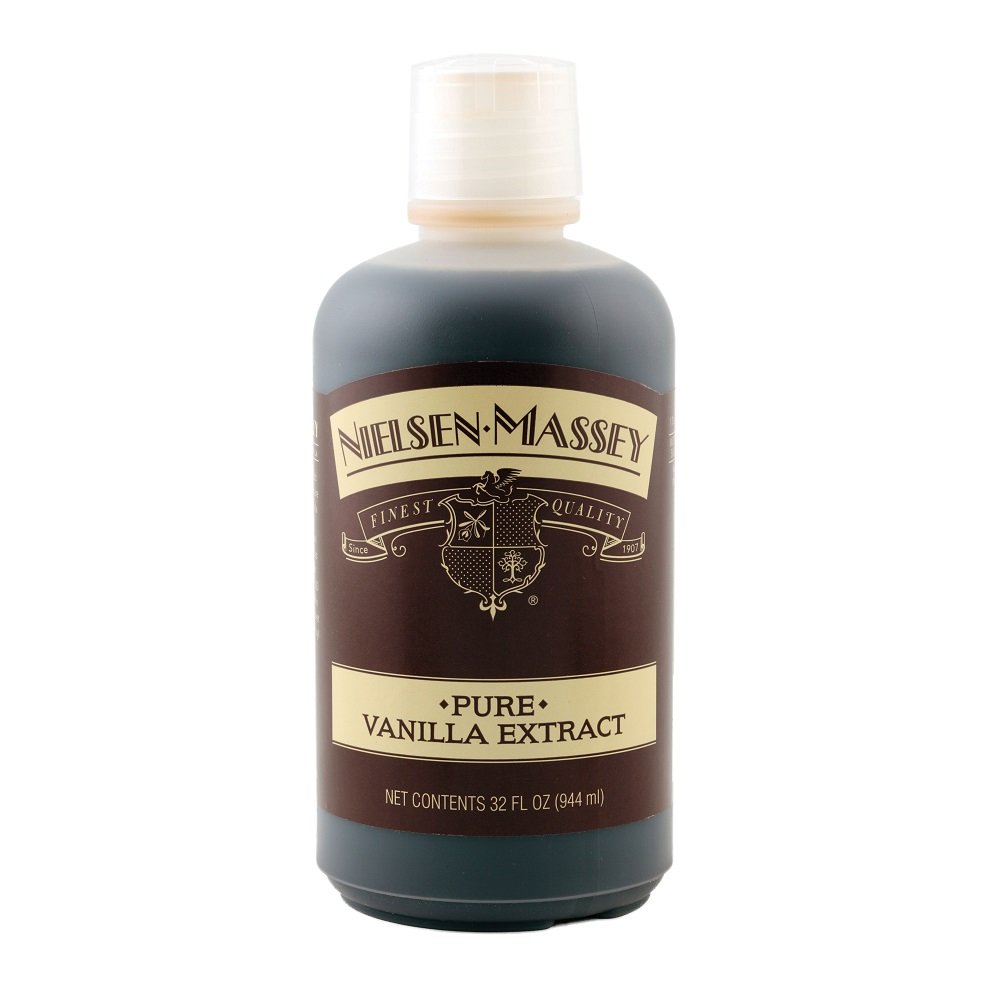
If you’ve ever stood in a restaurant supply aisle holding a 32-ounce bottle of pure vanilla extract — “pure” meaning it’s made from real vanilla beans and alcohol, nothing synthetic — and thought surely this is the smarter buy, you’re not wrong to think that. Per-ounce prices drop dramatically once you move past the grocery-store 4-ounce bottle. But vanilla extract is a living product. It contains volatile aromatic compounds, the fragile molecular structures responsible for that warm, complex scent and flavor, that behave differently sitting in a half-empty bottle than they do in a freshly cracked one. This article walks through the exact conditions under which bulk buying saves real money, and the ones where it quietly costs you — in degraded flavor, wasted product, or a mismatch between what you bought and what your recipes actually need.
The Cost-Per-Ounce Math (And Why It’s Only Half the Picture)
Let’s start with the numbers, because they’re genuinely compelling.
By the numbers — pure vanilla extract, approximate 2025–2026 retail pricing:
| Format | Approximate Price | Cost per Ounce |
|---|---|---|
| Nielsen-Massey Madagascar Bourbon, 4 oz | $16–$18 | $4.00–$4.50 |
| Nielsen-Massey Madagascar Bourbon, 32 oz | $55–$70 | $1.72–$2.19 |
| OliveNation Pure Vanilla Extract, 1 gallon | $120–$160 | $0.94–$1.25 |
| Heilala Single Origin Tongan Vanilla, 3.4 oz | $30–$40 | $8.82–$11.76 |
That’s not a small difference. Moving from a consumer 4-ounce bottle to a 32-ounce format can cut your per-ounce cost nearly in half. Scaling to a gallon from professional suppliers like OliveNation or Spice Jungle can cut it by 75 percent or more compared to supermarket pricing.
The catch is that this math only holds if you actually use the product before its quality peaks out. And that is a much trickier question than most buyers anticipate.
Cook’s Illustrated’s blind taste tests on pure vanilla extracts have consistently shown that storage conditions and time in bottle are meaningful quality variables — meaning a well-stored 8-ounce bottle you cycle through in four months can outperform a 32-ounce bottle you nurse for two years. The savings evaporate if the flavor does.
How Vanilla Extract Degrades — And the Timeline That Actually Matters
Pure vanilla extract doesn’t “go bad” the way milk does. The alcohol base — typically 35 percent ethanol by FDA requirement for the “pure” designation — acts as a preservative that prevents microbial spoilage almost indefinitely. The Kitchn’s storage guide and King Arthur Baking’s ingredient resources both note that pure extract is shelf-stable for many years.
But here’s the nuance that matters to practitioners: shelf-stable and flavor-stable are different things.
Vanilla’s most delicate aromatic compounds — including vanillin, but also the supporting cast of hundreds of secondary aromatics that distinguish a quality Madagascar Bourbon from a one-dimensional imitation — are volatile. They escape slowly through imperfect seals, oxidize gradually when exposed to air as the bottle empties, and react with light over time. Fine Cooking’s vanilla deep-dive notes that proper storage (cool, dark, sealed tightly) dramatically slows this process, but doesn’t stop it.
The practical implication: a 32-ounce bottle you open and close repeatedly over 18 months is exposing its contents to more oxidation cycles than a four-pack of 8-ounce bottles you open one at a time. The total volume is identical. The flavor trajectory isn’t.
For single-origin premium extracts — Heilala Tongan, Nielsen-Massey Tahitian, Singing Dog Bourbon — this effect is amplified. These products are formulated for aromatic complexity and often have thinner, more delicate flavor profiles than a workhorse Madagascar Bourbon. The Tahitian vanilla’s signature floral notes (primarily from the compound heliotropin, which is more prominent in Tahitian than Bourbon-type beans) are especially volatile. Serious Eats’ vanilla breakdown observes that Tahitian varieties skew more floral and anise-adjacent versus the creamy, rich profile of a Bourbon-type — and that distinction is precisely what you’re paying a premium for. Buying a 32-ounce format of a premium Tahitian extract to sit on your shelf for a year is a reasonable way to spend significant money on a product that no longer tastes like what the spec sheet promised.
When Bulk Buying Actually Makes Sense
With that context established, here is the decision framework. Bulk format is a good buy when several conditions align:
1. You have a predictable, high-volume use case.
Small-batch bakery owners producing vanilla buttercream, custard bases, and pound cakes at scale represent the sweet spot for bulk purchasing. If your operation cycles through a 32-ounce bottle in six to eight weeks — which is entirely plausible at professional production volumes — the quality-degradation risk shrinks dramatically. OliveNation and Spice Jungle both offer professional-grade pure vanilla extracts in quart and gallon formats that are designed for exactly this customer: steady throughput, proper storage, high turnover.
For reference, a home baker making one or two weekend projects per month might use 1–2 teaspoons per recipe. At that pace, a 32-ounce bottle (roughly 192 teaspoons) represents a six-to-eight-year supply. That is almost certainly too slow a turnover to justify the format.
2. You’re buying a workhorse, not a showcase ingredient.
There’s a meaningful distinction between your formulation vanilla — the extract going into your cookie dough, cake layers, and general pastry applications where it plays a supporting role — and your feature vanilla, the extract in a crème brûlée, a vanilla bean panna cotta, or a white chocolate ganache where it’s the primary flavor note.
Bulk buying makes strong economic sense for your workhorse vanilla. A gallon of a reliable professional-grade Madagascar Bourbon from a bulk supplier, used consistently in high-volume applications, delivers real savings. King Arthur Baking’s ingredient guidance consistently recommends Madagascar Bourbon-type extracts as the reliable baseline for general baking — it’s a benchmark profile that holds up well even with extended storage.
Bulk buying is a riskier call for your showcase vanilla, especially single-origin or premium formats. Use smaller bottles for those; protect the investment in flavor.
3. Your storage setup is actually optimized.
“Store in a cool, dark place” is advice most people apply loosely. For bulk vanilla, take it literally. An ideal storage environment is 60–70°F, away from any heat source (including the ambient warmth of a busy bakery kitchen), in original glass bottles with secure closures. Plastic containers can introduce off-flavors over time through permeability. Decanting a gallon purchase into smaller amber glass bottles for active use — keeping the main supply sealed — is a practice professional confectioners report as an effective way to manage oxidation exposure.
4. The price differential is substantial and the product quality is verified.
Not all bulk vanilla is the same quality. Some bulk extract products achieve low per-ounce pricing through thinner bean-to-solvent ratios or lower-quality source beans. The FDA’s standard of identity requires that a product labeled “pure vanilla extract” contain a minimum of 13.35 ounces of vanilla beans per gallon of extraction, at no less than 35 percent alcohol — but that’s a floor, not a ceiling. Premium bulk suppliers like OliveNation specify fold strength (a measure of concentration, where “2-fold” means double the standard bean-to-solvent ratio) and sourcing region. Confirm these specs before committing to a large-format purchase.
When Buying Big Doesn’t Save You Anything
Let’s name the scenarios where the bulk math fails:
Low-volume home baking. If you’re an enthusiastic but occasional baker, buying 32 ounces of premium vanilla extract is a false economy. You will lose more money in quality degradation over years of storage than you saved on the per-ounce price. Stick with 4- or 8-ounce formats and cycle through them in a reasonable timeframe.
Specialty or exploratory extracts. If you’re in the mode of comparing Heilala Tongan against Nielsen-Massey Tahitian for a specific ganache application, or trialing a Singing Dog Vanilla product for its distinctive earthy-sweet profile, buy the smallest available format. These are evaluation purchases, not volume purchases. Locking into 32 ounces of a product you’ve never used in your specific formulations is a real risk.
Extract-paste substitution mismatches. Vanilla paste — a thicker product that includes vanilla bean specks and a higher concentration of both aromatic compounds and natural sugars — behaves differently than liquid extract in baked applications. Serious Eats notes that paste works best in applications where the specks are visible and desirable (custards, ice creams, buttercreams) and where the thicker consistency doesn’t disrupt the formulation. If your recipe balance was developed around liquid extract, bulk-buying paste “because it was a good deal” can create texture and sweetness drift. Buy the format your formula requires, not just the one with the best per-unit economics.
Unstable supply chain sourcing without quality verification. Madagascar vanilla pricing is notoriously cyclical — driven by crop reports, political instability in growing regions, and speculative purchasing by large buyers. The vanilla market in 2025–2026 reflects prices that are elevated compared to the commodity lows of 2019–2020 but below the record spike years of 2017–2018, per reporting from agricultural commodity trackers. In a rising-price environment, pre-buying bulk vanilla can protect against cost increases — but only if you can verify the product’s quality and extraction standards before committing at scale. A low price on a gallon of extract that turns out to be weakly extracted is not a hedge; it’s a compounding problem.
The Decision Rule
Here’s the plain “if X, then Y” version of everything above:
If you’re a professional or high-volume home baker who cycles through at least 16–32 ounces of pure vanilla extract every two to three months, buying bulk from a verified professional supplier is almost certainly the right call on your workhorse vanilla. Optimize storage, buy in glass, and decant to smaller working bottles.
If you’re an intermediate home baker using vanilla weekly but not at production scale, a 16-ounce format is your sweet spot — meaningful savings over 4-ounce grocery pricing without the degradation risk of a container you’ll nurse for years.
If you’re evaluating premium single-origin vanilla — Tahitian, Tongan, or any specialty origin — buy the smallest available bottle first, use it deliberately in targeted applications, and only scale up if it earns a permanent role in your formulations.
If you’re tempted by a great bulk price on an unknown or unverified product, slow down. Confirm the fold strength, the source region, and the alcohol percentage. A gallon of under-extracted vanilla at a low per-ounce price is not savings — it’s just more of something that won’t do the job.
The 32-ounce bottle isn’t a trap. It’s a tool. It just works best when your throughput, your storage setup, and your specific flavor use case are all in alignment with what bulk formats are actually designed to deliver.