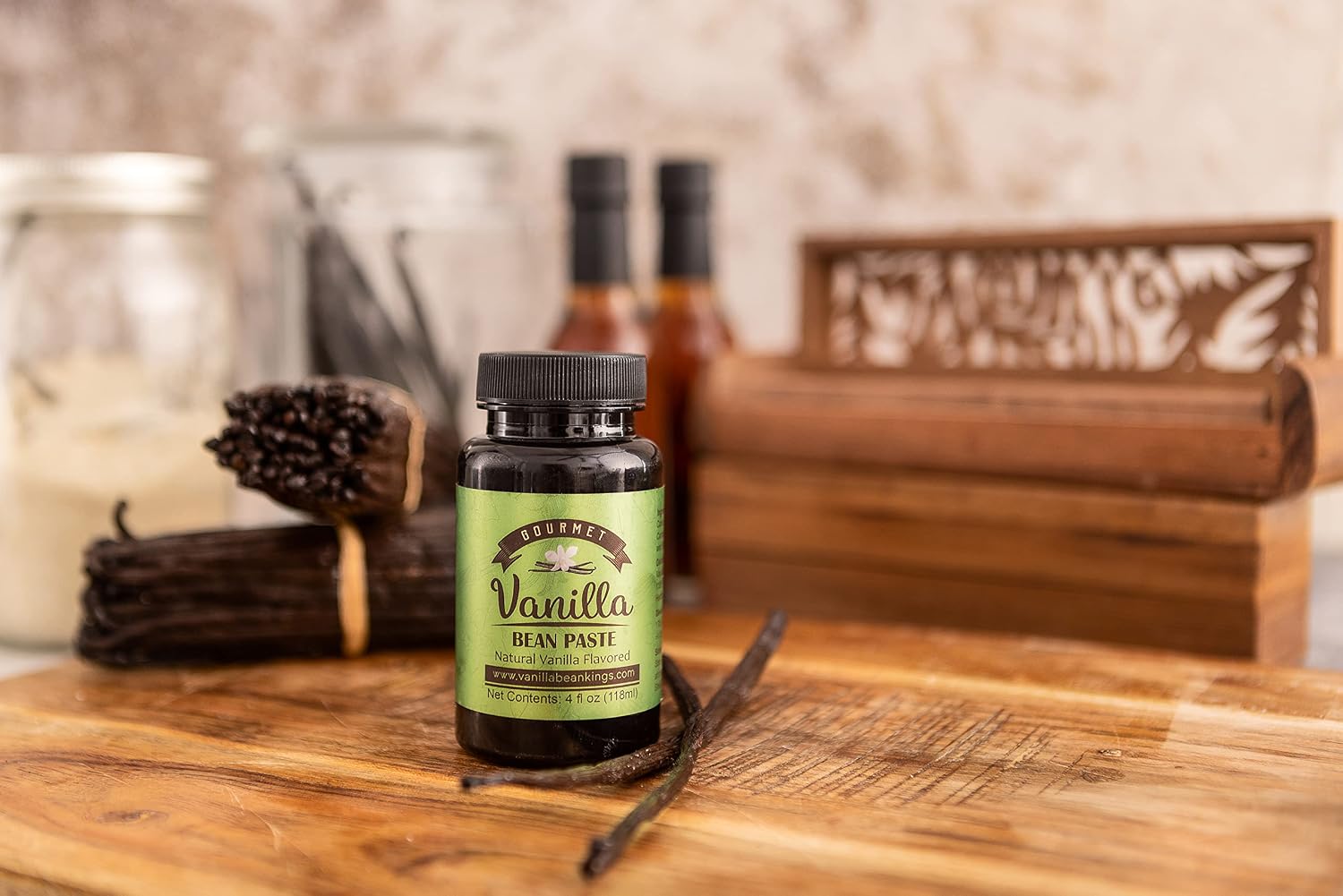
Vanilla bean paste is exactly what it sounds like: a spoonable, thick concentrate made from vanilla extract and real vanilla bean seeds — those tiny black specks you normally only get when you scrape an expensive whole bean with a paring knife. The paste puts both the flavor of the extract and the visual drama of the specks into a single jar, which is why pastry professionals and serious home bakers have largely replaced one or the other (sometimes both) with it. The pitch is simple: measure like an extract, look like you used a whole bean.
But here is the part most paste articles skip over entirely: paste is not a standardized product. Two jars sitting side by side on the shelf can have completely different thickeners, different sugar loads, and consistencies so far apart that one pours like honey while the other holds a stiff peak of its own. If you have ever grabbed a new brand and wondered why your custard tasted slightly sweeter or your ganache broke differently, the answer is almost certainly in the formulation — not your technique.
This article maps out what the most-reviewed pastes actually contain, what buyers consistently report about how they behave, and exactly how to match the right paste to the right application.
| EDITOR'S PICKNielsen-Massey Pure Vanilla Bea… | Mid-tierNielsen-Massey Madagascar Bourb… | Budget pickLorAnn Natural Vanilla Bean Pas… | |
|---|---|---|---|
| Volume | 32 fl oz | 4 fl oz | 4 fl oz |
| Origin | — | Madagascar | — |
| Brand | Nielsen-Massey | Nielsen-Massey | LorAnn |
| Price | $101.50 | $23.17 | $14.32 |
| See on Amazon → | See on Amazon → | See on Amazon → |
The Two Ingredients That Separate Every Paste on the Shelf
Before you compare brands, you need to understand the two variables that drive almost every texture and performance difference: thickener and sweetener.
Most vanilla bean pastes use one of two thickening agents. Glycerin (also called glycerol) is a clear, slightly sweet, alcohol-free syrup derived from plant oils. It is flavor-neutral and adds body without contributing meaningful sweetness or browning. Sugar — sometimes listed as cane sugar or corn syrup derivatives — also thickens, but it contributes to sweetness, can affect caramelization in baked goods, and adds measurable grams of carbohydrate per serving.
Why does this matter to you? Because a paste thickened primarily with sugar behaves more like a simple syrup with vanilla flavoring, while one thickened with glycerin stays closer to a neutral carrier. In applications where sugar balance is calibrated tightly — Italian meringue buttercream, crème brûlée, a high-ratio white cake — even a small swing matters.
Cook’s Illustrated, in their vanilla bean paste ingredient note, observes that the best pastes maintain a clean vanilla flavor without introducing off-notes from the carrier, and glycerin-based formulations tend to score better on that metric. King Arthur Baking Company’s ingredient guide titled “What Is Vanilla Bean Paste?” similarly flags that the ingredients list on the label is your first quality checkpoint before you buy.
Brand-by-Brand: What Buyers and Reviewers Actually Report
Nielsen-Massey Vanilla Bean Paste
Nielsen-Massey is the most-reviewed paste in the enthusiast tier, and the loyalty language buyers and food editors use is among the strongest recorded for any single extract or paste product. Serious Eats, in their taste comparison piece “The Best Vanilla Extracts, Pastes, and Beans,” calls out Nielsen-Massey as a benchmark product — one where the characteristic Bourbon-style profile (warm, woody, slightly smoky, with strong vanillin intensity) is reliably consistent batch to batch.
From a formulation standpoint, Nielsen-Massey’s paste uses a blend that includes sugar and other carriers, and it reads as moderately thick — not stiff, but it holds its shape briefly when spooned. It is one of the few pastes where buyers and reviewers explicitly name the application — pound cake, custard, pastry cream — because the paste visibly distributes seeds evenly through a cooked custard in a way extract never does.
One significant caution: Aggregated buyer reviews of the gallon-format bulk paste include credible detailed accounts of a plastic or off-smell present from first opening, distinct from the vanilla aroma. This is worth taking seriously if you are sourcing bulk for a professional kitchen — evaluate the container before incorporating it into a high-cost recipe. It is likely a storage or packaging quality-control variance rather than a formulation issue, but bulk-format paste is more vulnerable to this than glass-jarred retail sizes.
Nielsen-Massey
$23.17
In stock on Amazon
Check price on AmazonTaylor and Colledge Vanilla Bean Paste (Tube Format)
Taylor and Colledge distribute their paste in a toothpaste-style squeeze tube, which solves a real storage problem: no oxygen exposure every time you open a lid, no spoon contamination, and a much cleaner portion for small amounts. The Kitchn, in their vanilla bean paste review roundup, identifies the Taylor and Colledge tube as a particularly strong choice for applications where extract’s alcohol note would remain perceptible — smoothies, yogurt, whipped cream, mousse, no-bake cheesecake, and fresh fruit preparations. The absence of alcohol aroma is the primary reason cold-application users reach for paste over extract, and the tube format reinforces that advantage by keeping the paste fresher longer after first use.
The paste itself is moderately thin by paste standards — thicker than extract, certainly, but not the stiff, spoonable consistency some buyers expect when they first transition from a jar-style product. If you are coming from a thick paste like Vanilla Bean Project (see below), the Taylor and Colledge texture will read as noticeably more fluid, though it still delivers seeds and full flavor.
Nielsen-Massey
$23.17
In stock on Amazon
Check price on AmazonLorAnn Vanilla Bean Paste
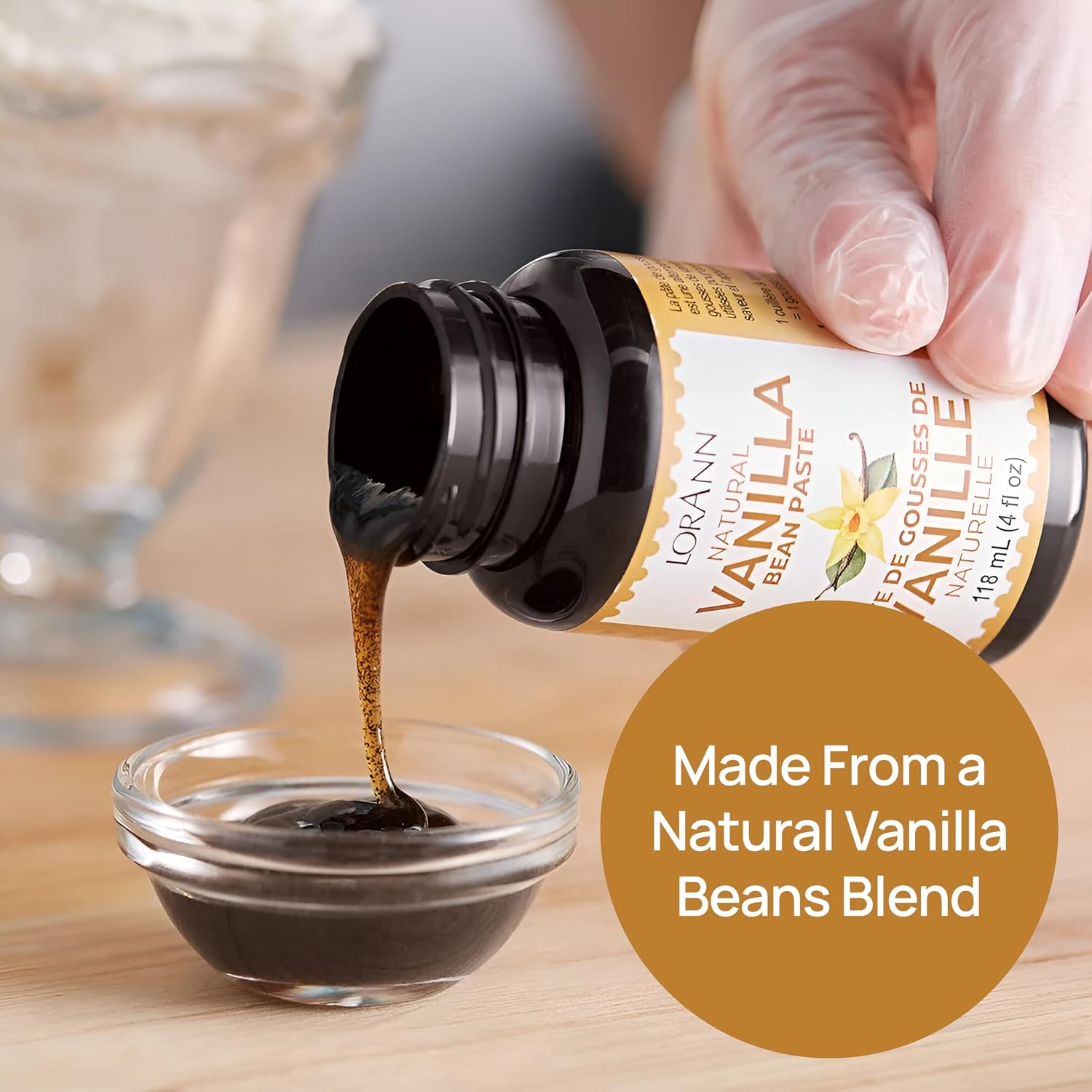
LorAnn has strong brand recognition in the home baker segment because its flavor oils and concentrates are sold widely in craft stores, and buyers tend to assume its paste will mirror the thick, viscous consistency of its other concentrates. Reviewers consistently note the opposite: LorAnn’s paste runs significantly more liquid than expected, and this is the single most-repeated buyer surprise across review platforms. This is not a defect — the paste still delivers seeds and vanilla flavor — but if you are planning to use it anywhere consistency matters (swirling into a cheesecake batter for visual effect, spooning into a custard before setting), expect a pourable product, not a spreadable one.
For buyers who primarily want seeds and vanilla flavor in a liquid application — a smoothie base, a quick whipped cream, a sauce — the thinner body is functionally irrelevant. For anyone who chose paste specifically for its thick, spoonable character, this brand will disappoint on texture while still delivering on flavor.
LorAnn
$14.32
In stock on Amazon
Check price on AmazonFive Star Chef Vanilla Bean Paste
Five Star Chef is a value-positioned paste that turns up frequently in comparisons for buyers looking to work at volume without the per-ounce cost of premium brands. The most analytically useful detail in the buyer record for this product is a label-reading finding: the paste is thickened primarily with sugar at approximately 8 grams per tablespoon — and multiple buyers explicitly state they would prefer glycerin as a thickener for the reasons outlined in the formulation section above.
Eight grams of sugar per tablespoon is not negligible in precision applications. A frosting recipe scaled to a large wedding cake, or a custard where the sugar ratio is calibrated to a specific set point, will register this addition. For a rustic breakfast bake or a sugar cookie where a gram or two of variance is invisible, it is a complete non-issue. Know your application, and check the nutrition label before scaling up.
LorAnn
$14.32
In stock on Amazon
Check price on AmazonVanilla Bean Project Organic Paste
Buyers of Vanilla Bean Project’s organic paste describe it consistently using three words: thick, fragrant, and only. The “only” is the telling one — reviewers repeatedly describe it as the only vanilla they currently use, with strong repeat-purchase signals and an unusually high proportion of buyers who mention gifting it or recommending it without prompting. The organic certification and single-origin sourcing language attracts buyers who are already reading labels on their other ingredients and want traceability in their extracts.
From a texture standpoint, this paste is reported as genuinely thick — closer to the stiff end of the paste spectrum — which makes it well-suited for fold-in applications (stirring paste into stiff dough or thick batter) where a thinner paste might not distribute as cleanly. The premium price is real, but so is the repeat loyalty: this is a paste buyers return to rather than rotate away from.
Nielsen-Massey
$101.50
In stock on Amazon
Check price on AmazonBy the Numbers: Paste Formulation Comparison at a Glance
| Brand | Reported Consistency | Primary Thickener | Notable Trade-off |
|---|---|---|---|
| Nielsen-Massey | Medium-thick | Sugar + carriers | Bulk format: monitor for off-odor on receipt |
| Taylor and Colledge | Medium (tube) | Glycerin-forward | Thinner than jar-style expectations |
| LorAnn | Thin/pourable | Not glycerin-dominant | Surprise for texture-expecting buyers |
| Five Star Chef | Medium | Sugar (~8g/tbsp) | Meaningful in precision sugar applications |
| Vanilla Bean Project | Thick | Organic carriers | Premium price; strong repeat loyalty |
Substitution Math: Paste for Extract (and Back)
The standard guidance from King Arthur Baking Company’s ingredient guide “What Is Vanilla Bean Paste?” and from Serious Eats’ vanilla paste comparison “The Best Vanilla Extracts, Pastes, and Beans” is 1:1 substitution — one teaspoon of paste replaces one teaspoon of extract. This holds in most baking contexts where you are replacing the flavor and adding the visual seed bonus.
Where it breaks down: if the paste you are using has significant sugar content (Five Star Chef at 8 grams per tablespoon, for example), and you are substituting into a formula where that sugar is not accounted for, you may need to reduce another sweetener slightly. At teaspoon-level quantities in most home recipes, the effect is imperceptible. At tablespoon-level quantities in a scaled commercial recipe, it is worth the ten seconds it takes to calculate.
Going the other direction — replacing paste with extract — you lose the seeds. There is no adjustment to the flavor volume needed, but the visual character of your finished product will change.
Frequently Asked Questions
Does vanilla bean paste contain sugar, and does that matter for my recipe?
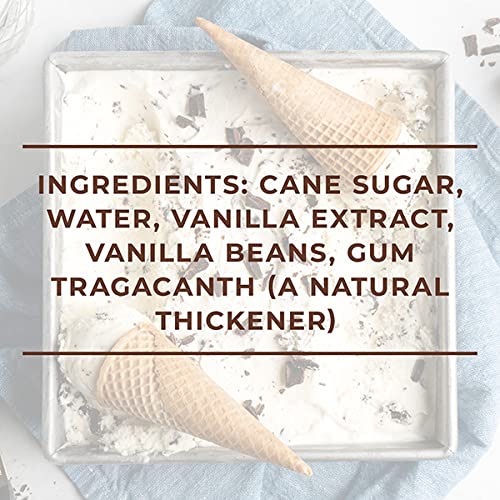
Some pastes use sugar as a primary thickener; others rely on glycerin. The Five Star Chef paste, for example, contains roughly 8 grams of sugar per tablespoon — a meaningful amount in tight formulations like Italian meringue or crème caramel, and largely invisible in a batch of chocolate chip cookies. Check the nutrition label before scaling up.
Why is my vanilla bean paste thinner or thicker than I expected compared to another brand?
Because there is no industry standard for paste viscosity. LorAnn runs thin enough that buyers consistently describe it as more liquid than expected. Vanilla Bean Project runs thick enough that buyers compare it to a spread. The thickener, the ratio of seeds to carrier, and the brand’s target consistency all vary — and most labels do not disclose this.
Can I substitute vanilla bean paste for vanilla extract 1:1, or do I need to adjust the ratio?
In most recipes, yes — 1 teaspoon of paste for 1 teaspoon of extract, as confirmed by King Arthur Baking Company in their ingredient guide “What Is Vanilla Bean Paste?” and by Serious Eats in their vanilla extract and paste taste comparison “The Best Vanilla Extracts, Pastes, and Beans.” The flavor intensity is generally equivalent. If the paste you are using has significant sugar content and your recipe is precision-calibrated for sweetness, factor that in at scale.
How should I store an open jar or tube of vanilla bean paste, and how long does it last?
Most pastes are shelf-stable before opening and store well at room temperature after opening, away from heat and direct light. Tube formats have a storage advantage because they limit oxygen exposure. Jar formats should be sealed tightly after every use. Most manufacturers list 2–3 year shelf life on sealed product; open paste is typically good for 12–18 months when stored properly. The bulk gallon format is the most storage-sensitive — see the caution about off-odor in the Nielsen-Massey section above.
Is the sugar in vanilla bean paste enough to affect the sweetness of a frosting or custard recipe?
At one teaspoon per batch, no — for almost any recipe. At one tablespoon or more, in a recipe calibrated precisely (Italian buttercream, pastry cream for a multi-layer entremet), the 8 grams per tablespoon in a sugar-thickened paste becomes worth accounting for. If you are scaling a formula that calls for two or more tablespoons, do the math or switch to a glycerin-thickened paste.
The Decision Rule
If you want maximum flavor intensity and visual impact with a proven track record, Nielsen-Massey paste in glass-jar retail size is where buyer loyalty and editorial consensus converge — just evaluate the specific lot on receipt if you order the bulk gallon.
If your application is uncooked or cold and you want zero alcohol aroma, Taylor and Colledge’s tube format is the purpose-built answer, as noted by The Kitchn in their vanilla bean paste review roundup.
If sugar load matters — precision buttercreams, tight custard formulas, professional scaling — read the nutrition label before you buy and default to glycerin-thickened options. Cook’s Illustrated, in their vanilla bean paste ingredient note, confirms that carrier neutrality is a meaningful quality differentiator at this level.
If you are building a repeat-purchase, single-brand pantry and want organic traceability, Vanilla Bean Project’s thick, fragrant paste earns its loyal following at the premium tier.
Paste is not extract, and paste is not a single category — it is a spectrum. Match the formulation to the application, read the thickener on the label, and the specks take care of themselves.