If you’ve ever stood in front of a bag of vanilla beans and wondered whether the origin label actually matters for homemade extract — you’re asking exactly the right question. Making your own vanilla extract is simple at its core: you split open dried vanilla pods, submerge them in alcohol, seal the jar, and wait. Over weeks and months, the alcohol draws out the flavor compounds locked inside the beans. What varies dramatically, though, is which flavor compounds you end up with, and that depends heavily on where those beans were grown. The two origins you’ll encounter most often are Tahitian (from French Polynesia) and Madagascar (specifically the Bourbon-type beans grown on Madagascar and nearby islands). This article breaks down what seasoned extract-makers and food publications report about each origin, how to do the bean math before you buy, and exactly when to choose one over the other.
| EDITOR'S PICK50 Organic Madagascar Vanilla B… | Mid-tier25 Organic Madagascar Whole Gra… | Budget pick25 Plump Tahitian Vanilla Beans… | |
|---|---|---|---|
| Bean Count | 50 | 25 | 25 |
| Vanilla Type | Madagascar | Madagascar | Tahitian |
| Grade | Grade A | Grade A | Grade A++ |
| Origin | Madagascar | Madagascar | Papua |
| Price | $39.99 | $27.99 | $17.99 |
| See on Amazon → | See on Amazon → | See on Amazon → |
The Flavor Difference: What Experienced Bakers Actually Report
Let’s be clear about something important upfront: flavor perception is subjective, and the differences between Tahitian and Madagascar extracts in a finished baked good are real but sometimes subtle.
Madagascar Bourbon Beans: The Classic, Creamy Workhorse
Madagascar Bourbon beans are what most people picture when they think “vanilla.” Fine Cooking’s vanilla guide for bakers describes the profile that emerges in extract form as creamy, rich, and classically sweet — that round, warm, almost custardy note that works universally in baked goods. It’s the workhorse profile. It marries well with dairy, brown sugar, and fat, which is why it’s the default for pound cake, buttercream, and cookie dough.
According to Serious Eats’ overview of vanilla extracts and flavor chemistry, Madagascar Bourbon beans are notably rich in vanillin — the compound most directly responsible for that familiar, creamy vanilla character. This high-vanillin profile is why Madagascar extract performs so reliably across the widest possible range of baking applications. When vanilla is a background note rather than the headline flavor, Madagascar does exactly what you need it to do without calling attention to itself.
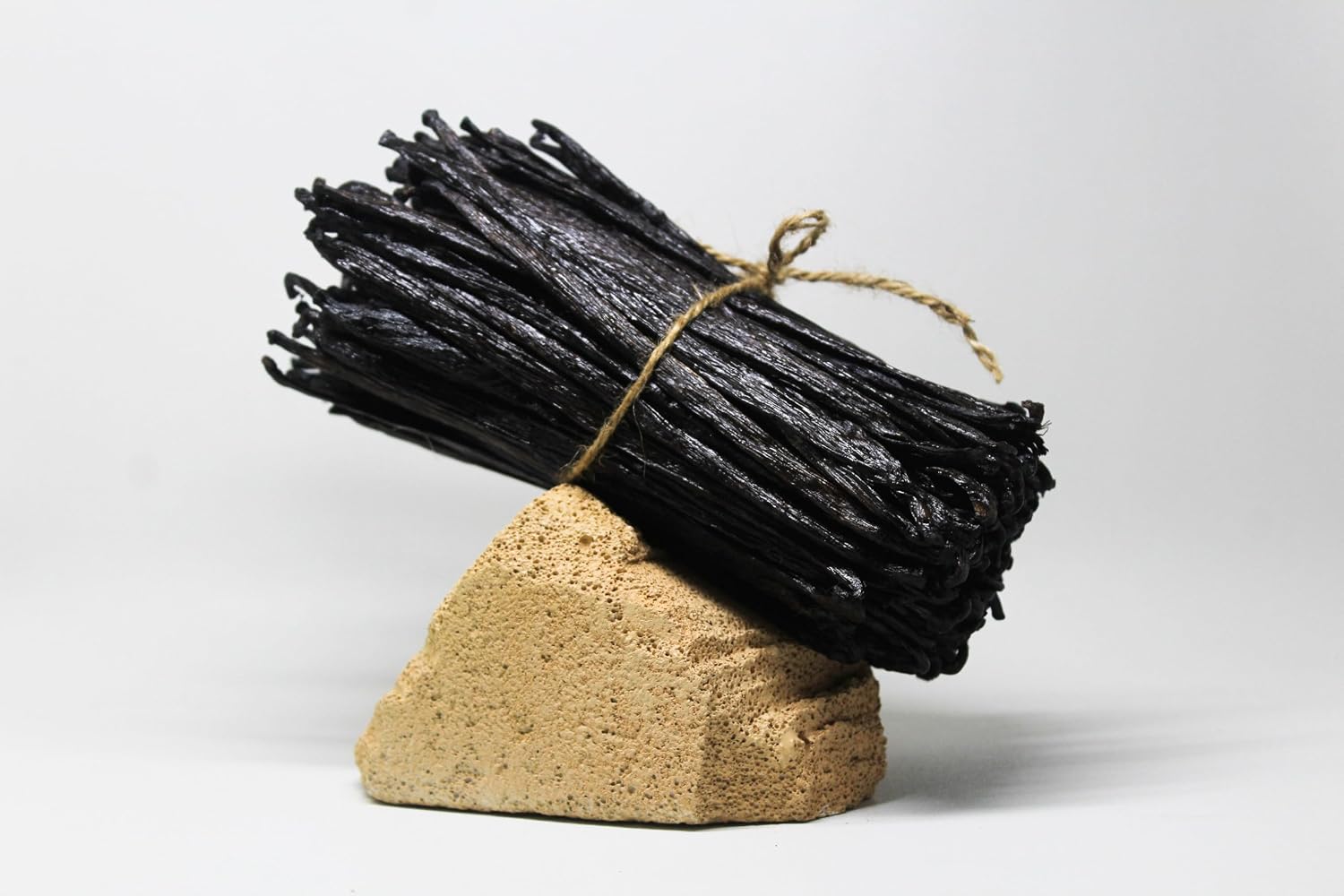
25
$17.99
In stock on Amazon
Check price on AmazonTahitian Beans: Floral, Fruity, and Aromatic
Tahitian beans are a genuinely different animal. Botanically they’re a distinct species — Vanilla tahitensis versus the Vanilla planifolia that Madagascar produces — and experienced bakers consistently flag the aroma as a surprise: cherry-forward, floral, almost fruity. Where Madagascar’s profile reads as warm and grounding, Tahitian reads as bright and aromatic. Think less “vanilla as comfort food” and more “vanilla as a perfume note.”
Serious Eats’ vanilla extract overview notes that Tahitian beans carry a higher concentration of heliotropin (also called piperonal), which is directly responsible for that cherry-floral character. Fine Cooking’s baking guide to vanilla similarly identifies this compound distinction as the primary reason Tahitian extract performs differently in delicate applications: the higher heliotropin content lifts and brightens rather than rounds and deepens.
The practical implication is clear: Tahitian extract shines in applications where the vanilla itself is a foreground flavor — panna cotta, white chocolate ganache, a delicate pastry cream, or a lightly flavored shortbread where you want floral lift. Madagascar extract is your foundation in robust baked goods where cocoa, heavy spice, or caramel would bury a more delicate aromatic profile anyway.
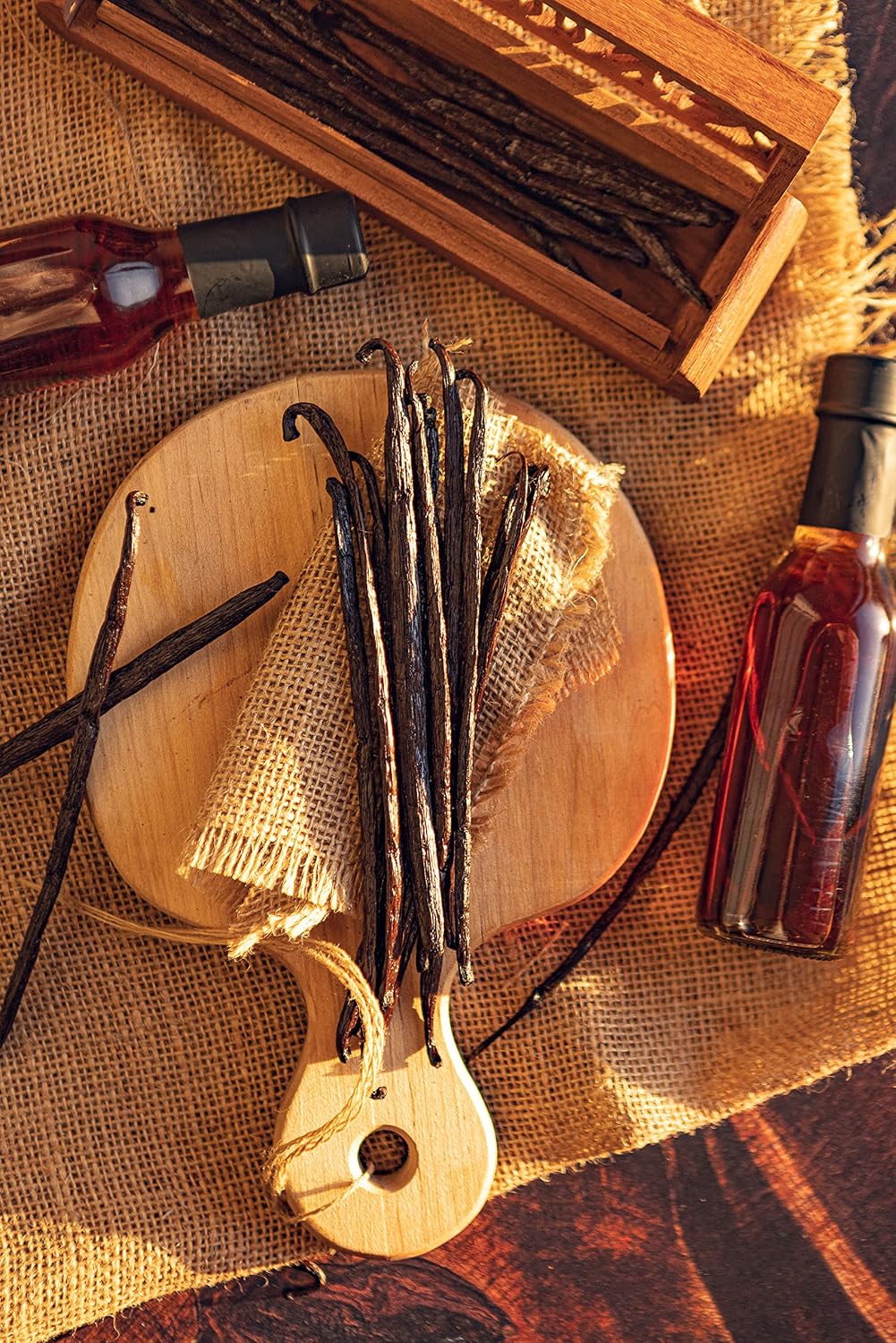
25
$27.99
In stock on Amazon
Check price on AmazonBlended Batches: Getting the Best of Both Origins
You don’t have to choose. Extract-makers who blend Tahitian and Madagascar beans in the same jar describe results that outperform either origin used alone — the floral lift of the Tahitian beans softens the intensity of the Madagascar profile, while the Madagascar beans anchor the blend so it reads as recognizably “vanilla” in finished baked goods rather than floral-forward.
A practical starting ratio: 70% Madagascar Grade B, 30% Tahitian Grade B in the same jar, covered with neutral vodka. This gives you a deeply complex extract that works across a wide range of applications without sacrificing versatility. It’s the right approach if you’re making one large batch for general baking use and don’t want to maintain two separate jars.
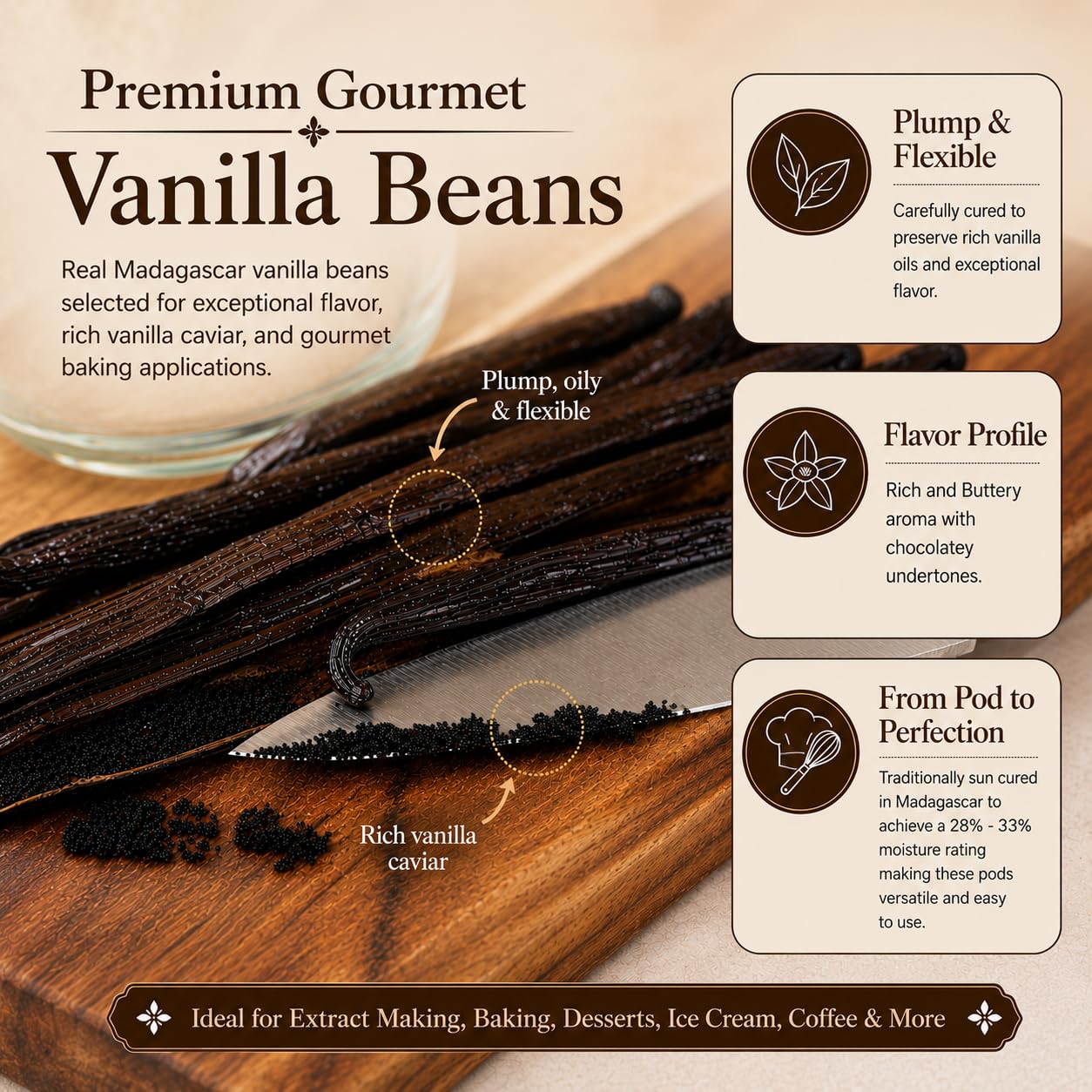
50
$39.99
In stock on Amazon
Check price on AmazonGrade A vs. Grade B: Which Bean for Extract?
Before you decide on origin, you need to decide on grade — and this is where many first-time extract-makers overspend.
- Grade A beans (also called “gourmet” or “prime”) are plump, moist, and visually beautiful — high moisture content (typically above 25–30%), pliable, often covered in a light vanillin frost. They’re ideal for applications where the bean itself is visible or scraped directly into a recipe: vanilla bean ice cream, custards, crème brûlée.
- Grade B beans (also called “extract-grade”) are drier, thinner, sometimes slightly less uniform in appearance, but they carry a higher concentration of flavor compounds per unit of moisture precisely because the water content is lower. For extract-making, this makes them the smarter buy.
King Arthur Baking Company’s guide to making vanilla extract at home affirms this directly: Grade B beans are the preferred choice for extraction because the drier cell structure releases flavor compounds into alcohol more efficiently than moisture-heavy Grade A beans do. You’re paying for flavor, not for water.
That said, if you’re making extract as a gift where the visual experience of a plump, visible bean inside a beautiful bottle is part of the presentation, Grade A has an aesthetic argument. Just know you’re paying a moisture premium, not a flavor premium.
The Bean Math: Yield, Jars, and Timelines
This is where things get concrete. The FDA’s standard of identity for “pure vanilla extract” in the United States requires a minimum of 13.35 ounces of vanilla beans per gallon of 35%-ABV alcohol. That translates to roughly 3 to 5 beans per 8-ounce jar, depending on bean size and the extract strength you’re targeting.
By the numbers:
| Batch size | Beans needed (moderate strength) | Beans needed (strong/pro strength) | Minimum wait |
|---|---|---|---|
| 4 oz jar | 2–3 beans | 4–5 beans | 8 weeks |
| 8 oz jar | 4–5 beans | 6–7 beans | 8–12 weeks |
| 16 oz jar | 8–10 beans | 12–14 beans | 12–16 weeks |
On timeline: Grade A beans infuse slightly faster because the bean splits and releases its seed paste more readily into the alcohol. Most home extract-makers report a usable Grade A extract in 8 weeks, though 3 months is where the flavor rounds out fully. Grade B beans are denser and drier — plan for 10–14 weeks before the extract is at full strength, with 4–6 months yielding a noticeably richer result.
The Kitchn’s guide to vanilla forms confirms the general 8-week minimum benchmark for any homemade extract and notes that the “closer to 6 months, the better” principle holds across both origins and both grades.
Alcohol Choice: What Extract-Makers Are Actually Using
Vodka is the default for a reason: it’s neutral, it doesn’t add its own flavor, and it produces a clean, bean-forward extract. For Tahitian beans especially, vodka lets that floral, cherry character come through without competition from the spirit itself.
But experienced extract-makers who’ve switched from vodka to bourbon or rum with Madagascar beans consistently prefer the result — the warm, woody notes in the spirit complement the creamy vanillin profile of Bourbon-type Madagascar beans in a way that adds genuine complexity. Epicurious’s guide to vanilla notes that aged spirits can add welcome depth to Madagascar-origin extracts, while that same oaky character can flatten or obscure the more delicate floral notes of Tahitian beans.
The practical rule:
- Tahitian beans → vodka (neutral carrier lets the floral profile lead)
- Madagascar beans → vodka for a clean, pure character; bourbon or rum if you want a warmer, more layered extract
Does Origin Noticeably Change the Final Baked Good?
Honestly? Sometimes, and sometimes not. In recipes where vanilla plays a supporting role — a chocolate layer cake, gingerbread cookies, a heavily spiced muffin — origin differences largely disappear under dominant flavors. Madagascar and Tahitian extracts at equivalent concentration would be functionally indistinguishable in a double-chocolate brownie.
Where origin does matter is in delicate, vanilla-forward applications. Fine Cooking’s vanilla guide specifically identifies pastry cream, panna cotta, shortbread, and white chocolate ganache as the categories where a Tahitian extract’s floral distinction registers clearly and pleasantly. In these preparations, the higher heliotropin content becomes an asset rather than a subtle background note — it reads as brighter, more aromatic, and more complex than a Madagascar extract in the same formula.
The honest takeaway: if your primary baking is in the “vanilla as background note” category, Madagascar Grade B extract delivers maximum versatility per dollar spent. If you bake frequently in vanilla-forward territory — custards, delicate pastry creams, single-note confections — a Tahitian extract, or a blended jar, earns its dedicated place on the shelf.
Frequently Asked Questions
How long does homemade vanilla extract take to be ready with Grade A vs. Grade B beans? Grade A beans are usable at 8 weeks but better at 3 months. Grade B beans need more patience — plan for 10–14 weeks minimum, and 4–6 months for a fully developed flavor. If you’re making extract as a gift on a deadline, Grade A is the faster path to a bottle that’s ready to present.
How many beans do I need to fill a standard jar of extract? For a standard 8-ounce jar at moderate strength, plan on 4–5 beans. For a strong extract closer to professional-grade intensity, use 6–7 beans. A real-world benchmark from experienced extract-makers: those filling jars from a 50-bean pack typically use 6 beans per jar when targeting a dark, concentrated result.
Does Tahitian vanilla extract taste noticeably different from Madagascar in a finished baked good? In bold, complex recipes — chocolate, heavy spice, caramel — the difference is minimal. In delicate, vanilla-forward applications like pastry cream, white chocolate ganache, and shortbread, Tahitian extract reads as noticeably brighter and more floral than Madagascar. The higher the vanilla’s role in your recipe, the more origin matters.
Can I mix Tahitian and Madagascar beans in the same extract batch? Yes — and extract-makers who do this report results they find more interesting than either origin alone. A 70/30 Madagascar-to-Tahitian ratio in neutral vodka gives you a versatile, complex extract that performs well across a wide range of baking applications.
Which alcohol produces the best color and aroma in homemade vanilla extract? Vodka produces the clearest, most bean-forward result and is the right choice for Tahitian beans. Bourbon, rum, or brandy add warmth and complexity that pair well with Madagascar Bourbon beans. Color-wise, darker spirits produce a deeper amber extract; vodka yields a lighter, more golden tone.
The Decision Rule
Here’s the clear if/then framework:
- If your baking is primarily chocolate, spice-forward, or caramel-heavy → Madagascar Grade B, vodka or bourbon, 4–6 month steep. Maximum versatility per dollar spent.
- If you specialize in custards, white chocolate, pastry cream, or delicate confections → Tahitian Grade B, neutral vodka, 3–4 month steep. The floral profile earns its spot.
- If you want one multi-purpose extract for mixed baking → Blend 70% Madagascar Grade B with 30% Tahitian Grade B in vodka. Experienced extract-makers consistently find this outperforms single-origin for everyday versatility.
- If you’re buying Grade A beans specifically for extract → you’re paying a moisture premium you don’t need. Redirect that budget to more Grade B beans and a longer steep; the result will be stronger and more complex.
The bean origin question sounds esoteric until you’re standing over a batch of vanilla bean panna cotta and realizing that this is exactly where origin makes the difference. Know your application, buy your grade accordingly, and give the extract time. The patience is the skill.