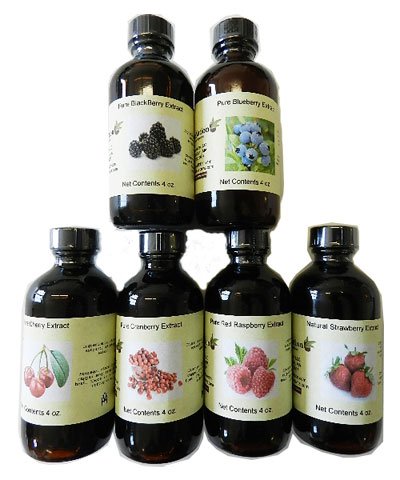
If you’ve recently upgraded from a grocery-store vanilla to something like a Nielsen-Massey or a Heilala single-origin bottle, you already understand the basic idea behind a pure extract: a flavoring made by soaking a real ingredient — vanilla beans, citrus zest, roasted nuts — in alcohol until the alcohol pulls out the aromatic compounds that give that ingredient its distinctive taste and smell. That liquid concentrate is what you add by the teaspoon to your batter. The upgrade in quality was probably obvious. What’s less obvious is that the same logic — pure source material, careful extraction, honest labeling — applies to a whole pantry’s worth of flavors beyond vanilla, and that most serious bakers are leaving real performance on the table by treating everything else as an afterthought. This guide walks through the specialty extracts worth your budget, explains the label terminology you’ll encounter, and gives you a clear decision framework for each category.
Why the “Imitation vs. Pure” Divide Hits Harder Outside Vanilla
You already know vanilla has a complicated label landscape. The same complexity exists across fruit, nut, and floral extracts — and in some categories, the gap between a pure extract and an imitation flavoring is even wider than it is with vanilla.
Here’s the terminology you’ll see on labels, defined plainly:
- Pure extract: Flavoring derived solely from the named source material (almonds, raspberries, rose petals) via extraction in a food-grade solvent, almost always ethanol (grain alcohol). No synthetic aromatic compounds added.
- Natural flavoring / WONF (With Other Natural Flavors): The named ingredient is present, but other natural flavor sources are used to round out or boost the profile. Technically “natural,” but not single-source pure. A raspberry WONF might contain strawberry or other fruit-derived volatiles.
- FTNF (From The Named Fruit/Flavor): All flavoring compounds come from the named source — no other naturals added. This is the stricter standard, closer to “pure,” and you’ll see it on higher-quality fruit extracts from suppliers like OliveNation and Spice Jungle.
- Imitation / artificial flavoring: Synthetic aromatic molecules (benzaldehyde synthesized from petrochemical sources for almond, for example) designed to mimic the target flavor. These aren’t inherently evil — some professional bakers use them deliberately — but the flavor profile is almost always flatter and less complex than a pure or FTNF source.
The King Arthur Baking Company’s editorial guide on extracts and flavorings notes that in high-heat applications like cookies and quick breads, the difference between pure and imitation can be subtle because many volatile aromatics cook off. But in low-heat or no-heat applications — buttercreams, mousses, ganache, custards, glazes — the full complexity of a pure extract survives, and the flatness of an imitation becomes obvious to any trained palate. If you’re a small-batch bakery owner pricing a $12 slice of cake, that’s the difference between a product that justifies the price and one that doesn’t.
The Nut Extract Category: More Nuance Than You Think
Almond extract is the first specialty extract most bakers add to their pantry after vanilla, and it’s also the one most likely to be misused. The key distinction: pure bitter almond extract (derived from bitter almonds or apricot kernels, which naturally contain benzaldehyde precursors) versus sweet almond extract (derived from sweet almonds, with a softer, more buttery profile).
Most commercial “pure almond extract” in the U.S. market — including the widely available Nielsen-Massey Pure Almond Extract — is actually made from FFPA (from the named fruit, apricot) or bitter almond oil, because true bitter almonds are restricted under FDA regulations due to their hydrogen cyanide precursor content. The FDA’s flavor regulations (21 CFR Part 172) permit the use of benzaldehyde derived from these sources at safe usage levels, and commercial manufacturers work well within those parameters. At normal baking doses (¼ to ½ teaspoon per batch), there is no safety concern — that’s worth stating clearly, because confusion around this point leads bakers to avoid the category unnecessarily.
The practical tradeoff: Pure bitter almond–type extract (benzaldehyde-forward) is intensely aromatic and performs brilliantly in macaron shells, amaretti, and frangipane, where you want that sharp, almost cherry-like almond note. It’s also notoriously easy to over-add. Pastry Arts Magazine’s feature on working with specialty extracts warns that almond extract in particular has an additive perception curve — a little adds clean almond character, too much tips into a cough-drop or medicinal quality that can’t be baked out. The standard guidance from professional pastry sources: start at half the amount called for by any recipe, taste, and adjust before committing.
Sweet almond extract from sources like Beanilla or Sonoma Syrup Co. is genuinely different — rounder, creamier, and lower-intensity. It layers beautifully with stone fruit flavors and pairs well in white chocolate ganache in a way that the sharper bitter-almond type doesn’t. These are not interchangeable, and the label won’t always tell you which you’re getting; you sometimes need to read the source ingredient statement or contact the supplier.
A note on walnut and hazelnut extracts: Both are available in pure and imitation formats. Pure walnut extract is genuinely hard to find and expensive when you do; OliveNation stocks it in professional quantities. The Fine Cooking editorial team’s flavor extract feature notes that pure hazelnut extract is one of the most fragile specialty extracts to work with — its aromatic compounds degrade faster than most, and bakers consistently report that freshness matters more here than in almost any other category. Buy in small quantities and use within 12 months of opening.
Fruit Extracts: Where FTNF Certification Actually Earns Its Premium
The fruit extract category is where label literacy pays the biggest dividends. The flavor difference between a FTNF raspberry extract and a standard “natural raspberry flavoring” is substantial, and the price difference is real.
By the numbers:
| Extract Type | Typical Retail (1 fl oz) | Typical Pro/Bulk (per oz, gallon pricing) |
|---|---|---|
| Imitation raspberry flavoring | $1.50–$3.00 | $0.40–$0.80 |
| Natural raspberry (WONF) | $4.00–$7.00 | $1.00–$1.80 |
| FTNF raspberry extract | $9.00–$16.00 | $2.50–$4.50 |
Pricing reflects 2026 mid-year market rates from professional extract suppliers; figures represent a general range across formats and packaging sizes.
For a home baker making one batch of raspberry buttercream, the difference between the low end and the high end of that table is maybe $1.50 in cost. For a small bakery running 40 lb of buttercream a week, it’s a meaningful line item — but so is the quality delta that justifies the pricing on the finished product.
The Kitchn’s editorial piece on extract versus flavoring distinguishes what bakers consistently report: FTNF fruit extracts carry the brightness and slight tartness of the actual fruit, while WONF and imitation versions tend toward a candy-like sweetness that reads as artificial to anyone who’s eaten a real raspberry recently. In applications where the fruit extract is carrying the whole flavor note — a lemon posset, a single-flavor macaron filling, a strawberry glaze — the FTNF version earns its cost. In a multi-component recipe where fruit is a background note, a high-quality WONF is often defensible.
Lemon and orange extracts deserve special mention because they’re frequently confused with oils. A citrus extract is alcohol-based; a citrus oil (like Boyajian orange oil, which you’ll see recommended in serious pastry recipes) is a cold-pressed oil concentrate. They’re not interchangeable in recipes. Extracts disperse evenly in water-based batters; oils emulsify differently and can seize in certain chocolate applications. Serious Eats’ coverage of flavor extracts calls out this confusion as one of the most common sourcing errors intermediate bakers make when they start exploring specialty formats. Read the format before you substitute.
Floral Extracts: The High-Ceiling, High-Risk Category
Rose, lavender, and orange blossom (neroli) extracts are where you find both the most transformative successes and the most notorious recipe disasters. The Kitchn’s editorial team describes these extracts as “polarizing by nature” — their aromatics are potent, and cultural context shapes whether a flavor reads as sophisticated or off-putting to a given eater.
Rose extract from a quality source — Sonoma Syrup Co.’s rose extract is frequently cited by pastry professionals for its balance — carries the full complexity of rose petals: floral, slightly green, slightly spicy. Used at ¼ teaspoon in a Persian love cake or a rose-pistachio shortbread, it’s stunning. Used at a full teaspoon, the same recipe tastes like soap. There is almost no extract category with a narrower window between “brilliant” and “ruined.” If you’re deploying rose extract in a professional product, the decision rule is: test at ⅛ teaspoon increments in a small batch, and let it sit overnight before evaluating — floral notes intensify as they meld with fat and sugar over time.
Lavender extract vs. lavender oil vs. infused lavender sugar is a whole separate discussion, but the short version: culinary-grade pure lavender extract is cleaner and more controllable than DIY infusions, which vary wildly in potency. Pastry Arts Magazine notes that professional pastry chefs who use lavender in commercial applications almost universally prefer extracts from controlled sources over home-dried lavender for exactly this reason — consistency matters when you’re running a product.
Orange blossom water (technically a hydrosol rather than an extract) is a related format worth distinguishing from orange blossom extract. The water is much lower concentration and can be added in tablespoon quantities; the extract is alcohol-based and should be treated with the same restraint as rose.
Building Your Specialty Extract Pantry: The Decision Framework
If you’re stocking up — whether for a home kitchen or a professional operation — here’s the if/then logic that organizes the spending decision:
If you bake mostly layer cakes, buttercreams, and custards: Your highest-ROI purchases after vanilla are pure almond extract (Nielsen-Massey or a comparable FTNF source), a FTNF lemon extract, and a quality rose extract. These three extracts cover a wide territory of celebration-cake flavor profiles and hold their aromatics well in low-heat applications.
If you’re running a small-batch bakery with macaron, tart, or confection production: Bulk pricing from OliveNation or Spice Jungle for almond and fruit extracts in FTNF format is worth evaluating seriously. The per-ounce cost drops meaningfully at gallon quantities, and the quality ceiling at that supplier tier is professional-grade. Hazelnut and walnut extracts in small quantities are worth carrying for seasonal and specialty items, but buy fresh and turn them fast.
If you’re flavor-curious and building range: Beanilla and Singing Dog Vanilla both carry specialty extracts beyond vanilla — lemon, almond, orange, and some floral formats — at quantities and price points suited to experimentation. The quality is solid and the format (small bottles, clear labeling) is designed for bakers who want to test before committing to volume.
If the application is high-heat (cookies, quick breads, muffins): The fine print from the King Arthur Baking Company’s guide holds: pure extracts are still preferable for flavor complexity, but you can consider a high-quality WONF natural flavoring without feeling like you’ve compromised — especially in recipes with competing strong flavors like brown butter or chocolate, where a subtle extract would be lost anyway.
The through-line in all of these decisions is label literacy. Read the ingredient statement before you buy. Know whether you’re getting pure, FTNF, WONF, or imitation. Know the format — extract versus oil versus hydrosol — and match it to the application. The pantry beyond vanilla is genuinely exciting territory, and the bakers who navigate it well are the ones who treat the label as information, not decoration.