Almond extract is one of those pantry items that looks simple until you’re standing in a baking aisle holding two nearly identical bottles — one $3, one $14 — and genuinely unsure which one will make your cherry cake taste like something you’d pay for. At its core, almond extract is a flavoring liquid, usually alcohol-based, that delivers the distinctive sharp, marzipan-adjacent aroma we associate with bakeries and grandmothers’ kitchens. But “almond extract” on a label can mean wildly different things chemically, legally, and sensorially. The difference between pure and imitation isn’t just marketing language — it’s a practical formulation decision that affects heat stability, dosage, finish, and whether your macarons smell floral and complex or vaguely like sunscreen. This guide breaks down how to read the label, what’s actually inside each type, and which specific bottles are worth your money at every tier.
| EDITOR'S PICK[Rodelle Pure Almond Extract](https://www.amazon.com/dp/B00F6MPQBU?tag=greenflower20-20) | Mid-tier[Nielsen-Massey Pure Almond Extr…](https://www.amazon.com/dp/B00DUF3Y5U?tag=greenflower20-20) | Budget pick[McCormick Culinary Imitation Al…](https://www.amazon.com/dp/B008OGD0JA?tag=greenflower20-20) | |
|---|---|---|---|
| Type | Pure | Pure | Imitation |
| Size | 16 fl oz | 2 fl oz | 16 fl oz |
| Gluten Free | ✓ | — | — |
| Kosher | ✓ | — | — |
| Made in USA | ✓ | — | — |
| Clear | — | — | ✓ |
| Price | $19.99 | $12.99 | $11.46 |
| See on Amazon → | See on Amazon → | See on Amazon → |
What “Pure” and “Imitation” Actually Mean on an Almond Extract Label
Let’s start with the compound that matters most: benzaldehyde. This is the primary aromatic molecule responsible for that almond flavor — and nearly every almond extract on the market, pure or imitation, gets its flavor primarily from benzaldehyde. The distinction is where it comes from.
Pure almond extract sources its benzaldehyde from natural botanical materials — typically the kernels of stone fruits like apricots, peaches, or cherries, or from bitter almonds themselves. These kernels naturally contain amygdalin, a compound that converts to benzaldehyde during processing. The U.S. Food and Drug Administration’s Code of Federal Regulations (21 CFR Part 182) defines “natural flavor” as a flavoring derived from plant or animal sources through physical, microbiological, or fermentation processes. When a bottle says “pure” and lists “natural flavor” in the ingredients, the benzaldehyde inside was extracted from actual botanical material, not synthesized in a lab.
Imitation almond extract uses synthetically produced benzaldehyde — the same molecule, made via chemical synthesis rather than botanical extraction. It is not fraudulent or unsafe; the Flavor and Extract Manufacturers Association (FEMA) has maintained synthetic benzaldehyde on its Generally Recognized as Safe (GRAS) list for decades. The molecule is structurally identical to its natural counterpart. What differs is the supporting cast: natural extracts carry trace aromatic co-compounds — small amounts of benzyl alcohol, indole, and other volatiles that round out the flavor profile. Synthetic benzaldehyde tends to be cleaner, sharper, and more one-dimensional by comparison.
As The Kitchn explains in their article “What Is Almond Extract Made From?”, most American commercial “pure” almond extracts are actually derived from the kernels of stone fruits — not sweet almonds — because true bitter almonds contain prussic acid precursors that require careful processing. The grocery-store sweet almond is almost never the source of the extract in your cabinet.
A practical label-reading checklist:
- “Pure Almond Extract” — benzaldehyde sourced from botanical material; typically lists “natural flavor” in the ingredients
- “Natural Almond Flavor” — could be pure extract or a blend; watch for “WONF” (With Other Natural Flavors) in fine print, which signals the named flavor is supplemented with additional naturals
- “Imitation Almond Extract” — synthetic benzaldehyde; typically cheaper per ounce and more potent by volume
- “Bitter Almond Extract” — specifically from Prunus amara (bitter almond) or related stone fruit kernels; more complex and slightly less sweet than sweet almond formulations
The Formulation Tradeoffs: Where Pure and Imitation Diverge in Real Applications
Knowing the chemistry is useful; knowing when it matters in a recipe is what makes you a better baker.
Heat stability: Benzaldehyde — both natural and synthetic — is reasonably heat-stable compared to vanilla’s more delicate vanillin esters. Serious Eats, in their round-up “The Best Almond Extracts for Baking,” notes that benzaldehyde survives oven temperatures well, which is why almond extract performs reliably in baked goods where you’d lose subtler florals from other flavoring agents. This is one application where the pure-vs-imitation distinction compresses: at 350°F for 30 minutes, both versions deliver. The difference shows more dramatically in no-bake or cold applications — panna cotta, buttercream, glaze, mousse — where imitation extracts can read as metallic or sharp at the finish, while pure extracts tend to trail off more cleanly.
Dosage: This is where practitioners get into trouble. Imitation extracts are typically formulated at higher benzaldehyde concentrations because synthetic production is cheaper and the goal is potency. King Arthur Baking’s “Extracts and Flavorings Guide” advises starting at half the called-for amount when substituting imitation for pure, then adjusting upward. In macaron shells — where you’re working with a fragile meringue and the flavor needs to penetrate through egg white proteins — overshooting with a high-concentration imitation can tip from “almond” to “marzipan candy” quickly.
Bitter almond vs. sweet almond extract: Bitter almond extract delivers a more intense, complex, slightly dark-fruit-adjacent character. It’s exceptional in financiers, frangipane, and anything with stone fruit. Sweet almond extract tends toward softer, rounder, more confection-like flavor — better in sugar cookies, shortbread, and glazes where you want almond as a background note rather than a headliner. Cook’s Illustrated, in their blind tasting article on almond extracts, found that tasters described bitter-type extracts as “more authentic” and “more sophisticated,” while sweet almond formulations were rated “pleasant but familiar” — which, depending on your application, is exactly what you want.
By the Numbers: Extract Types at a Glance
| Type | Typical Benzaldehyde Concentration | Cost Range (1–2 oz retail) | Best Application |
|---|---|---|---|
| Pure (stone fruit-derived) | 0.5–1.5% | $8–$18 | Buttercream, glaze, cold desserts |
| McCormick — $11.46 Imitation (synthetic) | 1.5–3.0% | $2–$6 | High-heat bakes where cost matters |
| Nielsen-Massey — $12.99 Pure (bitter almond-type) | 1.0–2.0% | $10–$22 | Frangipane, financiers, stone fruit pairings |
| Rodelle — $19.99 Bulk professional-grade pure | 0.8–1.5% | $80–$200/gallon | Wholesale production, consistent runs |
Concentration ranges based on published manufacturer specification sheets and FEMA flavor safety documentation. Retail price ranges reflect May 2026 market conditions.
The Picks That Actually Taste Like Almonds
The bottles below come up consistently across aggregated professional baker reviews and editorial round-ups from Food and Wine, Serious Eats, and The Kitchn. Each is evaluated on label transparency, reported flavor profile, and value at its price tier.
Budget Pick: LorAnn Oils Imitation Almond Flavor
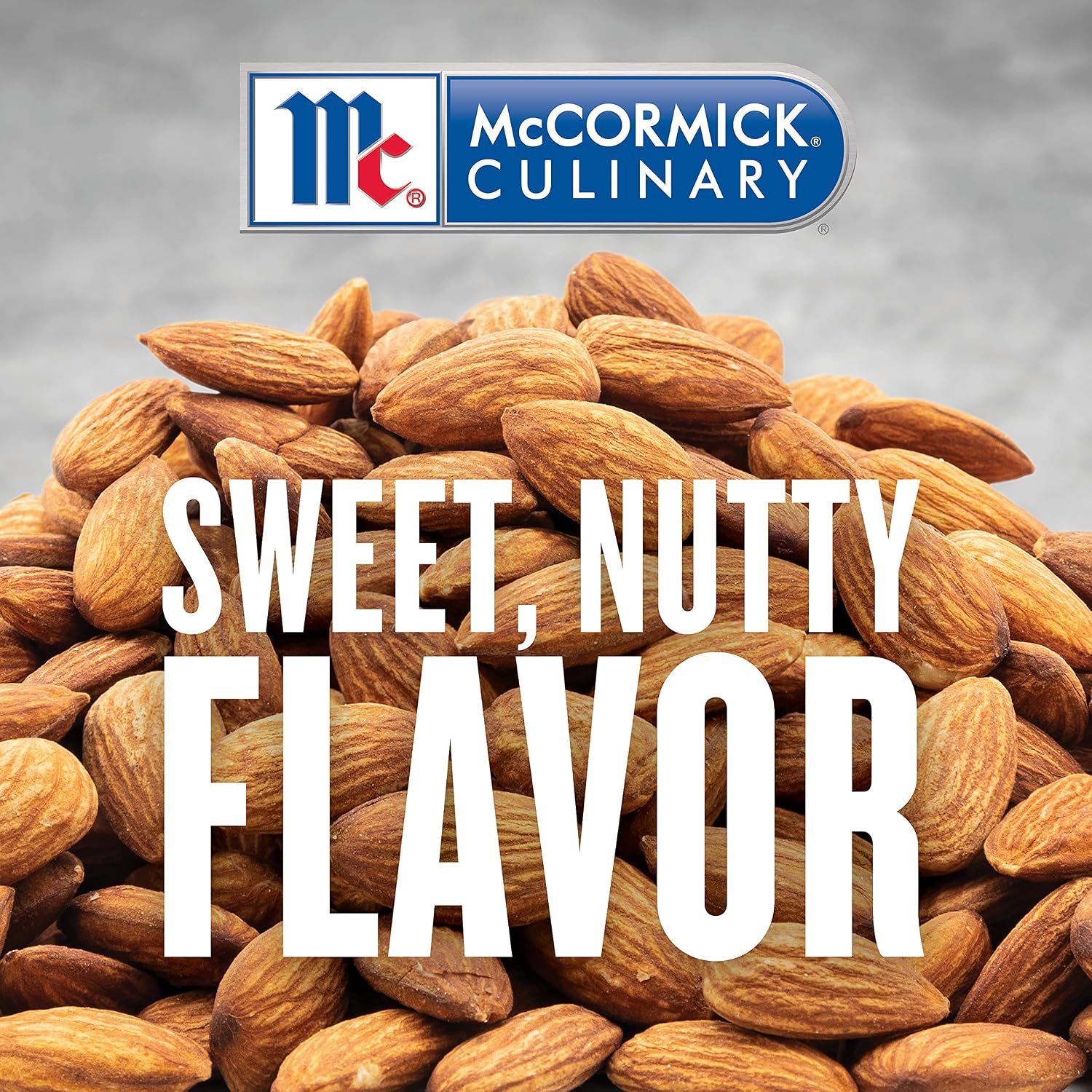
Here’s an honest admission: for high-heat applications — a batch of almond biscotti, a sheet cake going out to fifty people at a school event — the practical difference between a well-made imitation and a pure extract compresses considerably. Cook’s Illustrated, in their almond extract tasting, noted that in baked applications at temperatures above 325°F, trained tasters had more difficulty distinguishing pure from imitation than they expected going in.
LorAnn Oils’ imitation almond flavor is the professional-grade version of the budget pick. It’s widely used in candy-making and high-volume commercial baking because it’s consistent, potent, and cost-effective. The label is straightforward about what it is — synthetic benzaldehyde, clearly identified as “imitation.” It’s not pretending to be something it isn’t.
Best for: High-heat baking at volume, candy-making, school and community-scale production where unit economics matter.
Practical note: Start at half the quantity called for if a recipe specifies pure extract. Imitation runs roughly twice as potent by volume, and overshooting is easy.
McCormick
$11.46
In stock on Amazon
Check price on AmazonMid-Tier Pick: Nielsen-Massey Pure Almond Extract
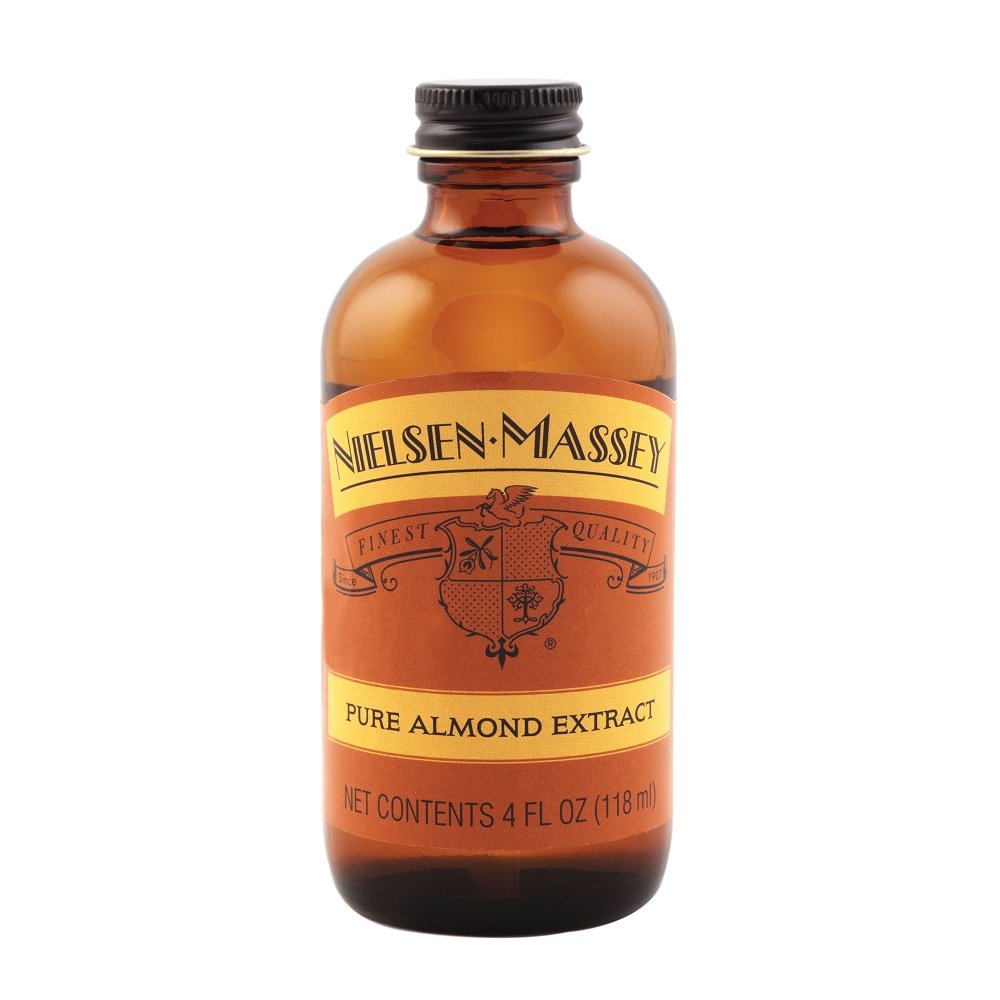
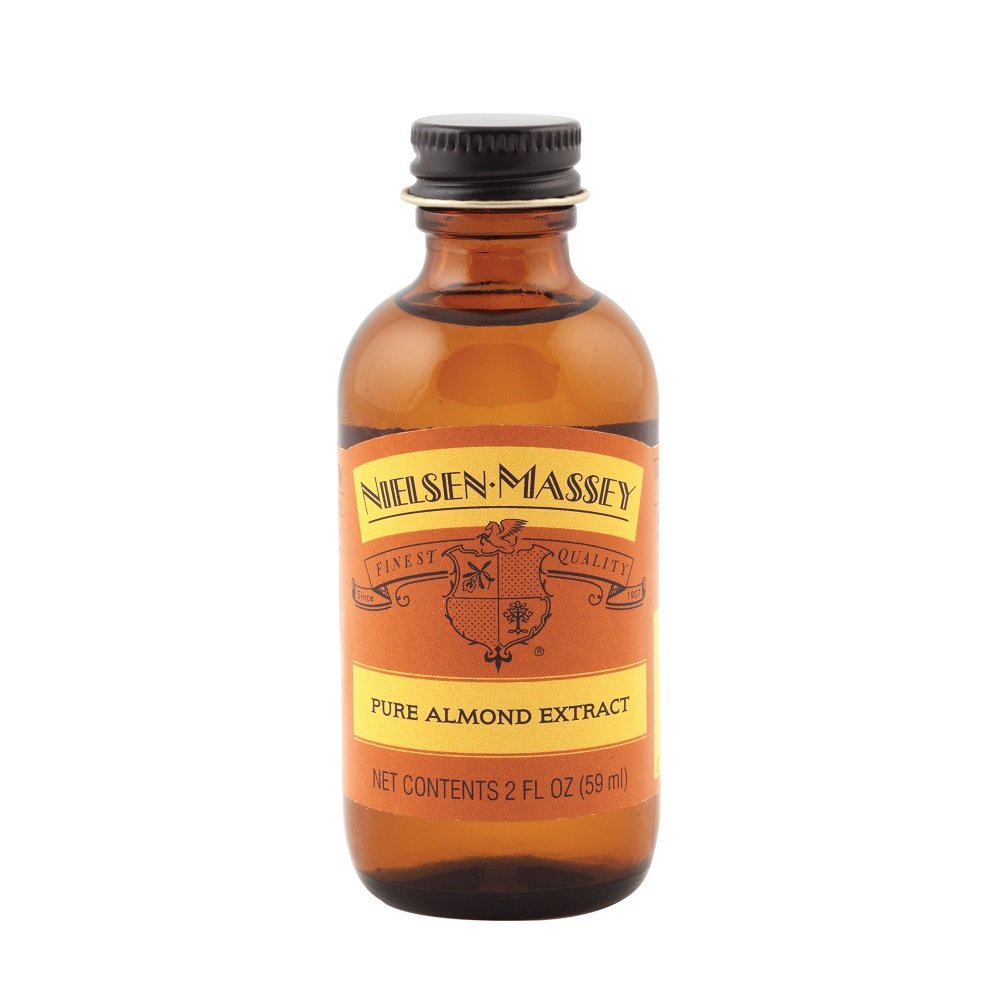
Nielsen-Massey Pure Almond Extract is the clearest upgrade from imitation for most intermediate bakers. It is derived from natural botanical sources, the label is transparent about its “natural flavor” formulation, and users across multiple editorial reviews — including Food and Wine’s round-up “Best Baking Extracts” — report a cleaner finish than grocery-store imitation options, with less of the artificial-cherry-candy note that can accompany synthetic versions. At roughly $10–$14 for 2 oz at retail in May 2026, it sits in a sensible range for a pantry staple you’ll use in small quantities over an extended period.
The tradeoff: Nielsen-Massey’s almond extract is formulated to be approachable and consistent, which means it leans toward the softer, sweeter end of the spectrum. Serious Eats’ round-up “The Best Almond Extracts for Baking” specifically calls it out as a reliable choice for bakers who want dependable flavor without the intensity of a bitter almond formulation. If you want that complexity, keep reading.
Best for: Buttercream, panna cotta, glaze, no-bake fillings, sugar cookies, shortbread — any application where almond is a supporting note and you want clean flavor with a graceful finish.
Nielsen-Massey
$12.99
In stock on Amazon
Check price on AmazonPremium Pick: Boyajian Pure Almond Extract
Boyajian Pure Almond Extract comes up repeatedly in professional pastry contexts. Food and Wine’s “Best Baking Extracts” round-up and multiple pastry community discussions name it as a go-to for bakers who want the extract to do serious sensory lifting. It is a bitter almond-type formulation, which means it runs more intense and more complex — reviewers consistently describe a dark-fruit undertone alongside the core benzaldehyde note that distinguishes it from sweeter commercial formulations.
In a French buttercream or an almond financier, the difference is unmistakable. The Kitchn’s article “What Is Almond Extract Made From?” points toward exactly this kind of formulation when discussing extracts that carry aromatic co-compounds preserved through natural botanical sourcing — the trace volatiles that round out the flavor and prevent one-dimensional synthetic sharpness.
Practical note: Because it is more potent and more complex, Boyajian rewards careful dosing. In a frangipane tart or a batch of amaretti, it elevates. In a sugar cookie where almond should be a whisper, it can easily become the only thing you taste. King Arthur Baking’s “Extracts and Flavorings Guide” guidance about adjusting by half and tasting upward applies especially here.
Best for: Frangipane, financiers, amaretti, marzipan-based work, stone fruit pairings — any application where almond flavor is the headliner and you want depth, not just sweetness.
Rodelle
$19.99
In stock on Amazon
Check price on AmazonBulk Professional Pick: OliveNation Pure Almond Extract (Gallon)
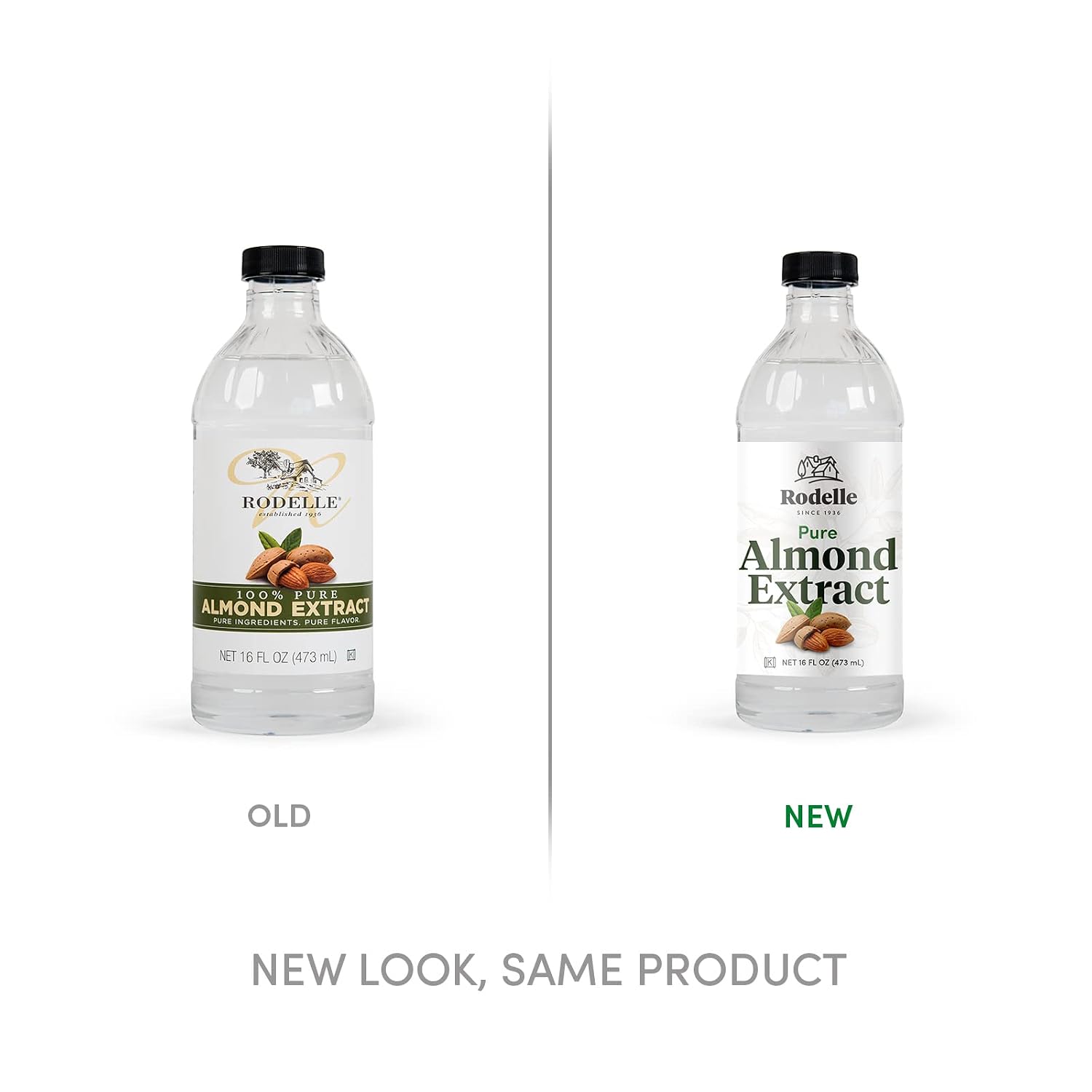
For production kitchens where unit economics matter, gallon-size pure almond extract is the right conversation. OliveNation’s pure almond extract in gallon format comes with published specification sheets detailing natural flavor sourcing — documentation that matters when you’re scaling recipes and need batch-to-batch consistency, or when your health department inspector asks what’s in the case on your prep shelf.
The cost-per-use math is straightforward: at typical usage rates of ½ to 1 teaspoon per batch, a gallon runs a small bakery operation for months. The premium over imitation bulk product is real but modest when amortized across production volume. Serious Eats’ “The Best Almond Extracts for Baking” makes the point that once you’ve settled on a pure extract whose flavor profile matches your house style, buying at scale is the sensible move for any kitchen producing more than a few dozen units per week.
Best for: Small bakery production runs, wholesale pastry operations, commissary kitchens — any context where you need consistent pure extract at scale without retail pricing.
Rodelle
$19.99
In stock on Amazon
Check price on AmazonThe Decision Rule
If you’ve read this far, you probably have a specific use case in mind. Here’s the simple frame:
If your almond flavor will survive significant heat (baked cookies, cakes, muffins above 325°F) and you’re producing at volume → imitation or professional bulk pure are both defensible. Use half the volume of imitation versus pure, and taste before committing to a batch.
If your almond flavor is load-bearing in a cold or lightly cooked application (buttercream, panna cotta, glaze, no-bake filling) → pure extract, full stop. The finish difference is noticeable in these contexts. Boyajian or Nielsen-Massey depending on how prominent you want the note.
If almond is your headliner flavor — frangipane, financiers, amaretti, marzipan work → bitter almond-type extract (Boyajian, or a WONF formulation that lists bitter almond explicitly). More complex, more interesting, needs careful dosing.
If you’re buying for a production kitchen and unit economics matter → gallon-size pure from OliveNation. The cost-per-unit math works out significantly better than retail, and you get a spec sheet to hand to your health department inspector.
The label tells you almost everything you need. Once you know that “pure” means botanical-sourced benzaldehyde and “imitation” means synthetic — and once you understand that bitter almond runs more complex than sweet almond formulations — the rest is matching the bottle to what you’re building. That’s label literacy, and it’s what separates a pantry staple from a formulation decision.
How the Tiers Compare
For readers weighing price against capability, here’s how the standout picks break down by budget level.
Best Budget Pick
At $11.46, this is the value option in this lineup — it covers the essentials without the premium-tier cost, the smart starting point if you’re weighing price against capability.
McCormick
$11.46
In stock on Amazon
Check price on AmazonBest Mid-Range Pick
At $14.99, this is the balanced choice — it closes most of the gap to the high end while staying well short of premium pricing, which is why it’s the pick most buyers actually land on.
Nielsen-Massey
$12.99
In stock on Amazon
Check price on AmazonBest Premium Pick
At $19.99, this is the top performer here — you pay for it, but if capability and longevity matter more than the upfront cost, this is the one to beat.
Rodelle
$19.99
In stock on Amazon
Check price on Amazon