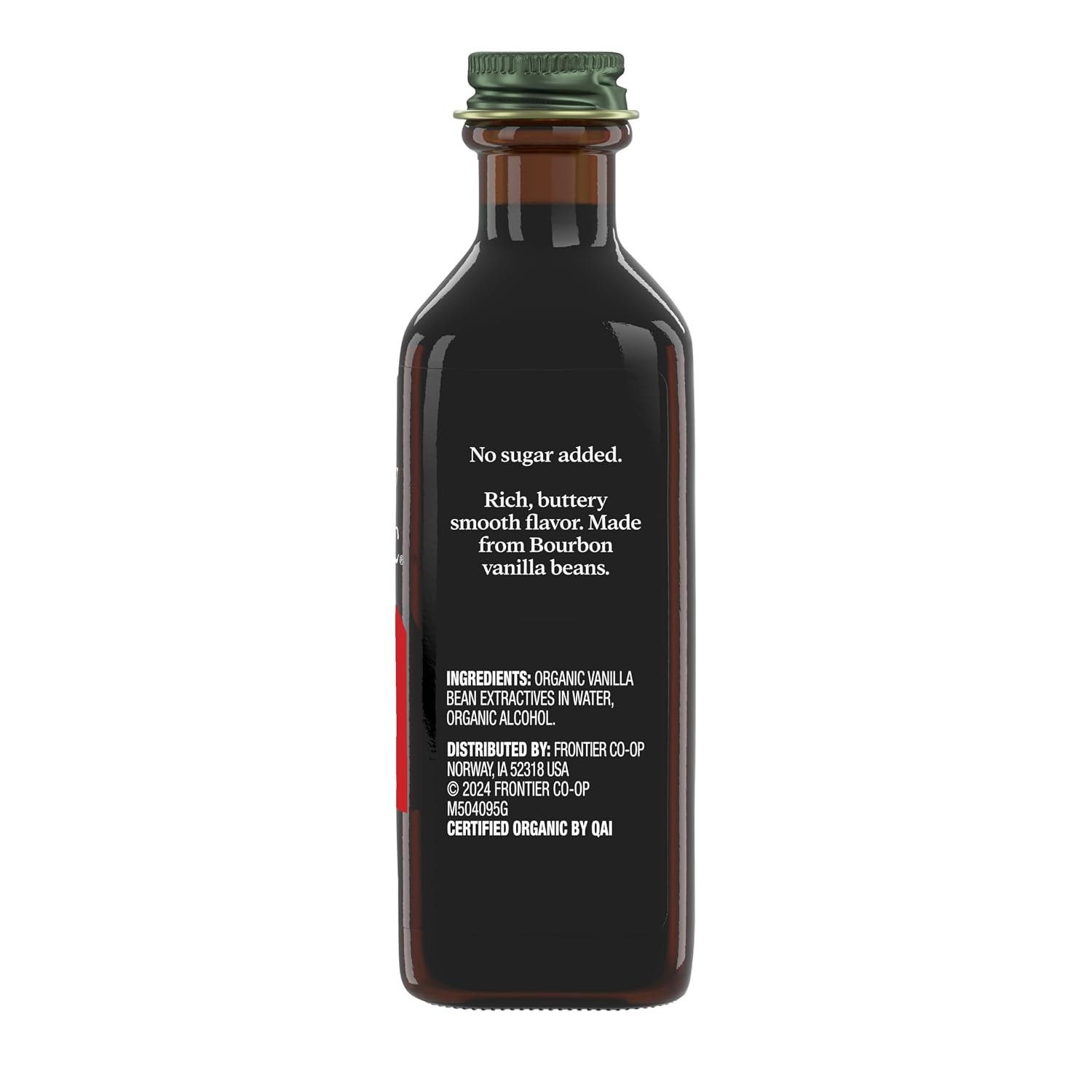
If you’ve ever picked up a bottle of vanilla extract at a specialty grocery store or scrolled through a baking supply site and noticed that some bottles wear a little green-and-white USDA Organic seal while others don’t, you’ve probably wondered what that actually means for your baking. The USDA Organic certification — run by the U.S. Department of Agriculture’s National Organic Program, or NOP — is a regulated label that sets real rules about how a product is grown, processed, and handled. It’s not just a marketing badge any brand can slap on a label. But here’s the honest truth: the seal guarantees some things rigorously and leaves other things — things that matter a lot to serious bakers — entirely unaddressed. This guide walks you through exactly where the certification has teeth, where it goes quiet, and how to use that knowledge to make a smarter buying decision, whether you’re picking a single bottle for a wedding cake or sourcing a gallon jug for a production kitchen.
| EDITOR'S PICKOrganic Vanilla Extract - Made… | Mid-tier[Simply Organic Pure Madagascar…](https://www.amazon.com/dp/B0002UN7PI?tag=greenflower20-20) | Budget pick[Simply Organic Pure Madagascar…](https://www.amazon.com/dp/B000VKA33I?tag=greenflower20-20) | |
|---|---|---|---|
| Size | 32 fl oz | 4 fl oz | 2 fl oz |
| Gluten-Free | — | ✓ | — |
| Sugar-Free | — | ✓ | ✓ |
| Price | $49.99 | $13.96 | $6.98 |
| See on Amazon → | See on Amazon → | See on Amazon → |
What the USDA Organic Seal Actually Certifies
Let’s start with what the seal does guarantee, because this part is real and meaningful.
The USDA National Organic Program sets mandatory standards that certified producers must meet. For vanilla extract, those standards touch three distinct layers of the supply chain:
1. The vanilla beans themselves. Organic certification requires that the beans be grown without synthetic pesticides, synthetic fertilizers, or genetically modified organisms (GMOs). The farms must be inspected and certified by a USDA-accredited certifying agent — a third-party organization like Oregon Tilth, CCOF, or Quality Assurance International. This isn’t self-reported; it involves documentation, farm visits, and annual renewal. That’s a meaningful guarantee for growers in Madagascar, Indonesia, Tahiti, Tonga, and Uganda, where conventional vanilla cultivation can involve synthetic agrochemicals.
2. The carrier alcohol. Pure vanilla extract, by FDA standard of identity (21 CFR Part 169), must contain at least 35% alcohol by volume. For a bottle to wear the USDA Organic seal, that alcohol must itself be certified organic — typically organic cane alcohol or organic corn alcohol. This is where costs escalate. Organic grain or cane alcohol runs meaningfully more expensive than conventional food-grade ethanol, and that cost flows directly into the retail price.
3. Any additional ingredients. Some vanilla extracts include small amounts of glycerin (used as a co-solvent to improve vanilla compound extraction and body) or water. For certified organic status, these must also meet organic standards or be on the NOP’s approved materials list.
The USDA NOP’s regulations are published and publicly searchable under the Agricultural Marketing Service’s National Organic Program documentation. Any certifying agent must follow the same federal baseline, which means a USDA Organic vanilla extract from a brand you’ve never heard of is operating under the same legal floor as one from an established name.
What the Seal Doesn’t Guarantee — The Gaps That Matter to Bakers
This is where practitioners need to slow down, because the certification framework has several notable silences.
Flavor quality and vanillin concentration. The USDA organic seal says nothing — zero — about the sensory character of the extract. It doesn’t regulate how long the beans were cured, what extraction method was used (cold maceration vs. percolation vs. heat-assisted extraction), or the resulting vanillin concentration. Per FDA regulations, a “pure” vanilla extract must hit a minimum of 1 fold — meaning one unit of vanilla beans extracted into one unit of alcohol-water solution, yielding roughly 35% alcohol. But it can also be 2-fold, 3-fold, or higher, which dramatically affects flavor intensity. The USDA seal doesn’t distinguish between a barely-compliant 1-fold organic extract and a rich 2-fold organic extract. You need to read the full label for that.
Single-origin identity. Organic certification doesn’t verify or guarantee the geographic origin of the beans inside the bottle. A bottle can be USDA Organic and contain a blend of beans from multiple countries — Madagascar, Indonesia, and Papua New Guinea combined — without any disclosure required beyond “vanilla bean extractives.” If origin matters to your formulation (and for high-stakes applications like a Tahitian vanilla panna cotta or a Bourbon-type buttercream, it should), look for single-origin language on the label separately from the organic seal. These are different claims governed by different rules.
Fair trade or farmer income. The organic seal makes no claim about whether vanilla farmers were paid fairly. This is sometimes conflated with organic certification, but they are entirely separate label programs. Brands like Heilala Vanilla have made public commitments to cooperative sourcing models in Tonga, and their brand materials describe direct relationships with farming families — but that story lives in their sourcing disclosures, not in the USDA seal itself. If supply-chain ethics matter to your sourcing decisions (and for many artisan bakeries building a brand story, they do), look for Fair Trade USA or direct-trade language alongside the organic certification.
Organic doesn’t mean “no additives.” A small number of non-organic substances are permitted in organic products under the NOP’s National List of Allowed and Prohibited Substances. Propylene glycol — a synthetic carrier sometimes used in lower-quality extracts — is prohibited in organic certified products, which is actually a plus. But read labels carefully anyway. Some products marketed with organic-adjacent language (“made with organic vanilla”) are not fully certified and can contain conventional ingredients.
The Price Reality: What You’re Paying For
Here’s where the decision math gets concrete.
By the numbers: organic premium in vanilla extract (approximate 2026 retail)
| Format | Conventional pure vanilla | Certified organic vanilla |
|---|---|---|
| 4 oz / single-strength | $12–$18 | $18–$28 |
| 8 oz / single-strength | $18–$30 | $28–$45 |
| 1 gallon / single-strength (bulk) | $80–$140 | $130–$220 |
The premium runs roughly 40–65% over comparable conventional pure vanilla, depending on brand and channel. At the gallon level — where professional buyers at operations sourcing through OliveNation or Spice Jungle are making volume purchasing decisions — that gap is material enough to warrant explicit justification.
Where does that premium go? A meaningful portion goes to the organic alcohol (organic cane alcohol can cost 2–3x conventional food-grade ethanol per gallon, per industry sourcing discussions), a portion to certified-organic bean sourcing and the certification audit process itself, and a portion to brand positioning and smaller production runs.
The flavor payoff of the organic certification itself? Zero, as noted above — flavor is determined by bean origin, curing quality, and extraction method, not by the organic designation. What you’re buying is documentation of cleaner inputs and a regulated production chain, not better flavor by default.
Organic Vanilla Extracts Worth Knowing
A few brands have built genuine organic programs that serious bakers reference regularly.
Nielsen-Massey offers a USDA Organic Madagascar Bourbon Pure Vanilla Extract that is one of the most widely reviewed organic options in the enthusiast and professional segment. Per published brand specifications, it uses cold extraction, which the company describes as preserving more of the complex flavor compounds in the bean. Reviewers across aggregated professional baking communities note the characteristic warmth and creamy depth of Bourbon-type vanilla, present in the organic version as reliably as in their conventional pure extract. The organic version sits in the upper range of the 4 oz price band — typically $22–$28 at retail — making it a defensible choice for home bakers who want both cleanliness of ingredients and a known flavor profile.
Heilala Vanilla, based in New Zealand and sourcing from cooperative growers in Tonga, produces a certified organic option within their line. Their brand materials emphasize a single-origin Tongan flavor profile — florally distinct from Madagascar Bourbon types, with a lighter, more delicate character. Serious Eats’ vanilla coverage notes that Tongan and Tahitian-type vanillas tend to show more floral and fruity character compared to the richer, woodier Bourbon profile, which makes them particularly interesting in applications where the vanilla isn’t competing with heavy butter or chocolate. The organic certification on the Heilala product adds a layer of supply-chain documentation to an already differentiated origin story.
Singing Dog Vanilla is a smaller producer with a USDA Organic certified line and a strong following among natural-foods-oriented bakers. Their sourcing focuses on Indonesian vanilla, which typically shows a smokier, slightly more assertive profile compared to Madagascar Bourbon types. King Arthur Baking Company’s editorial vanilla resources note that Indonesian vanilla can be particularly interesting in spiced applications — think carrot cake, spiced shortbread, or molasses cookies — where its bolder character complements rather than competes.
The Practitioner’s Decision Rule
If you’re making a buying decision right now — whether it’s a single bottle for a high-stakes commission or a gallon purchase for a production kitchen — here’s the clean if/then framework:
If your clients, brand, or menu cards make “clean ingredient” or “organic” claims, the USDA seal is non-negotiable. It’s the only regulated claim that gives you third-party audit documentation. Don’t substitute “natural” language or “made with organic vanilla” phrasing — those are not the same legal standard and won’t survive a diligent customer’s label reading.
If you’re optimizing purely for flavor performance, the organic seal is incidental. Spend your research time on origin type (Madagascar Bourbon vs. Tahitian vs. Tongan), fold strength (1-fold vs. 2-fold), and extraction method. A well-made conventional 2-fold Madagascar extract will outperform a carelessly produced 1-fold organic extract in virtually every sensory test.
If you’re making volume purchases at the gallon level, run the math on the 40–65% premium against your actual need. If you’re baking vanilla-forward products where the extract’s flavor is primary — custards, Bavarian creams, simple butter cakes — the premium for organic is defensible and potentially part of your own brand positioning. If vanilla is a background note in a complex formula, the cost-per-use math probably doesn’t favor the premium.
If origin transparency matters to you — for sourcing storytelling, for flavor consistency, or because you’re dialing in a specific profile — buy the organic label and a single-origin label on the same bottle. They’re additive, not redundant. Brands like Heilala and Nielsen-Massey offer products that carry both, and that combination gives you documented origin, regulated production practices, and a predictable sensory profile you can build formulas around.
The USDA seal is a real guarantee about real things. It just doesn’t guarantee the things that make vanilla extract taste extraordinary. Use it as one filter in a multi-factor decision, not as a shortcut for the whole decision.