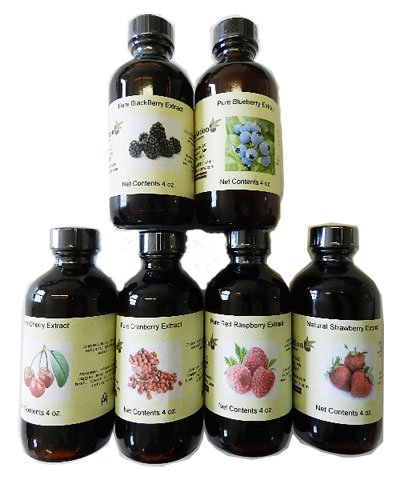
If you’ve ever grabbed a bottle labeled “strawberry flavoring” off a grocery store shelf and wondered why your finished cake tasted like a strawberry-scented candle rather than an actual berry, you’ve already bumped into the central problem this article addresses. A flavoring extract is a concentrated solution — typically alcohol-based — that captures the aromatic compounds from a real source ingredient: fruit, flower, herb, or spice. “Natural” on the label means those compounds were derived from actual botanical sources, not synthesized from petrochemicals in a lab. The difference matters in baking because natural extracts tend to behave more like the real ingredient: they interact with fat, sugar, and heat in ways that read as food rather than fragrance. This guide focuses specifically on fruit and floral extracts — think raspberry, lemon, lavender, and rose — and on two brands that attract the most serious buyer attention right now: OliveNation and Bakto Flavors. We’ll walk through their extract sets versus single-bottle buying, surface the tradeoffs the reviews keep raising, and give you a clear decision framework by the end.
| EDITOR'S PICKPure Chocolate | Mid-tierBakto Flavors Natural Fruit Fla… | Budget pickLorAnn Oils Strawberry Bakery E… | |
|---|---|---|---|
| Bottle count | 4 | 6 | — |
| Volume | 2 oz each | 1 oz each | — |
| Flavor lineup | Chocolate, Raspberry, Rose, Lavender | Mango, Blueberry, Cherry, Banana, Raspberry, Strawberry | Strawberry |
| Gluten-free | — | — | ✓ |
| Keto friendly | ✓ | — | ✓ |
| Flavor variety | 4 | 6 | 1 |
| Price | $45.00 | $25.99 | $8.29 |
| See on Amazon → | See on Amazon → | See on Amazon → |
What Makes a Fruit Extract Actually Taste Like Fruit (Instead of Candy)?
The short answer is: origin, extraction method, and the absence of masking sweeteners.
Reviewers of OliveNation berry extracts return repeatedly to one specific observation: these don’t taste artificial. That’s not a small thing. The comparison that keeps surfacing in aggregated buyer feedback is to fruit liqueurs — the kind a pastry chef might reach for when they want actual fruit character in a filling, not a shortcut simulacrum. The flavor cue those reviewers are picking up on is what King Arthur Baking Company, in their overview of extracts and emulsions, describes as “dimensional” flavor — aroma compounds that include both top notes (bright, volatile) and base notes (deeper, rounder) rather than the single synthetic molecule that makes imitation strawberry taste like strawberry-flavored medicine.
Here’s the technical detail that matters most for baking applications: OliveNation’s fruit extracts contain no added sugar and no corn syrup. This gets mentioned in buyer reviews as a health-adjacent detail, but for bakers, the real advantage is flavor control. When an extract contains sugar, you’re adding an untracked sweetness variable to every formula you use it in. That matters in a dacquoise with a precise sugar structure, or a macaron shell where even a small change in moisture (corn syrup is hygroscopic — it pulls moisture from the air) can collapse your feet. A clean, unsweetened extract lets you scale your recipe’s sugar independently. Serious Eats’ coverage of natural versus artificial flavors makes this same point from the formulation side: flavor integrity depends on isolating the flavoring variable from other functional ingredients.
Set Buying vs. Single Bottles: When the Math Favors Each
This is where the decision gets practical, and it splits cleanly depending on your situation.
By the numbers:
- A typical single-bottle natural fruit extract (1–2 oz): $6–$12 per flavor
- A 4–6 bottle fruit extract set: $22–$38 total, or roughly $5–$7 per flavor
- Per-flavor savings in a set: 20–40% versus buying individually
- Break-even point: if you’ll use 3 or more flavors within 12–18 months, a set almost always wins on cost
The case for sets is strongest when:
-
You’re building a flavor library from scratch. Intermediate bakers who’ve outgrown vanilla-only baking but haven’t yet committed to specific flavor directions benefit enormously from the sampling function a set provides. You learn what raspberry extract actually smells like before you buy a 4-oz bottle of it.
-
You run a small-batch operation with variable seasonal menus. A bakery doing summer berry tarts and spring floral cakes doesn’t need industrial quantities of any single extract, but needs several reliably on hand. Sets solve the “one-of-each” sourcing problem efficiently.
-
You’re testing flavor pairings. Pairing raspberry with rose, or lemon with lavender, is a formulation decision you can’t make confidently from a spec sheet. Having both in hand — especially from the same brand, so the base extract quality is consistent — lets you actually run your own blending experiments.
The case for single bottles wins when:
-
You already know exactly which flavor you need and you’ll use it at volume. If you make lemon bars every week, a single large bottle of lemon extract at a lower per-ounce cost outperforms any set.
-
You’re in a specialty application where one flavor dominates — lavender shortbread, rose Turkish delight, a raspberry Swiss meringue buttercream. Buy depth, not breadth.
-
Shelf life is a concern. Opened extract bottles lose potency over time — more on this in the FAQ — and buying a six-pack when you’ll only realistically use two flavors heavily means four bottles degrading slowly in your cabinet.
Floral Extracts: The Dosing Problem Is Real
Floral extracts — particularly lavender and rose — are where the most cautionary language in the baker community lives, and for good reason.
The Bakto floral set generates a warning that experienced reviewers phrase nearly identically across multiple purchase reviews: one drop too many and your buttercream crosses from “yum” to “perfume.” This isn’t an exaggeration. Fine Cooking’s coverage of working with floral flavors in pastry makes the same point structurally: floral aromatic compounds are among the most volatile and potent in the extract category, meaning the sensory threshold between “elegant” and “soapy” is narrower than it is for fruit flavors, which have more forgiveness in the upper dose range.
Here’s a working dosing framework for floral extracts in buttercream, drawn from patterns in professional baker reviews and The Kitchn’s guidance on flavoring buttercream without overpowering it:
- Start at ¼ teaspoon per cup of finished buttercream for both lavender and rose
- Taste after mixing thoroughly before adding more — floral compounds need a moment to distribute and bloom
- Add in ⅛-teaspoon increments from there, not ¼-teaspoon jumps
- Stop before it tastes strong enough — floral flavors intensify slightly as buttercream sits
The Bakto premium set draws two particularly credible endorsements worth highlighting. A reviewer identifying themselves as a food professional singled out the lavender extract specifically, describing it as the cleanest lavender flavoring they’d encountered without medicinal or soapy undertones — a meaningful distinction since many lavender extracts tip into those registers quickly. Separately, a macaron baker described using the rose extract in Swiss meringue buttercream — a technically demanding application, because Swiss meringue (made by whisking egg whites with hot sugar syrup) is less forgiving of off-notes than American buttercream — and found the floral character held up as elegant rather than perfume-adjacent. These are use-case-specific endorsements, not generic praise, and that specificity is worth weighting.
The Drink Application Nobody Expects (But Should)
One of the more surprising themes in Bakto fruit set reviews is the use case that goes well outside the oven: flavoring filtered water and beverages.
Reviewers describe adding a small amount of fruit extract to a glass or pitcher of water as a cost-effective, zero-sugar alternative to flavored drink products — the math comes out to pennies per serving. For bakers specifically, this opens a useful secondary utility: if you buy a set for baking purposes, you’re not locked into using the bottles only when you have a cake in progress. The lemon extract that flavors your pound cake can also go into sparkling water at your bench.
This matters for the set-buying calculus. If a bottle of, say, peach extract doesn’t get called into a recipe for three months, it’s not sitting idle — it has a secondary use case that extends its functional life in your kitchen.
Frequently Asked Questions
How do I know if a fruit extract is strong enough to survive baking without tasting artificial?
The clearest signal from aggregated buyer experience is the liqueur comparison — reviewers consistently use it as a quality shorthand. If a fruit extract reads as dimensional (you get multiple fruit notes, not one flat synthetic spike) before baking, it will typically hold up through moderate heat. High-heat applications like cookies or layer cakes above 350°F do cause some volatile aromatic loss, which is why Serious Eats recommends slightly higher initial dosing in baked applications versus fillings or buttercreams that won’t be heated. A natural extract without sugar or syrup filler is also less likely to caramelize or develop off-flavors under heat than one with added sweeteners.
What is the right amount of lavender or rose extract to use in buttercream before it tastes like soap?
Start at ¼ teaspoon per cup of buttercream. Taste after full mixing. Add in ⅛-teaspoon increments only. The “yum to perfume” line from Bakto floral set reviewers is essentially accurate — the margin is small. Err on the side of too little; you can always add a drop, but you can’t subtract one.
Can I use these fruit extracts to flavor drinks and infused water, not just baked goods?
Yes — and Bakto fruit set reviewers specifically call this out as a use case. The no-sugar, no-corn-syrup formulation of OliveNation extracts in particular makes them clean additions to water and beverages without adding sweetness. Start with a very small amount (a few drops per glass) and adjust up.
Do OliveNation or Bakto berry extracts contain sugar, and does that matter in recipes?
OliveNation reviewers explicitly note the absence of sugar and corn syrup as a reason they chose OliveNation over alternatives. For baking, this matters: unsweetened extracts don’t introduce uncontrolled sweetness or hygroscopic moisture into your formula. If you’re working with precision recipes — macarons, choux, Italian or Swiss meringue — this is a functional advantage, not just a dietary preference.
How long do opened fruit and floral extract bottles stay potent?
The general guidance from King Arthur Baking Company’s extract overview is that alcohol-based extracts, stored properly (cool, dark, tightly sealed), retain potency for 3–4 years after opening. Floral extracts — being more volatile — may show some aromatic fade at the 18–24 month mark if stored imperfectly. The practical test: smell the bottle before each use. If the aroma is flat or alcohol-forward without the floral character, potency has degraded.
The Decision Rule
If you’re building a flavor library and expect to experiment across multiple recipes in the next 12 months, a set is almost always the right entry point — the per-bottle savings are real, the sampling function is valuable, and the secondary use cases (drinks, infused water) extend the utility of bottles that don’t get used immediately in baking.
If you already know you need volume of one specific flavor — raspberry for a summer menu, lemon for a lemon bar program, rose for a macaron signature — buy a single larger bottle from whichever brand’s quality signals match your application, and don’t pay for breadth you won’t use.
For floral applications specifically: start with a set to calibrate your palate and dosing instincts before committing to a larger bottle. The risk of over-extracting a floral note into a full batch of buttercream on a wedding order is real, and the set-buying approach gives you a lower-stakes way to learn where your personal taste threshold sits before the stakes are high.