If you’ve ever stood in the baking aisle — or scrolled a supplier website at midnight — staring at two bottles of “pure vanilla extract” priced $15 apart with no obvious explanation, you’re not alone. Pure vanilla extract is vanilla beans soaked in alcohol: that’s the simple version. The U.S. Food and Drug Administration requires that a product labeled “pure” contain at least 13.35 ounces of vanilla beans per gallon of liquid, at a minimum of 35% alcohol. “Madagascar Bourbon” on the label means the beans come from Madagascar or the nearby Bourbon Islands (Réunion and Comoros), and they belong to the Vanilla planifolia species — the one responsible for the rich, creamy, almost caramel-forward vanilla flavor most bakers picture when they close their eyes. This guide breaks down what separates the bottles worth buying, what the cost-per-teaspoon math actually looks like, and which extract belongs in which situation — whether you’re baking one celebration cake or sourcing a professional bulk bottle for a bakery run.
What “Madagascar Bourbon” Actually Guarantees — and What It Doesn’t
The phrase “Madagascar Bourbon” tells you the species and the general growing region. It does not tell you:
- The bean grade (extraction-grade beans versus prime or gourmet curing)
- The extraction fold (1x, 2x, or higher concentration)
- Whether the product is single-origin or blended from multiple farms across the island
- The harvest year or storage conditions before extraction
This is the first label-reading skill worth building. A 1-fold extract contains the FDA-minimum bean content. A 2-fold (sometimes called “double-strength”) contains twice as many beans per gallon, which means you use half as much in a recipe — critical context when doing cost-per-teaspoon math. Some professional-grade bulk extracts are sold at 2x fold without prominent labeling, so checking the product specification sheet before ordering in volume can meaningfully change your cost calculus.
The King Arthur Baking Company’s vanilla extract buying guide makes a point that home bakers often miss: extraction quality matters as much as bean origin. Beans harvested underripe or cured too quickly produce an extract with muted, almost sharp flavor — less of the buttery, vanillin-forward warmth that makes Madagascar Bourbon the default choice for custards, buttercreams, and pound cakes.
Cook’s Illustrated’s vanilla extract taste test — which evaluated extracts across baked and unbaked applications — found that even within pure Madagascar Bourbon extracts, tasters noticed meaningful differences in flavor complexity, particularly in unbaked preparations like pastry cream, where the alcohol cooks off and the full nuance of the extract is exposed. The Kitchn’s buying coverage echoes this point, noting that pastry cream and whipped cream are the most demanding tests for extract quality precisely because nothing masks an off note.
The Four Bottles Most Likely on Your Shortlist
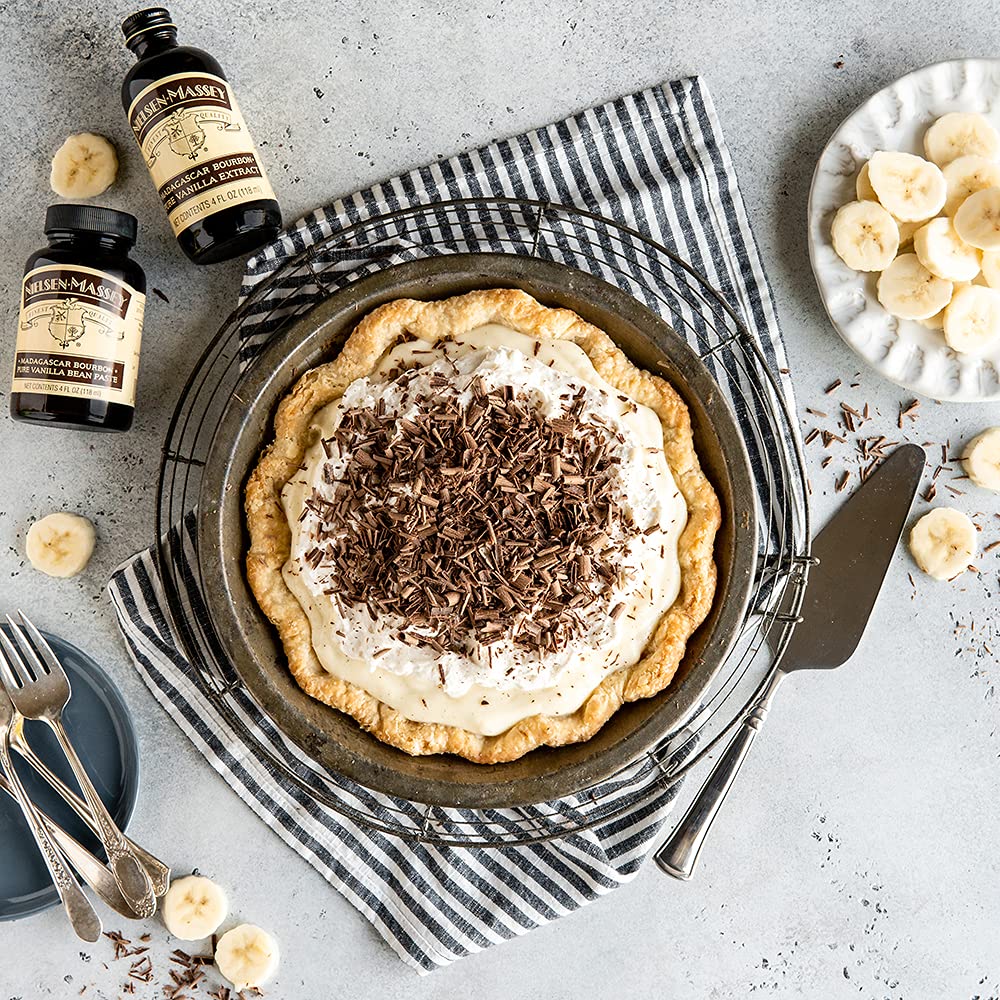
Nielsen-Massey Madagascar Bourbon Pure Vanilla Extract
Nielsen-Massey
$34.14
In stock on Amazon
Check price on AmazonNielsen-Massey is where most serious home bakers land when they graduate from the grocery-store imitation bottle. Their Madagascar Bourbon line is a 1-fold extract — standard concentration — produced using a cold extraction process that the company’s published product specification documentation credits with preserving more of the flavor compounds that heat can degrade. The flavor profile, as characterized consistently across long-run baker reviews and noted in Serious Eats’ vanilla extract evaluation, skews rich and creamy with a pronounced vanillin sweetness and a clean finish. It performs reliably across both baked and unbaked applications.
The 4-oz bottle typically runs $15–$18 retail; the 8-oz runs $22–$28. For a home baker doing weekly baking, this is the practical sweet spot — quality that outperforms any imitation extract by a measurable margin, at a price that doesn’t require a business justification.
Best for: Everyday elevated baking. Buttercream, pound cake, cookie dough, custard. The workhorse bottle for a home kitchen.
Nielsen-Massey Madagascar Bourbon Vanilla Bean Paste
Nielsen-Massey
$34.14
In stock on Amazon
Check price on AmazonPaste is extract plus vanilla bean seeds — the tiny black specks — suspended in a sugar syrup base. Same origin, more visual impact. Nielsen-Massey’s paste runs roughly $20–$30 for 4 oz at standard retail, and 1 teaspoon of paste substitutes for 1 teaspoon of extract in most formulas.
The practical tradeoff: paste adds flecks that read as “artisan” in a crème brûlée or a vanilla bean cheesecake, but the sugar syrup base can affect moisture balance in delicate formulas — particularly macarons or very lean genoise batters where every gram of liquid matters. Bon Appétit’s coverage of the difference between vanilla extract and vanilla bean paste makes exactly this distinction, advising bakers to reach for paste when visual impact matters and to return to extract when the formula is tight. Epicurious’s vanilla buying guide similarly recommends paste for custard-based desserts and extract for high-heat baked applications where the seeds would be invisible anyway.
Best for: Anything you’re plating. Panna cotta, crème brûlée, pastry cream, vanilla bean buttercream where the specks are part of the presentation.
Heilala Single Origin Tongan Vanilla Extract
Nielsen-Massey
$101.50
In stock on Amazon
Check price on AmazonHeilala sources from Tonga — not Madagascar — so technically this is Vanilla planifolia from a different island. It’s on this shortlist because it’s the most common comparison a buyer makes when evaluating whether to step up from Nielsen-Massey’s price point. Heilala’s published sourcing documentation emphasizes a direct grower partnership model and hand-pollination. The flavor profile is frequently described in aggregated editorial reviews as slightly floral and fruit-forward compared to the deeper, earthier character of Madagascar-grown beans — closer to a Tahitian lean without crossing fully into Tahitian territory.
Retail price runs $28–$45 for 1.69–2 oz. That’s a meaningful step up in cost-per-teaspoon, and it’s a step worth taking only when the flavor profile is an asset to your specific recipe.
Best for: White chocolate ganache, whipped cream, fruit-forward desserts where the floral note reads as elegant. Less ideal when you want the vanilla to disappear into a deeply caramelized baked good where Madagascar’s earthier depth is better camouflaged.
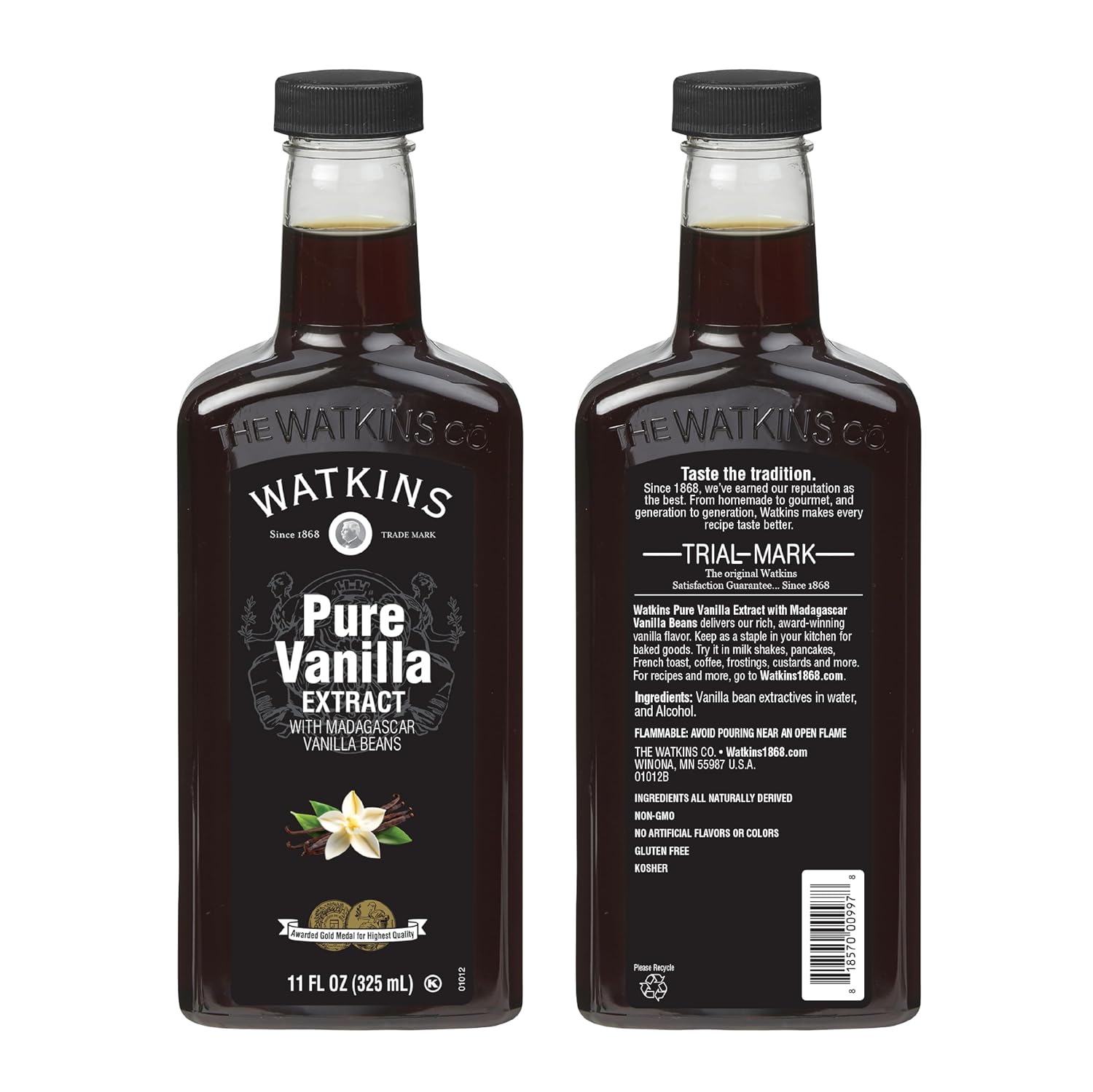
Bulk Professional-Grade Madagascar Bourbon Extract
Watkins
$19.65
In stock on Amazon
Check price on AmazonFor small-batch bakery owners or high-volume home bakers, the per-teaspoon math shifts dramatically at scale. Bulk pure Madagascar Bourbon vanilla extract from professional ingredient suppliers typically runs $80–$120 for a 32-oz bottle and $140–$200 for a full gallon, depending on fold and current bean pricing. At the gallon level, cost-per-teaspoon can drop to $0.22–$0.30, compared to $0.52–$0.67 for a retail 8-oz bottle — a gap that justifies the buying decision for any operation using more than a quart per month.
The risk: bulk extract requires appropriate dark, cool storage and has a practical use window. Purchasing more than you’ll use in 12–18 months introduces quality degradation risk that erodes the per-unit savings. The Serious Eats vanilla extract buying coverage notes that properly sealed extract stored away from heat and light holds its character well, but that bulk buyers should treat their storage conditions as part of the quality equation, not an afterthought.
Best for: Small-batch bakery operations, high-volume home bakers producing at holiday scale, and any operation where monthly vanilla use exceeds a quart.
By the Numbers: Cost-Per-Teaspoon at a Glance
| Product | Approx. Retail Price | Volume | Cost per Teaspoon | Tier |
|---|---|---|---|---|
| Nielsen-Massey Madagascar Bourbon (4 oz) | $16 | ~24 tsp | ~$0.67 | Nielsen-Massey — $34.14 |
| Nielsen-Massey Madagascar Bourbon (8 oz) | $25 | ~48 tsp | ~$0.52 | Nielsen-Massey — $34.14 |
| Nielsen-Massey Vanilla Bean Paste (4 oz) | $26 | ~24 tsp | ~$1.08 | Nielsen-Massey — $34.14 |
| Heilala Single Origin (1.69 oz) | $32 | ~10 tsp | ~$3.20 | Nielsen-Massey — $101.50 |
| Bulk Madagascar Bourbon (32 oz, 1-fold) | $95 | ~192 tsp | ~$0.49 | Watkins — $19.65 |
| Bulk Madagascar Bourbon (1 gal, 1-fold) | $170 | ~768 tsp | ~$0.22 | Watkins — $19.65 |
Prices reflect 2025–2026 market conditions. Madagascar crop volatility can shift bulk pricing by 15–30% seasonally. Verify current listings before committing to a gallon purchase.
The Variables That Move the Price — and Should Influence Your Timing
Madagascar accounts for the substantial majority of global vanilla supply. That concentration means a single cyclone season, a drought, or a spike in green bean theft — a documented and recurring issue in the island’s primary growing region — can compress global supply within a single harvest cycle and push extract prices up significantly at the retail level within 12–18 months.
Serious Eats’ buying guidance on vanilla extracts identifies this volatility as a core reason to buy ahead when prices soften — typically in years following strong harvests with good curing conditions. For professional buyers sourcing bulk, monitoring Madagascar crop reporting during the July–September harvest window and locking in pricing before Q4 demand peaks is a strategy that experienced purchasing managers cite as protecting margin annually.
For home bakers, the practical version is simpler: if you notice your usual bottle has jumped $5–$8 at your normal retailer, it’s not random. It’s most likely a bean-price ripple, and it usually moderates within a season or two. The King Arthur Baking Company’s vanilla buying guidance advises stocking up during price dips if you have proper storage conditions — a cool, dark pantry away from the stove is sufficient for most households.
The Decision Framework: Match the Extract to the Bake
You’re not picking the “best” vanilla in the abstract. You’re picking the right vanilla for a specific context. Here’s the decision map:
If you bake regularly and want to stop thinking about it: Nielsen-Massey 8-oz Madagascar Bourbon. Reliable, clean, widely distributed, predictable cost. Buy two when it goes on sale.
If the recipe is unbaked or the vanilla is the visible hero: Spring for the paste — Nielsen-Massey paste if you want maximum Madagascar Bourbon character, or Heilala if the recipe is fruit-forward and a floral note will read as elegant rather than distracting. As Bon Appétit notes, the visual argument for paste is strongest in custard-based and plated desserts where the speck is part of the signal.
If you’re a small-batch bakery owner using more than a quart per month: Run the per-teaspoon math on current bulk listings versus your per-unit cost at retail. At consistent usage, the crossover to bulk pricing almost always favors the gallon, at roughly $0.22–$0.30 per teaspoon versus $0.52–$0.67 at 8-oz retail.
If you’re formulating a new signature product and testing flavor direction: Buy small quantities of two or three profiles — Madagascar Bourbon, a Tahitian, possibly a Tongan like Heilala — and run a side-by-side in your specific formula. The base recipe context changes which profile wins. A vanilla-forward shortbread will reveal differences immediately; a chocolate cake will mask all but the loudest nuances.
If Madagascar prices are currently elevated: Consider buying one size up from your usual. The per-teaspoon math still favors the larger format even at inflated bean prices, and properly sealed extract stored in a cool, dark location does not meaningfully degrade for 24 months or more.
A Word on Label Honesty
The FDA standard of identity for pure vanilla extract is specific, but labeling gray areas still exist. “Natural vanilla flavor” is not the same as “pure vanilla extract” — it may contain vanilla but in a form or concentration that doesn’t meet the extraction standard. “WONF” (With Other Natural Flavors) means vanilla is present but blended with other natural flavor compounds. “FTNF” (From The Named Fruit) means the flavor derives only from the vanilla bean itself — a stronger authenticity signal worth recognizing when you see it.
The Kitchn’s vanilla extract buying coverage flags this distinction explicitly, noting that shoppers often pay pure-extract prices for products that are technically legal blends. The short checklist when evaluating an unfamiliar label: Does it say “pure”? Does it name the origin? Does it list the alcohol percentage? Does the ingredient list show only vanilla bean extractives, water, and alcohol — or does it include additional flavor compounds?
The cleaner the ingredient list, the closer you are to unfiltered bean character. At the prices Madagascar Bourbon extract commands — and given the role vanilla plays in nearly everything you bake — those thirty seconds of label reading are worth it every time.