If you’ve ever browsed LorAnn’s catalog and felt a little lost — there are two completely different product lines sitting right next to each other — you’re not alone. On one side you have the Super-Strength Flavor Oils, which come in tiny one-dram bottles (that’s about a teaspoon, roughly 3.7 milliliters) and are oil-based, meaning the flavor compounds are dissolved in a lipid carrier rather than alcohol or water. On the other side sit the Bakery Emulsions, which are water-based suspensions — the flavor is held in a stable mix of water and gum base so it blends easily into batters and frostings without separating. Both lines are made by LorAnn, both deliver intense flavor, and both have devoted fans. But they behave very differently once they hit your mixing bowl. Getting this wrong costs you an entire batch of ganache or a seized sugar pull. This article walks through the real decision points so you can stock the right format — or, as many serious bakers do, both — without guessing.
| EDITOR'S PICKLorann Oils Variety Bakery Emul… | Mid-tierLorann Oils Variety Bakery Emul… | Budget pick[LorAnn SS Tropical Variety pack](https://www.amazon.com/dp/B012BQ5W9O?tag=greenflower20-20) | |
|---|---|---|---|
| Type | Emulsion | Emulsion | Oil |
| Size per bottle | — | — | 1 dram (3.7 ml) |
| Flavors per pack | Multiple | Multiple | 4 varieties |
| Gluten-Free | ✓ | ✓ | — |
| Keto-Friendly | ✓ | ✓ | — |
| Price | $33.99 | $33.00 | $9.02 |
| See on Amazon → | See on Amazon → | See on Amazon → |
What’s Actually Inside Each Bottle
The chemistry here isn’t complicated, but it matters a lot.
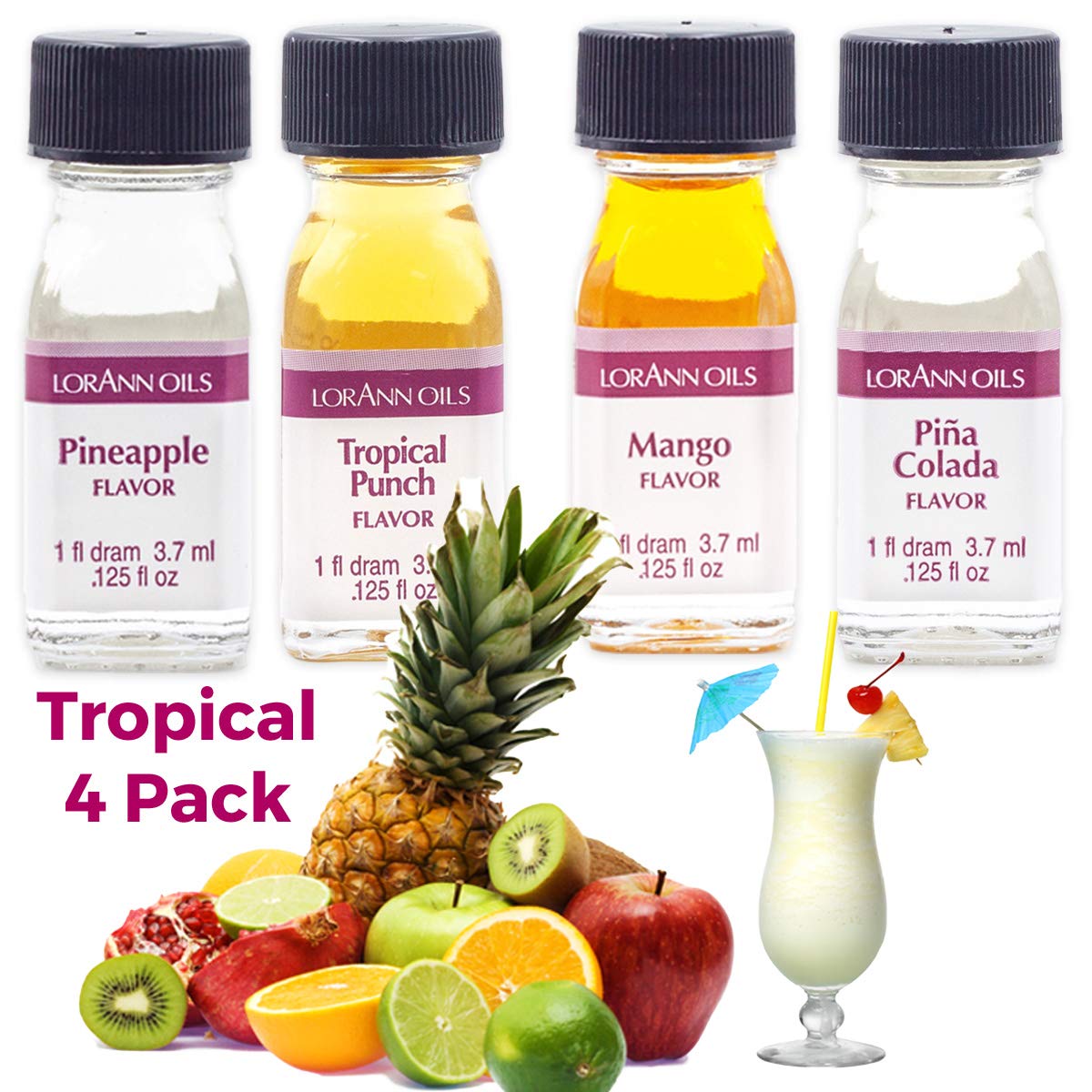
Super-Strength Flavor Oils are concentrated flavor compounds — either natural, nature-identical, or artificial, depending on the SKU — suspended in a food-grade oil carrier. Because they’re oil-based, they are natively compatible with fat-based applications: chocolate, candy coatings, hard candy pulls, caramel, and any confection where water introduction would cause problems. Candy making is perhaps the clearest example — even a small amount of water in a hot sugar batch causes crystallization or seizing, so the oil format is the safe call. The concentration is significant: per LorAnn Oils’ published product guidance on lorannOils.com (referenced here in plain text), the Super-Strength line runs roughly three to four times the potency of a standard grocery-store extract. That’s why the dram bottle — which feels absurdly small when you first hold it — is labeled to flavor a full batch.
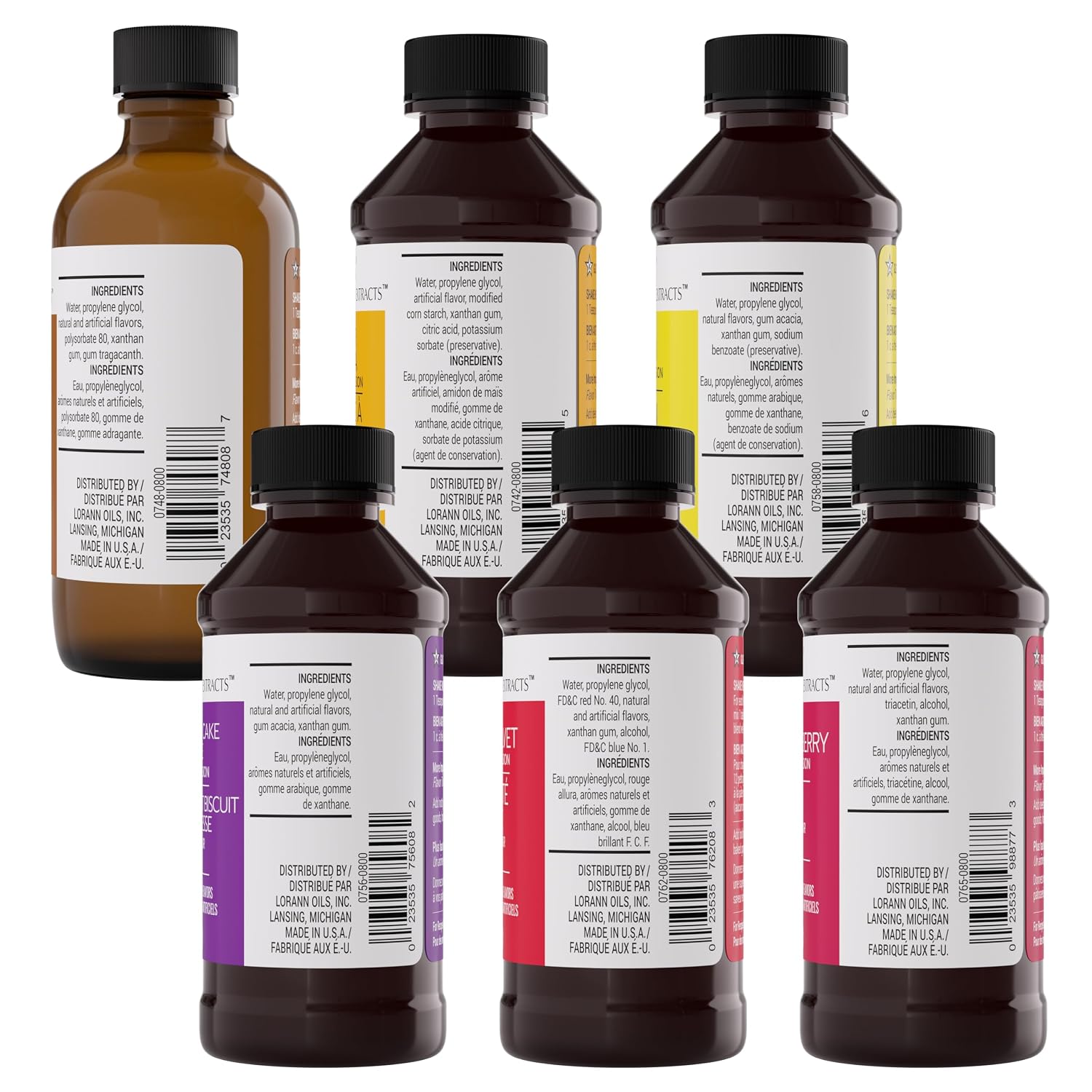
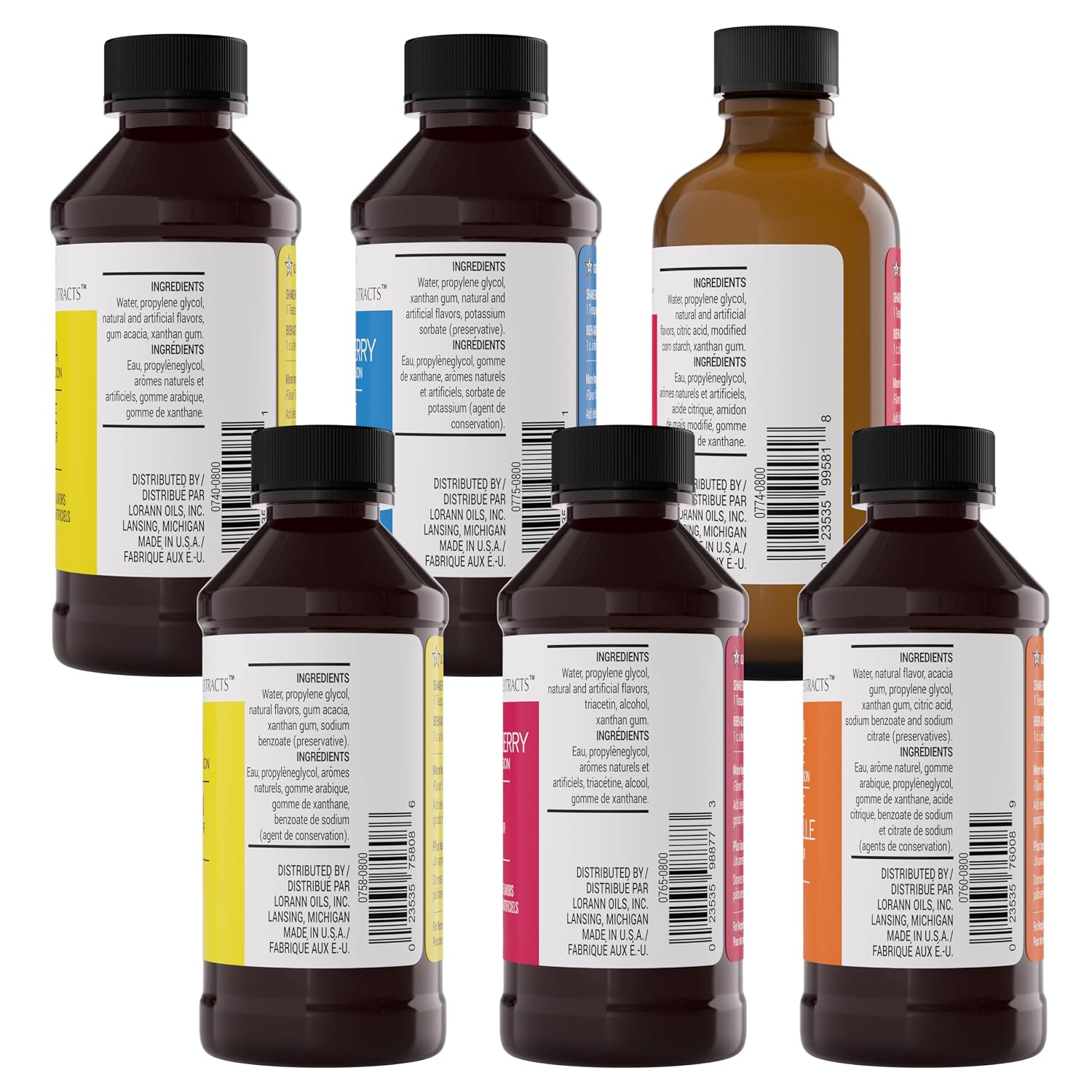
Bakery Emulsions are water-based, held together with gum arabic, a natural plant-derived thickener that keeps oil and water from separating. Because the base is water-compatible, emulsions blend seamlessly into cake batters, buttercreams, and royal icing without the flavor volatilizing the way alcohol-based extracts sometimes do at high temperatures. King Arthur Baking’s article “Extracts, Emulsions, and Flavor Oils: What’s the Difference?” on kingarthurbaking.com notes that emulsions often deliver a more stable, truer flavor through the bake cycle compared to alcohol-based products, because there’s no volatile alcohol to carry flavor compounds away as it evaporates.
The Kitchn’s piece “What Are Bakery Emulsions and Should You Be Using Them?” on thekitchn.com reinforces this point: the water-soluble format integrates without the slight bitterness or sharpness that high-proof alcohol extracts can sometimes leave behind in delicate applications like chiffon cake or Swiss meringue buttercream.
How the Two Formats Compare in Practice
Choosing between these formats is almost never a matter of quality — both deliver excellent results in the right context. The decision is purely about chemistry and application. The three comparison sections below walk through the key scenarios where format determines success or failure.
Candy, Chocolate, and Fat-Rich Confections
Lorann
$33.99
In stock on Amazon
Check price on AmazonIf you are making hard candy, lollipops, molded chocolates, candy bark, caramel, or toffee, the Super-Strength Flavor Oil is the only viable format. Water and hot sugar are incompatible — any moisture introduced into a sugar cook past around 300°F triggers crystallization or graininess. Water and tempered chocolate are equally incompatible; a single drop causes seizing. The oil format carries flavor into these environments without contributing any moisture.
Fine Cooking’s coverage of flavor extracts and oils in baking (finecooking.com) addresses this directly: oil-based flavorings are the professional standard in confectionery work precisely because they introduce no aqueous content to sugar or chocolate matrices. The same guidance cautions that because the oils are so concentrated, the difference between vivid and medicinal is a matter of drops. Start at half the labeled dose for any application you haven’t made before. A quarter-teaspoon is often sufficient for a full batch of hard candy. Taste before you add more.
For candy-focused buyers, this is the primary format to stock. The emulsions are not a workaround here — they will cause problems.
Lorann
$33.99
In stock on Amazon
Check price on AmazonCakes, Frostings, Custards, and Oven-Baked Applications
Lorann
$33.00
In stock on Amazon
Check price on AmazonFor layer cake batter, American buttercream, Swiss meringue buttercream, royal icing, pastry cream, panna cotta, shortbread, and most cookies, the Bakery Emulsion is almost always the better call. The substitution math is simple: one teaspoon of LorAnn Bakery Emulsion replaces one teaspoon of standard extract at a one-to-one ratio, per LorAnn’s published conversion guidance on lorannOils.com. No mental math required.
King Arthur Baking’s guide to emulsions and extracts notes that the absence of volatile alcohol in emulsions means flavor compounds stay in the finished product more reliably through the heat of the oven — the mechanism behind the common baker observation that emulsions produce a truer, more forward flavor in finished cakes than alcohol-based extracts of the same variety.
Across aggregated buyer feedback, the LorAnn Strawberry Bakery Emulsion is consistently the standout in the product line. Reviewers note it delivers a vivid, recognizably fruit-forward character that persists through the bake rather than fading into a generic “fruity” background note. The almond emulsion has a devoted following as well, particularly in wedding cake formulas where a clean, non-bitter almond profile is essential.
One important gotcha to know before you open the bottle: emulsions do not color your batter or frosting. The strawberry emulsion is not pink. It will not turn your buttercream blush. If you’re building a strawberry layer cake that’s supposed to look strawberry on the inside, you’re adding a separate colorant — the emulsion is handling flavor only. Bakers who don’t know this ahead of time are consistently surprised. Know it going in.
Lorann
$33.00
In stock on Amazon
Check price on AmazonBeverages, Dairy Applications, and Non-Baking Uses
LorAnn
$9.02
In stock on Amazon
Check price on AmazonThe format question extends beyond the oven. For beverages — lemonade, sparkling water, cocktail syrups, flavored milk — the emulsion is the appropriate format. The water-soluble base disperses cleanly in aqueous liquids. Serious Eats’ coverage of flavor additives and extracts on seriouseats.com notes that water-soluble flavorings integrate more evenly in beverages than oil-based concentrates, which tend to float or bead on the surface of water-based drinks rather than dispersing. For clear drinks especially, floating oil droplets are both visually and texturally undesirable.
The oils do have legitimate beverage applications in fat-rich liquid contexts — heavy cream, whole milk, or milkshake bases where there’s enough fat to act as a carrier. But for any transparent or lightly colored drink, the emulsion is the practical call.
A note on non-culinary use: buyers frequently document using the Super-Strength Oils in scented ornament dough, beeswax projects, and other aromatic non-food applications. This is real and documented buyer behavior. LorAnn’s primary positioning is culinary, but the oil format is compatible with wax and resin projects in ways the water-based emulsions are not. If you’re purchasing specifically for non-food aromatic work, the oils are the right format for that use case.
LorAnn
$9.02
In stock on Amazon
Check price on AmazonBy the Numbers
| Format | Typical size | Effective dose | Best for |
|---|---|---|---|
| Super-Strength Oil | 1 dram (~3.7 mL) | ¼ tsp or less per batch | Candy, chocolate, fat-based confections |
| Bakery Emulsion | 4 oz or 16 oz | 1 tsp replaces 1 tsp extract | Cakes, frostings, custards, beverages |
| Standard extract (reference) | 1–4 oz | 1 tsp (reference baseline) | General baking reference point |
The oils are the more concentrated format by a significant margin. Fine Cooking’s guidance on flavor oils recommends that even experienced bakers start below the labeled dose until they’ve calibrated to their specific application — there’s no recovery from overdosing a candy batch.
The Format-Application Decision at a Glance
There’s a version of this decision that feels complicated when you’re mid-project: what if you’re making both a strawberry cake and strawberry candy for the same event? Do you need both formats?
Yes — and they should be treated as entirely separate tools, not interchangeable. Here’s the short form:
Hot sugar or chocolate work? Oil only. No emulsion substitution.
Cake batter, frosting, or custard? Emulsion preferred. You can use oils in buttercream, but the concentration makes dosing harder and at higher amounts the oil can make the frosting feel slightly greasy.
Clear beverages or water-based drinks? Emulsion only. The Kitchn’s guide to emulsions confirms this application explicitly — the water-soluble base disperses where oils cannot.
Fat-rich beverages or cream-based drinks? Either format works, with the oils delivering more intensity per drop.
Non-food aromatic projects (ornament dough, wax)? Oils, not emulsions. The water base in emulsions is incompatible with most wax and resin applications.
Frequently Asked Questions
What is the difference between LorAnn Super-Strength Oils and LorAnn Bakery Emulsions? The oils are oil-based, highly concentrated, and designed for fat-rich or high-heat applications like candy and chocolate. The emulsions are water-based, designed to blend into batters, frostings, and other water-containing applications without separating. Both deliver strong flavor, but they belong in different applications.
Can you use LorAnn Bakery Emulsions in candy making, or do you need the oil-based versions? For hard candy, lollipops, and molded chocolate, you need the oil-based version. Water introduced into hot sugar or tempered chocolate causes crystallization in sugar work and seizing in chocolate. The emulsions are not safe substitutes in those applications.
How much LorAnn Bakery Emulsion do you use to replace one teaspoon of regular extract? One teaspoon of emulsion replaces one teaspoon of standard extract — a direct one-to-one swap with no conversion math. The oils are different: start at a quarter-teaspoon or less and scale up carefully based on taste.
Do LorAnn Emulsions add color to frostings and batters, or just flavor? Flavor only. The strawberry emulsion will not turn your frosting pink. The lemon emulsion will not yellow your batter. Add a separate food coloring if you want a colored result. This surprises more bakers than you’d expect.
Why are the dram oil bottles so small — is that really enough for a whole batch? Yes, for most recipes. One dram is approximately one teaspoon, and because the oils are several times the concentration of standard extracts, a small amount covers a full batch. Per LorAnn’s published dosage guidance on lorannOils.com, the consistent caution is to start low and taste — overdosing is the most common mistake with the oil format.
Can you use LorAnn flavoring oils in beverages? The oils don’t disperse cleanly in water-based beverages — they float or bead. For clear beverages like lemonade or sparkling water, the emulsions are the correct format, as Serious Eats’ coverage of water-soluble versus oil-based flavorings confirms. The oils work in fat-rich liquid applications, but for most drink uses, the emulsion is the practical choice.
The Bottom Line
If your application involves hot sugar, chocolate, or any fat-dominant confection: stock the oils. There is no emulsion workaround for candy work.
If your primary work is cakes, frostings, custards, or cookies: stock the emulsions. The one-to-one conversion is simple, the flavor holds through the bake, and the dosing is forgiving compared to the oil format.
If you run a small bakery producing both confections and baked goods: you need both formats and they should be treated as separate tools. The strawberry and almond emulsions are worth prioritizing for the baked-goods side based on consistent reviewer consensus. The dram oils in your most-used candy flavors — cinnamon, peppermint, citrus — cover the confection side.
If you’re buying a variety pack to explore: read the labels before you assume format. Many variety packs mix both formats in a single assortment, and knowing which bottle is which before you’re mid-batch matters.
Both formats are genuinely excellent at what they’re designed for. The only real mistake is using one where the other belongs.