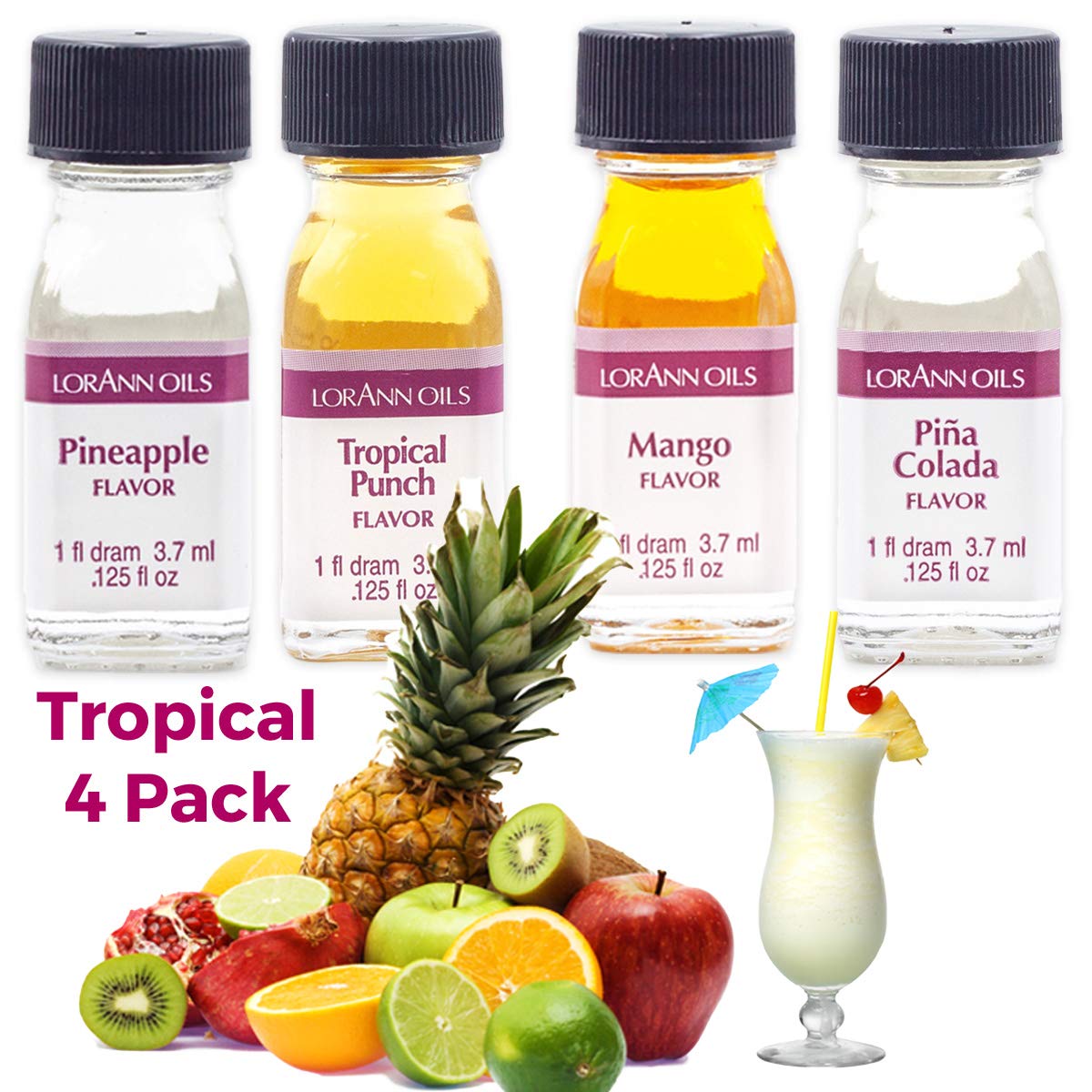
If you’ve ever picked up a tiny one-dram bottle (that’s about ⅛ of a teaspoon of liquid — roughly 3.7 milliliters) of LorAnn flavoring oil at a craft store and wondered how something that small could possibly matter in a batch of candy, the answer is: it matters enormously, and if you ignore the concentration, you’ll ruin your batch. LorAnn’s “super-strength” flavoring oils are food-grade concentrated flavor compounds — mostly essential oils and aromatic isolates suspended without water or alcohol — designed specifically for applications where heat is extreme and water would cause problems. Hard candy is the classic use case: you’re working with sugar cooked to 300°F or higher (what candy makers call the “hard crack” stage), and a water-based extract would seize your sugar, cause violent spattering, and steam off most of its flavor before the candy even sets. Oil-soluble flavorings — like LorAnn’s super-strength line — mix cleanly into hot sugar at the last moment, survive the heat, and lock into the candy as it hardens. This guide covers exactly how to dose them, which LorAnn formats are right for which jobs, and the one flavor (cinnamon) that bites harder than almost any new confectioner expects.
Format First: Oils vs. Emulsions vs. Extracts — Know Which One You’re Holding
This is the single most important distinction for anyone new to candy work, and conflating these formats is an expensive, batch-ruining mistake. Let’s separate them clearly.
Super-strength flavoring oils (LorAnn’s primary candy line) are oil-soluble, alcohol-free, and highly concentrated. Because they contain no water, they’re the only format that mixes safely into hot sugar syrups without causing the sugar to crystallize or seize. They’re also used in chocolate work, compound coatings, and any application where water introduction is a problem.
Bakery emulsions are water-based flavorings that use an emulsifier — think of an emulsifier as a molecule that holds oil and water together the way dish soap lifts grease off a pan — to keep flavor compounds dispersed in a water base. LorAnn’s emulsion line is excellent for baked goods and frostings precisely because the water base plays well with batters and buttercreams, and the emulsifier helps flavor survive oven heat. However, add an emulsion to a hot sugar syrup and you’re introducing water to a system that hates water. Per King Arthur Baking’s guidance on flavor concentrates, water in candy-making causes unwanted recrystallization and produces a grainy, cloudy finished product.
Alcohol-based extracts (standard vanilla extract, peppermint extract from most grocery store brands) share the same problem in candy work: the water-alcohol base reacts badly with cooked sugar. They’re designed for lower-temperature applications.
The decision rule is clean: If you’re making hard candy, lollipops, rock candy, pulled sugar, or any cooked sugar application — you need LorAnn super-strength oils, full stop. If you’re making cakes, cookies, frostings, or custards, emulsions or extracts are often the better (and cheaper) choice because their water base integrates smoothly into those systems.
The Kitchn’s overview of flavor formats puts it plainly: oil-based flavorings and water-based flavorings aren’t interchangeable, and the candy context is where that line matters most.
Dosing: The Numbers That Will Save Your Batch
Here’s where most first-time users go wrong. The bottle is tiny. The instinct is to use more. Resist that instinct.
LorAnn’s own manufacturer usage documentation recommends a starting dose of ½ to 1 teaspoon of super-strength oil per pound of hard candy — which sounds like almost nothing, but these oils are formulated to be 3 to 4 times more concentrated than standard extracts. Reviewers of LorAnn’s tropical variety pack consistently flag this in their notes: the concentration is the product’s entire value proposition, and overdosing produces candy that tastes medicinal, sharp, or outright inedible.
By the Numbers
| Application | Starting Dose | Max Recommended | Notes |
|---|---|---|---|
| Hard candy (per lb sugar) | ½ tsp | 1 tsp | Add off-heat, stir fast |
| Chocolate / compound coating (per lb) | ¼ tsp | ½ tsp | Oil-soluble only; test first |
| Lollipops (per lb sugar) | ½ tsp | ¾ tsp | Same as hard candy |
| Pulled / blown sugar | ½ tsp | ¾ tsp | Add after cooling slightly |
The practical workflow: cook your sugar to the target temperature (300–310°F for hard crack), pull the pan off the heat, let it sit for 30–45 seconds so the most violent off-gassing subsides, then add your flavoring and colorant and stir quickly. Adding flavoring to actively boiling sugar causes rapid volatilization — you lose flavor compounds to steam before they can bind into the candy matrix. Per Serious Eats’ coverage of candy science, the brief rest before adding flavor is a small step that meaningfully improves flavor retention in the finished piece.
Start at the low end of the dosing range on any new flavor. You can always add a drop more if a test piece tastes flat. You cannot remove flavor from a batch that’s already too strong.
The Cinnamon Problem (and What It Tells You About the Whole Line)
Cinnamon oil is the flavor that generates the most alarmed reviews across LorAnn’s line, and for good reason. Reviewers consistently describe the cinnamon super-strength oil as dramatically, almost shockingly hotter than cinnamon extract — and that’s not a quality complaint. It’s accurate chemistry.
Standard cinnamon extract is made by macerating cinnamon bark in an alcohol-water base, which extracts a moderate concentration of cinnamaldehyde (the compound that gives cinnamon its characteristic warmth). LorAnn’s cinnamon super-strength oil is essentially high-concentration cinnamaldehyde — the pure active compound at 3–4× the strength of extract, without the dilution of water or alcohol. Cinnamaldehyde at that concentration triggers the same oral heat receptors (TRPA1, if you want the technical name — but think of it as the same receptor pathway that makes raw ginger and chili pepper feel warm) that capsaicin activates in hot peppers. The “hot” sensation is real, not a flaw.
Fine Cooking’s writing on flavor concentrates in confectionery notes that cinnamon oil’s perceived heat compounds when trapped in hard candy, because the cinnamaldehyde is released slowly as the candy dissolves — producing an intensifying warmth rather than a quick flash. This is why classic cinnamon hard candy like Red Hots tastes so much more aggressive than cinnamon pastry.
Practical guidance: Start at ¼ teaspoon per pound for cinnamon specifically — half the standard starting dose for other flavors. A test piece from a small pour before casting the full batch is non-negotiable with cinnamon oil. If you’re making candy for a mixed audience (including children), stay at ¼ teaspoon or below.
Using LorAnn Oils in Chocolate and Compound Coatings
This is a slightly more nuanced application than hard candy, and it’s worth addressing directly because the stakes are high. Chocolate — both real couverture (chocolate that contains cocoa butter) and compound coating (chocolate-flavored coating made with vegetable fats instead of cocoa butter) — is extremely water-sensitive. A single drop of a water-based flavoring in a pound of melted chocolate causes immediate seizing: the chocolate goes from smooth and fluid to a grainy, clumped paste that can’t be recovered for coating purposes.
LorAnn super-strength oils, being oil-soluble and water-free, are the correct format for flavoring chocolate and compound coatings. They mix in cleanly without seizing.
Dosing caution is even higher here than in hard candy. Chocolate has a more delicate flavor baseline, and the oils will dominate it quickly. Reviewers and confectioners working with flavored chocolate consistently recommend starting at ¼ teaspoon per pound of chocolate — and many prefer even less, around ⅛ teaspoon, for subtle applications like orange or raspberry where you want the flavor to complement rather than override the chocolate.
One format note: LorAnn does make a separate “Chocolate Flavoring Oil” line optimized for chocolate work. Those are different from the general super-strength candy oils, though both are oil-soluble. The general super-strength oils work in chocolate, but if you’re doing volume chocolate work, LorAnn’s chocolate-specific line is worth exploring.
Storage and Shelf Life: Protecting a Concentrated Investment
Flavoring oils are not shelf-stable indefinitely, and poor storage degrades them faster than most users expect. Citrus oils in particular — orange, lemon, lime, grapefruit — are among the most volatile and oxidation-prone in the LorAnn line. Reviewers who store these at room temperature in warm kitchens frequently note that citrus oils go flat or develop an off-note within a year of opening.
The baseline storage protocol:
- Keep oils in a cool, dark location — a cabinet away from the stove, or a dedicated flavor drawer.
- Refrigeration extends shelf life meaningfully for citrus and fruit oils; it won’t hurt any of the oils in the line.
- Always close the cap tightly immediately after use. These are highly volatile compounds and they off-gas through even slightly loose caps over time.
- LorAnn’s manufacturer documentation lists most super-strength oils at 3–4 years unopened; once opened, plan to use them within 1–2 years for best potency, especially citrus and herbal flavors.
One practical note from aggregated buyer reviews: the dropper orifice on LorAnn drams tends to dispense unevenly, especially when the bottle is new and full. Tipping and tapping produces drops that range from small to large. For critical batches, measuring by the ¼ teaspoon rather than counting drops gives you more consistent results.
Frequently Asked Questions
Can I use LorAnn bakery emulsions in hard candy, or do I need the super-strength oils?
You need the super-strength oils. Emulsions contain water, and water in hot sugar syrup causes crystallization, seizing, and spattering. They’re also not designed to survive 300°F heat without flavor loss. Emulsions are excellent for baked goods and frostings — they’re the wrong tool for sugar work.
How many drops of LorAnn super-strength oil should I use per pound of candy?
LorAnn’s own guidance recommends ½ to 1 teaspoon per pound as a starting range — not drops. In practical terms, that’s roughly 80–160 drops, which is why counting drops is imprecise and measuring is better. Start at the low end (½ tsp per pound), taste a test piece, and increase from there if needed.
Why does LorAnn cinnamon oil taste so much hotter than cinnamon extract?
Because it’s a concentrated form of cinnamaldehyde — the active heat-producing compound in cinnamon — without the dilution of water or alcohol that extract provides. It’s chemically hotter by design, and that heat intensifies as hard candy dissolves slowly in your mouth. Start at half the standard dose and work up.
Can LorAnn oils be used in chocolate and compound coating?
Yes — oil-soluble super-strength oils are one of the only safe formats for flavoring chocolate, because they contain no water and won’t cause seizing. Start at ¼ teaspoon per pound or less, and err toward subtle. The chocolate’s own flavor is easy to overwhelm.
How should I store LorAnn super-strength oils between uses?
Cool, dark, and tightly capped. Refrigeration is beneficial for citrus and fruit flavors specifically. Plan to use opened bottles within 1–2 years for best potency, and check citrus oils for freshness before committing them to a large batch — they’re the first to fade.
The Decision Frame: Which Format, Which Dose
If you’re standing in front of a batch decision right now, here’s the clean version:
- Hard candy, lollipops, rock candy, pulled sugar? → Super-strength oil, ½ tsp per pound, add off-heat.
- Chocolate or compound coating? → Super-strength oil, ¼ tsp per pound or less, stir thoroughly.
- Cakes, cookies, frostings, custards? → Emulsion or extract; the water base integrates better and the heat is survivable.
- Working with cinnamon? → Whatever format you chose above, start at half the normal dose and taste before committing the batch.
The concentration is the product’s entire point. Respect it once and it rewards you with consistent, professional-tasting results at very low cost per batch. Ignore it once and you’ll be explaining to your wholesale account why the red-hot lollipop order tastes like a fire drill.