Making your own vanilla extract — that’s the process of soaking whole vanilla beans (the long, dark seed pods from the vanilla orchid plant) in alcohol so that their flavor compounds slowly dissolve into the liquid — is one of those projects that sounds complicated but is genuinely forgiving. You need beans, a bottle of vodka or bourbon, a jar, and patience. What trips most people up isn’t the method. It’s standing in front of a retailer’s bean options, staring at three different origins and two different “grades,” and having no clear framework for choosing. Grade A or Grade B? Madagascar or Tahitian? One origin for $12 and another for $38 — and the listing doesn’t explain why. This guide cuts through that. By the end, you’ll have a concrete decision rule based on what you’re actually making, how much you want to spend, and how quickly you need results.
What “Grade” Actually Means — and Why Most Tutorials Get It Backwards
Walk through enough homemade-extract content and you’ll see the same advice repeated: use Grade B beans for extract, Grade A for cooking. It’s not wrong, exactly, but it’s incomplete in a way that costs you money.
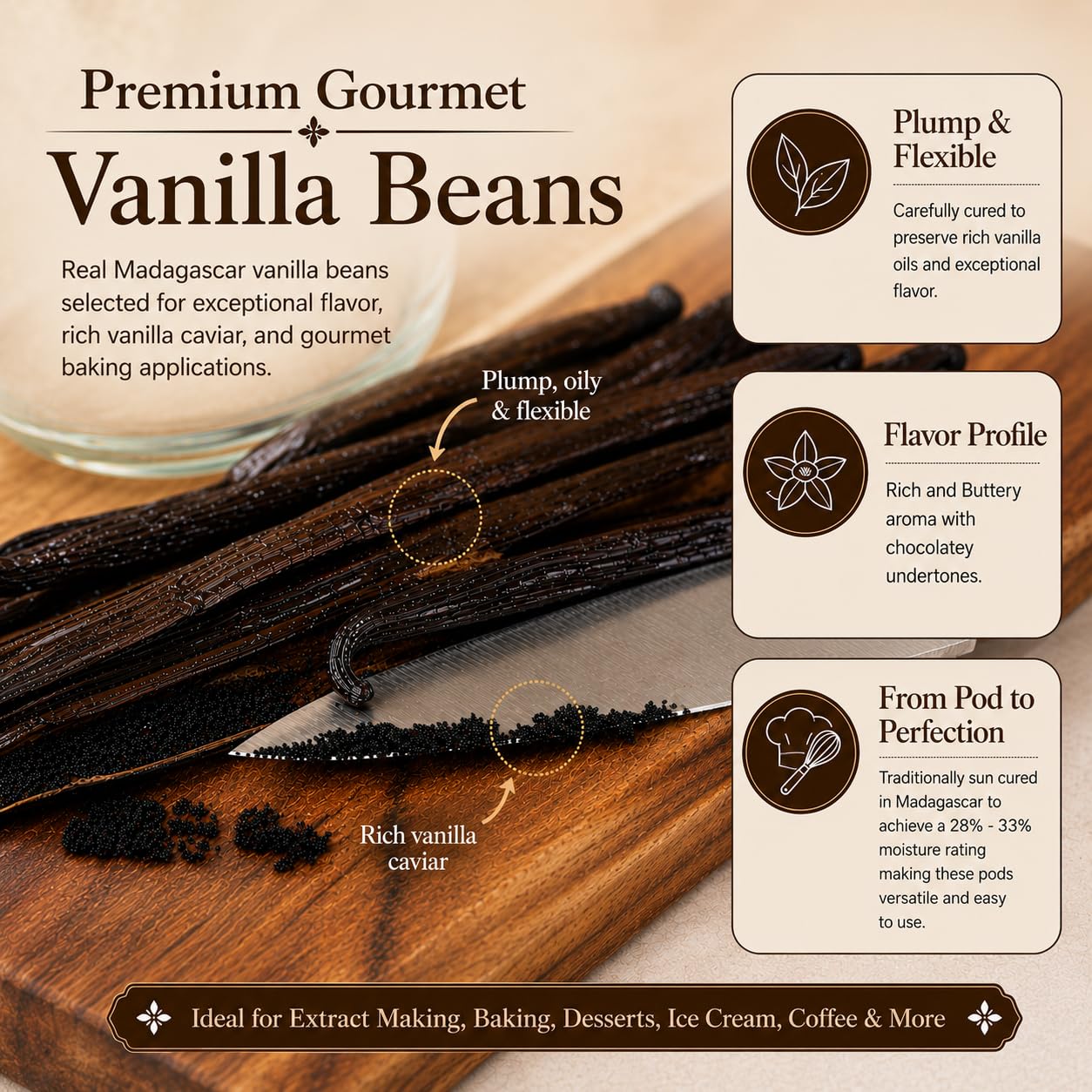
Grade A beans (sometimes called “gourmet” or “prime”) carry higher moisture content — typically 30–35% water by weight. They’re plump, pliable, oily on the surface, and visually attractive. That moisture makes them ideal when the bean itself will be seen or eaten: split one open, scrape the caviar (the tiny seeds inside) into a pastry cream, and you’re using the bean as an ingredient in the traditional sense.
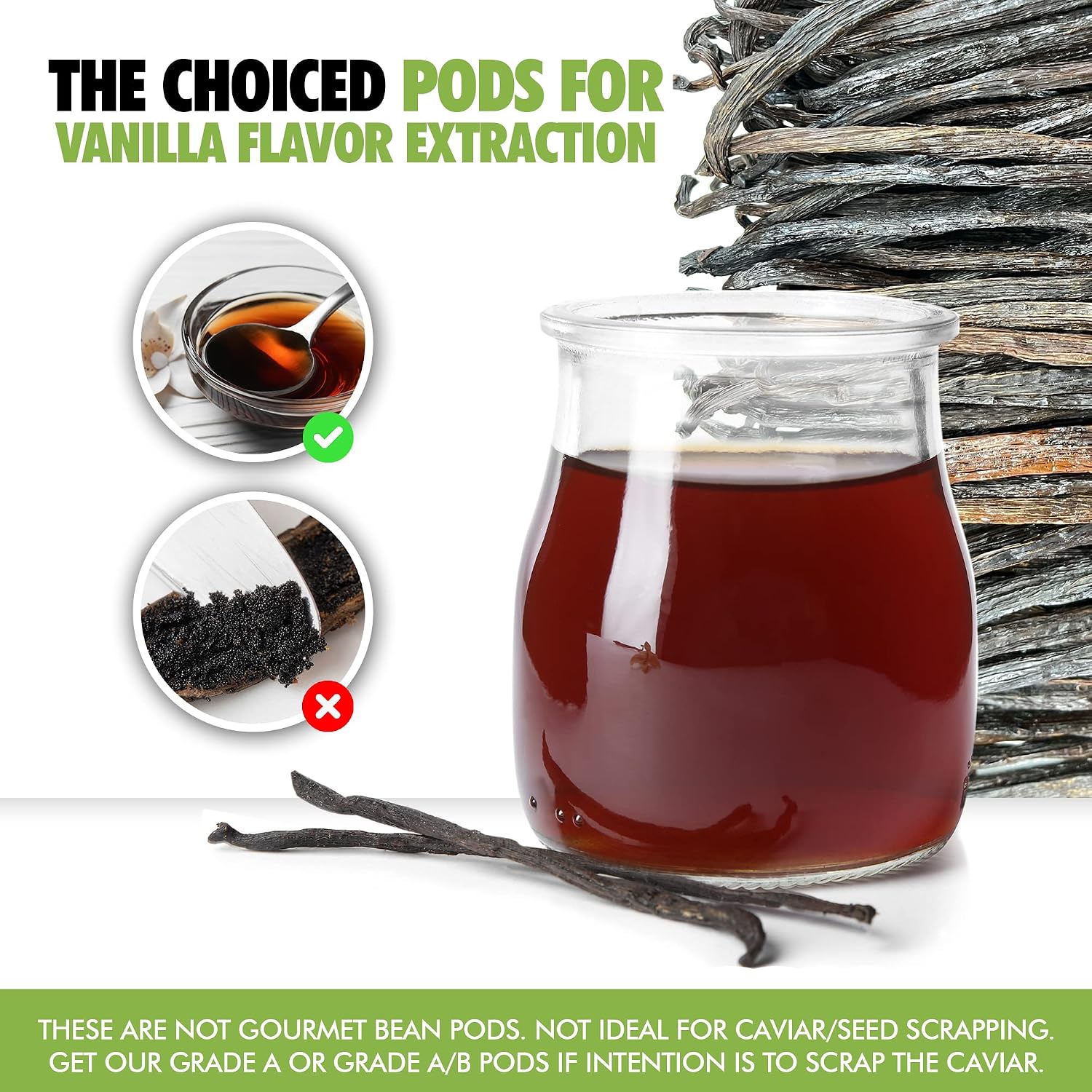
Grade B beans (sometimes called “extract grade”) run drier — around 15–25% moisture. They’re thinner, sometimes slightly brittle, and less photogenic. But because they carry less water weight, they’re denser in vanillin and other flavor compounds per gram of bean.
The numbers that matter:
- Grade A moisture: ~30–35% — you are partly paying for water
- Grade B moisture: ~15–25% — more flavor solids per dollar
- FDA minimum for “pure vanilla extract”: 13.35 oz of vanilla beans per gallon of 35% ABV alcohol
- Typical home-batch starting point: 3–5 beans per 8 oz of alcohol, as documented in King Arthur Baking Company’s homemade vanilla extract guide
For extraction purposes, Grade B’s lower moisture is an advantage, not a flaw. You get more extractable flavor per dollar spent. The beans that didn’t make the visual cut for culinary presentation are functionally better suited for dissolving their flavor into alcohol.
That said, Grade A beans are not a poor choice for extract. If you find Grade A at a competitive price, or if you’re splitting a batch — half scraped into a ganache, half dropped into your extract jar — Grade A works fine. The decision is about value per flavor unit, not quality in any absolute sense.
Origins Side by Side
This is where the decision gets genuinely interesting, because origin determines flavor profile, and the right profile depends entirely on what you’re baking.
Madagascar Bourbon Vanilla
26
$17.98
In stock on Amazon
Check price on AmazonMadagascar Bourbon vanilla — “Bourbon” here refers to the island of Réunion, formerly called Île Bourbon, not the whiskey — is the baseline that most commercial extracts are built from. The flavor is classic, warm, creamy, and slightly woody. Cook’s Illustrated’s vanilla extract taste test consistently describes Madagascar Bourbon character as the rounded, familiar vanilla note that most people recognize. When someone says something “tastes like vanilla,” they’re almost always tasting Madagascar Bourbon.
For an all-purpose extract that performs reliably across sugar cookies, buttercream, custards, and pound cake, Madagascar beans are the workhorse choice. Grade B Madagascar Bourbon from a reputable supplier — Beanilla and Singing Dog Vanilla both carry it — gives you the best flavor-per-dollar of any common option. Bulk sourcing through suppliers like OliveNation or Spice Jungle is the standard path for small bakeries and high-volume home bakers. Spice Trekkers’ Madagascar vanilla producer notes for 2024–2025 flagged continued supply variability from the SAVA growing region, which has kept bean prices elevated versus pre-2023 levels — worth watching for pricing dips if you’re on a professional sourcing schedule.
Best for: All-purpose extract, everyday baking, value-conscious batches, bulk professional sourcing. Grade recommendation: Grade B for pure extraction value; Grade A if you’re also using beans scraped into recipes. Spirit pairing: Vodka for clean expression; bourbon or rye to build additional depth.
26
$17.98
In stock on Amazon
Check price on AmazonTahitian Vanilla
25
$27.99
In stock on Amazon
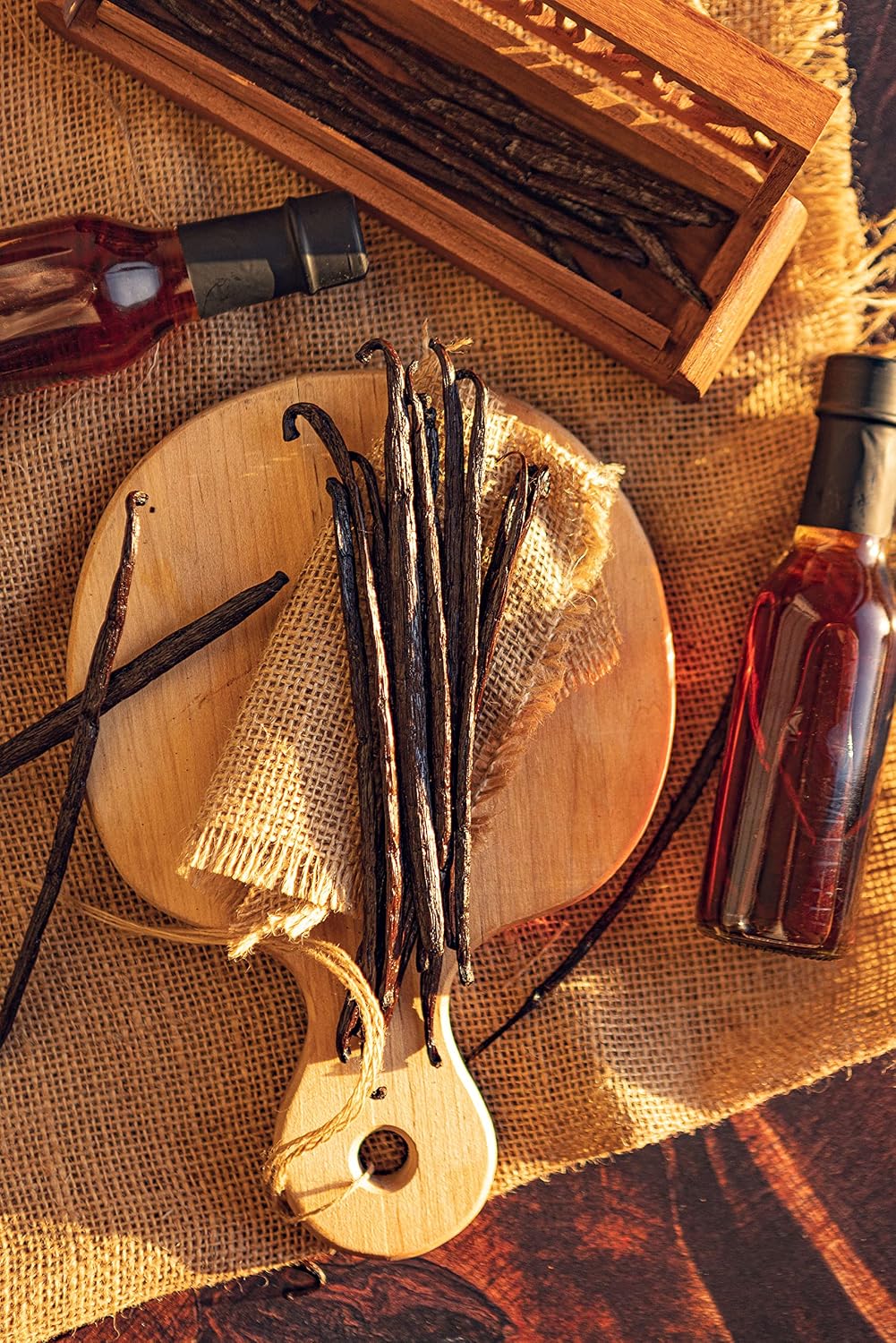
Check price on AmazonTahitian vanilla (Vanilla tahitensis, distinct from Madagascar’s Vanilla planifolia) is florally distinct from the Madagascar baseline. Serious Eats’ vanilla extract guide specifically identifies Tahitian vanilla’s floral notes — cherry, anise, and stone-fruit undertones — as a meaningful variable in applications where those high-register flavors can show. A white chocolate ganache, a delicate panna cotta, or a light chiffon cake are environments where Tahitian character genuinely elevates the result.
In a heavily spiced banana bread or a dark chocolate cake, those floral notes get buried and you’ve paid a premium for nothing. Know your application before committing.
Grade B Tahitian beans are harder to source than Grade B Madagascar — most specialty retailers stock Grade A Tahitian by default, so you’ll often end up there by necessity. Budget accordingly: Tahitian beans run meaningfully more expensive than Madagascar at comparable quantities.
Best for: Delicate, floral, or fruit-forward applications — panna cotta, white chocolate, chiffon cake, shortbread. Grade recommendation: Grade A by default (Grade B hard to source); accept the price premium. Spirit pairing: Neutral vodka — a flavor-forward spirit muddies the floral notes you paid for.
25
$27.99
In stock on Amazon
Check price on AmazonMexican, Ugandan, and Single-Origin Premium Beans
50
$39.99
In stock on Amazon
Check price on AmazonMexican vanilla has a complicated market reputation, largely because of a long history of adulterated products — some historically containing coumarin, a compound banned in U.S. food products. Reputable sourcing from verified Mexican producers, particularly from the Veracruz region where vanilla cultivation originates, yields beans with a spicy, slightly smoky, creamy character. Food and Wine’s vanilla extract feature describes genuine Mexican vanilla as distinctly warm and complex, with a character that stands apart from the Madagascar baseline. Buyer confidence depends entirely on supplier transparency: if a Mexican bean listing doesn’t name the region and producer clearly, pass.
Ugandan and Indonesian vanilla are increasingly available through specialty retailers. Ugandan beans tend toward a dark, fudgy, raisin-like depth. Indonesian beans (often Planifolia from Java or Papua) can be smokier and more phenolic. Both are interesting for experimental batches and dark applications — brownies, chocolate ganache, bourbon-based extracts — but less versatile as a single all-purpose extract.
Heilala Tongan beans and Nielsen-Massey’s single-origin Madagascar options occupy the premium-gift tier. Nielsen-Massey’s brand education materials on vanilla origins note that their single-origin Madagascar line is positioned for buyers who want verified provenance alongside flavor performance. If you’re making extract as a gift or want a premium single-origin story to accompany the bottle, you’re paying for provenance and presentation as much as flavor — and for that specific use case, that’s legitimate value.
Best for: Specialty applications (Mexican for spiced or dark bakes; Ugandan for chocolate-forward extracts), gift batches, single-origin provenance. Grade recommendation: Grade A for gifts (visual quality matters for presentation); Grade B for extraction-only specialty batches. Spirit pairing: White or aged rum pairs well with Mexican and Ugandan beans; vodka for single-origin where you want terroir clarity.
50
$39.99
In stock on Amazon
Check price on AmazonAlcohol Choice: It Interacts With Your Bean Decision
Most homemade extract guides treat the alcohol choice as a footnote. It deserves more than that because it directly interacts with which beans you buy.
Vodka (80 proof, 40% ABV) is the neutral baseline. It extracts vanilla compounds cleanly without adding its own flavor. Nielsen-Massey’s vanilla education materials consistently note that a neutral spirit lets a bean’s individual origin character express most clearly — which matters most when you’ve paid a premium for a distinctive origin like Tahitian or single-origin Mexican.
Bourbon or rye adds its own layer — caramel, oak, vanilla-adjacent warmth from barrel aging. This complements Madagascar beans beautifully and is a popular choice for building a “deeper” extract. But it muddies Tahitian’s floral brightness. If you’re spending up for Tahitian beans specifically to capture those floral notes, a neutral spirit preserves what you paid for.
Rum (white or aged) works particularly well with Mexican or Ugandan beans, where the spirit’s natural sweetness and the beans’ smoky or fudgy depth reinforce each other.
The practical rule: match neutral spirits to distinctive origins where you want to isolate terroir. Match flavor-forward spirits to workhouse origins where you want to build layered complexity.
Timing and the Patience Variable
One more factor that affects the grade decision: Grade B beans extract faster. The lower moisture content and the physical structure of drier beans means flavor compounds move into the alcohol more efficiently. King Arthur Baking Company’s homemade vanilla extract guide notes that extract needs time — commonly cited as a minimum of several weeks — and bakers who have documented extraction timelines report that Grade B batches reach usable depth in roughly 6–8 weeks, while Grade A batches may take 10–12 weeks for comparable intensity.
If you’re starting a batch with a target use date — a holiday cookie season, a wedding cake commission — that timing difference is real. Grade B’s efficiency advantage is most meaningful when you’re working against a calendar.
The Decision Rule, Plainly Stated
| Your situation | Bean choice | Grade | Spirit |
|---|---|---|---|
| All-purpose extract, value-conscious | Madagascar Bourbon | B | Vodka or bourbon |
| Delicate/floral applications | Tahitian | A (default) | Vodka only |
| Fastest usable extract | Any origin | B | Your preference |
| Gift or single-origin provenance | Heilala Tongan or Nielsen-Massey Madagascar | A | Vodka |
| Professional bulk sourcing | Madagascar Bourbon | B bulk | Vodka or bourbon |
| Dark/chocolate-forward applications | Ugandan or Indonesian | B | Bourbon or aged rum |
The grade debate gets treated as a quality hierarchy — Grade A is better, Grade B is lesser. It isn’t. They’re different tools. Grade B is optimized for exactly what you’re doing: extraction. Grade A is optimized for applications where the bean itself is the ingredient. Knowing that distinction means you’re not leaving money on the table in either direction.
Watch Madagascar crop pricing through Spice Trekkers’ producer notes if you’re sourcing professionally. Buy Grade B in bulk when pricing dips; reach for Grade A when a specific application — or a gift label — justifies the premium.
Sources referenced in this article: Nielsen-Massey Vanillas brand education resource on vanilla origins and grades; King Arthur Baking Company’s homemade vanilla extract guide; Serious Eats vanilla extract product guide; Cook’s Illustrated vanilla extract taste test (America’s Test Kitchen); Food and Wine vanilla extract feature; Spice Trekkers Madagascar vanilla producer notes, 2024–2025. All cited as plain-text named sources; no URLs are asserted for any editorial reference.