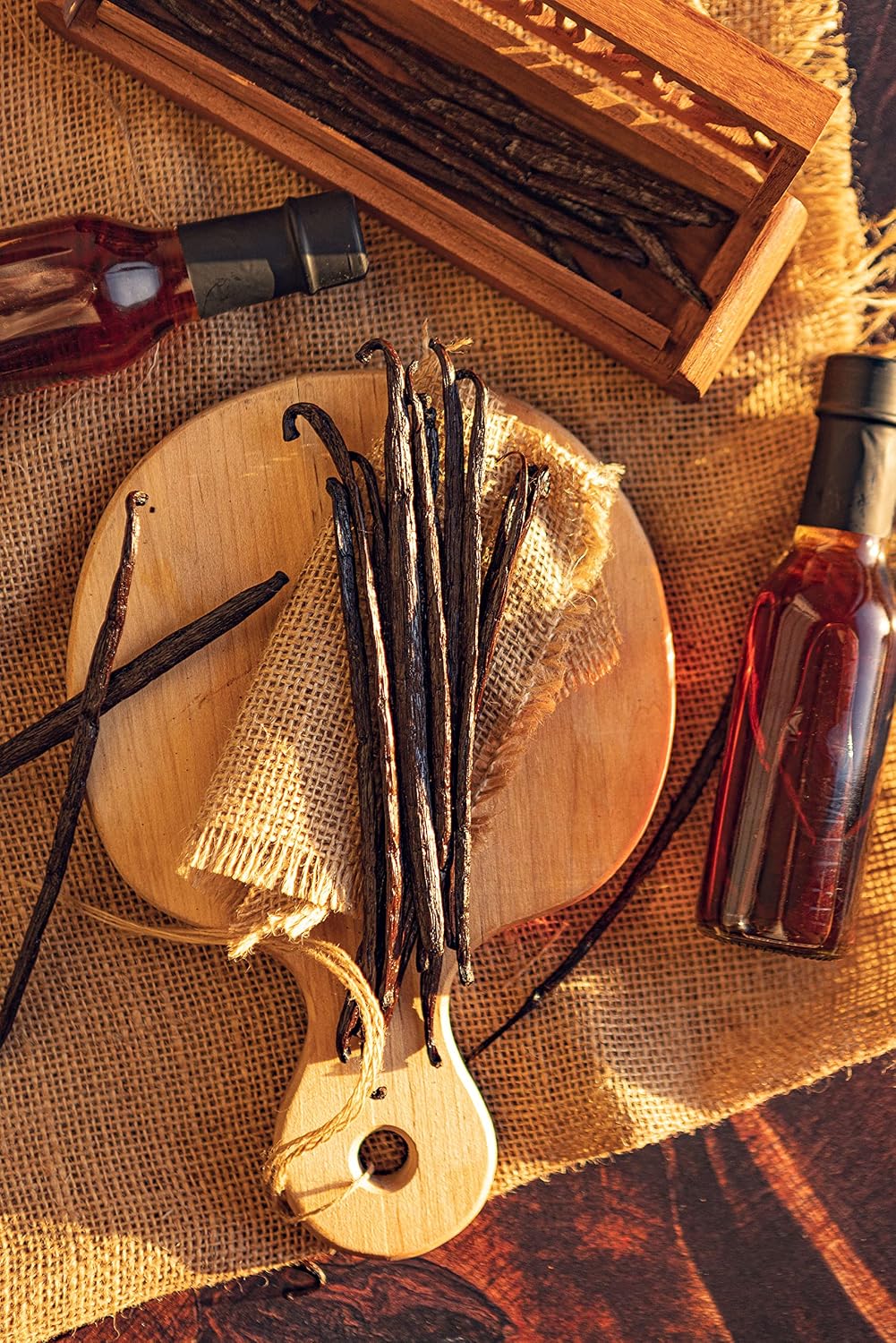
Making your own vanilla extract is exactly what it sounds like: you split open a handful of vanilla beans — the long, dark, seed-filled pods that give baked goods their warm, floral sweetness — drop them into a jar of alcohol, seal it, and wait. The alcohol (the menstruum, if you want the technical term, though you’ll never need to say it out loud) slowly pulls the flavor compounds out of the beans over weeks and months. What you end up with is a pure, deeply aromatic extract you can use anywhere a recipe calls for vanilla — and, as a bonus, something genuinely impressive to give as a gift. This guide walks through the three decisions that actually determine how good your extract turns out: which alcohol you choose, which bean grade you buy, and how long you give it before reaching for it. If you already know the basics and you’re trying to decide between, say, brandy versus vodka or Grade A versus Grade B beans, this is the comparison guide you’ve been looking for.
The Alcohol Decision: Vodka Is Just the Beginning
Vodka gets recommended constantly as the default for homemade extract, and the logic is sound: it’s neutral, widely available, and cheap. A 35–40% ABV (alcohol by volume — the percentage of the liquid that’s actually alcohol) vodka won’t fight the vanilla for flavor dominance. The FDA’s Standard of Identity for pure vanilla extract, documented in FDA Code of Federal Regulations Title 21, Section 169.175, requires a minimum of 35% alcohol, so mid-shelf 80-proof vodka clears the bar.
But reviewers who’ve spent serious time on this don’t stop at vodka. One particularly detailed account — describing a four-spirit experiment spread across four years, cycling through vodka, brandy, and rum — reports abandoning vodka entirely once the brandy and rum batches came ready. The verdict: the aroma profile with both brandy and rum was meaningfully richer and more complex than the vodka baseline.
Here’s how the four main options actually stack up:
Vodka: Neutral carrier. Your extract will taste like vanilla and nothing else. Best choice if you want a versatile all-purpose extract that won’t introduce any competing notes — ideal for delicate applications like pastry cream, white cake, or anything where vanilla should dominate cleanly.
Bourbon: Adds caramel and oak undertones. The natural pairing for anything with brown sugar, pecans, chocolate, or stone fruit. Several home extract makers report that a bourbon-base extract feels like a “depth upgrade” in cookies and brownies. Note: make sure you’re using actual bourbon whiskey at 40%+ ABV, not a flavored whiskey product.
Rum: Dark rum in particular brings molasses character that plays well against vanilla’s natural sweetness. Light rum is closer to neutral. Reviewers consistently describe the aroma of a rum-vanilla extract as distinctly warmer and more dessert-forward than vodka. Works well in tropical preparations, buttercreams, and anything with banana, coconut, or caramel.
Brandy: Fruit-forward and floral. The same long-term reviewer who tested four spirits found brandy the standout for pure aroma quality. In extract form, brandy’s dried-fruit notes complement vanilla’s own fruity ester compounds without overwhelming them. Worth trying if you’re making extract specifically as a gift or for applications like pears, apple cake, or creamy ganaches.
The tradeoff to name explicitly: Non-neutral spirits make your extract less versatile. A bourbon-vanilla extract is spectacular in a brown butter chocolate chip cookie and slightly misplaced in a vanilla bean panna cotta. If you’re making one batch, vodka or light rum is the safer call. If you’re already running multiple jars, specialty spirits are worth the experiment.
Bean Grade: The Grade A vs. Grade B Decision
Vanilla beans are sold in two main grades, and the difference matters depending on what you’re using them for.
Grade A beans (also called “gourmet” or “prime”) are plump, moist, and visually beautiful — high moisture content (around 25–35%), pliable pods loaded with visible seeds. They’re what you split and scrape when you want those characteristic black specks in your ice cream or pastry cream. The appearance and texture justify a price premium.
Grade B beans (also called “extract grade”) are drier, less visually impressive, and sometimes split or irregular. Moisture content runs lower, typically 15–25%. Crucially, lower moisture means higher concentration of flavor compounds per gram — which is exactly what you want when you’re steeping in alcohol. The alcohol does the extraction work; you don’t need the beans to look good.
The standard guidance from sources including King Arthur Baking’s homemade vanilla extract guide and The Kitchn’s home extract tutorial is consistent: use Grade B for extract making. You get more vanillin per dollar, and the visual imperfections that drop the price are completely irrelevant once the bean is submerged in liquid.
That said, at least one experienced home baker who reviewed Grade A Madagascar beans reports being “shocked” at the quality step-up in direct culinary use — specifically for ice cream — versus Grade B. This creates a useful decision fork:
If you’re making extract, buy Grade B. If you’re splitting and scraping beans directly into a preparation, buy Grade A — the texture, moisture, and seed yield justify the cost difference.
Some bakers run a small amount of Grade A beans in their extract batch purely because they had them on hand. There’s no harm in it; you won’t ruin anything. But dollar-for-dollar, Grade B wins for extract purposes.
By the numbers:
| Use case | Bean grade | Why |
|---|---|---|
| Vanilla extract (steeping) | Grade B | Higher dry flavor concentration per dollar |
| Custard, ice cream (scraped) | Grade A | Better seed yield, superior texture |
| Gifting whole pods | Grade A | Visual quality matters |
| High-volume extract production | Grade B | Cost efficiency at scale |
Origin: Madagascar vs. Tahitian Beans
Most buyers default to Madagascar Bourbon vanilla — “Bourbon” here refers to the island of Réunion (historically Île Bourbon), not the whiskey — and for extract making, Madagascar is a reasonable default. The flavor profile is classic: warm, creamy, rich, slightly woody. Cook’s Illustrated’s vanilla origin comparison describes Madagascar Bourbon as the most “universally versatile” profile across baked applications.
Tahitian vanilla beans offer a meaningfully different extract. Reviewers of Tahitian beans consistently describe a floral, fruity character — anise-adjacent, cherry-like — that differs noticeably from Madagascar in both aroma and finished taste. Several report using Tahitian beans for yogurt applications as well as extract, citing the fruity quality as a better match for dairy-forward preparations.
The tradeoff: Tahitian extract is more distinctive, which means it’s more suited to specific applications and less suited to being your all-purpose bottle. Think: stone fruit tarts, floral buttercreams, white chocolate preparations, anything where a floral note is welcome. If you’re making extract to give as gifts, Tahitian adds a “this is different from what you get at the store” quality that recipients notice and appreciate.
The Timeline: What to Expect Week by Week
This is the question that comes up most often in buyer reviews, and no one answers it clearly enough. Here’s the honest breakdown:
Weeks 1–2: The liquid will turn amber. You’ll smell vanilla when you open the jar, but it’s thin and sharp. Do not use it yet — the alcohol is still dominant and the complex flavor compounds haven’t fully extracted.
Weeks 3–4: Color deepens to a warm brown. The aroma is recognizably vanilla but still one-dimensional. This is drinkable in a pinch, but not optimal. Serious Eats’ coverage of vanilla flavor development notes that vanillin extraction is largely complete by 4–6 weeks, but the “supporting cast” of flavor compounds takes longer.
Weeks 6–8: This is when most home extractors get impatient and reach for the jar. It’s usable — genuinely good. The flavor is still developing, but it will perform well in baking.
Month 3: Noticeably richer. The difference between 8-week and 12-week extract is detectable in a side-by-side.
Month 6 and beyond: The extract most worth waiting for. This is where complexity develops — the supporting aromatic compounds that make vanilla smell like more than just “vanilla.” Long-term reviewers who’ve made extract repeatedly consistently cite 6+ months as the threshold where homemade extract beats many commercial bottles.
Practical advice: Make two jars at the same time. Use one starting at 6–8 weeks (your working bottle), and don’t touch the second until month 6 (your reference bottle). The comparison will teach you more about vanilla extract than anything you could read.
Frequently Asked Questions
How many vanilla beans do I need per cup of alcohol to make a strong extract? The FDA’s standard of identity for pure vanilla extract requires 13.35 ounces of vanilla beans per gallon of liquid — which works out to roughly 3–4 beans per 4 oz (half cup) of alcohol at the home scale. For a full cup (8 oz), use 5–7 beans for a standard-strength extract, or up to 8–10 for something richer. More beans mean more flavor, faster — this is the easiest lever to pull if you want a stronger result.
Which alcohol makes the best-tasting homemade vanilla extract — vodka, rum, bourbon, or brandy? “Best” depends on what you’re baking. Vodka makes the most versatile, cleanest extract. Rum (dark especially) and brandy produce the most aromatic, complex results, per the accounts of long-term home extract makers who’ve run multi-spirit comparisons. Bourbon adds caramel-oak depth that excels in any brown-sugar preparation. If you can only make one batch: vodka. If you’re experimenting: run parallel jars with rum and brandy.
Should I use Grade A or Grade B beans for making extract? Grade B, without hesitation. Lower moisture content means higher concentration of flavor compounds per gram — the exact quality you want for extraction. Grade A beans are worth the premium when you’re scraping them directly into a preparation and appearance or seed yield matters.
How long does homemade vanilla extract need to steep before it is ready to use? Minimum 6–8 weeks for usable extract. Genuinely excellent extract needs 3–6 months. Flavor complexity continues developing past 6 months, though the gains become more incremental. The gap between an 8-week and a 6-month batch is real and detectable.
Can I top off the jar with more alcohol after using some of the extract? Yes — this is called a “perpetual” or “running” extract and it works well, with caveats. Each top-off dilutes the concentration slightly. After 2–3 topping cycles, add 1–2 fresh split beans to maintain extraction strength. Don’t top off indefinitely without refreshing the beans; after 18–24 months of continuous use, the beans will be mostly exhausted.
Do Tahitian beans make a noticeably different extract than Madagascar beans? Yes, and noticeably is the right word. Reviewers of Tahitian beans describe the extract as floral, fruity, and anise-adjacent — distinct enough that it reads as “different vanilla” rather than just “better vanilla.” Madagascar produces the warm, creamy, classic profile most people expect. Tahitian extract excels in preparations where floral or fruity notes are welcome; Madagascar is the safer all-purpose choice. If you can afford to run both, do — the comparison is genuinely illuminating.