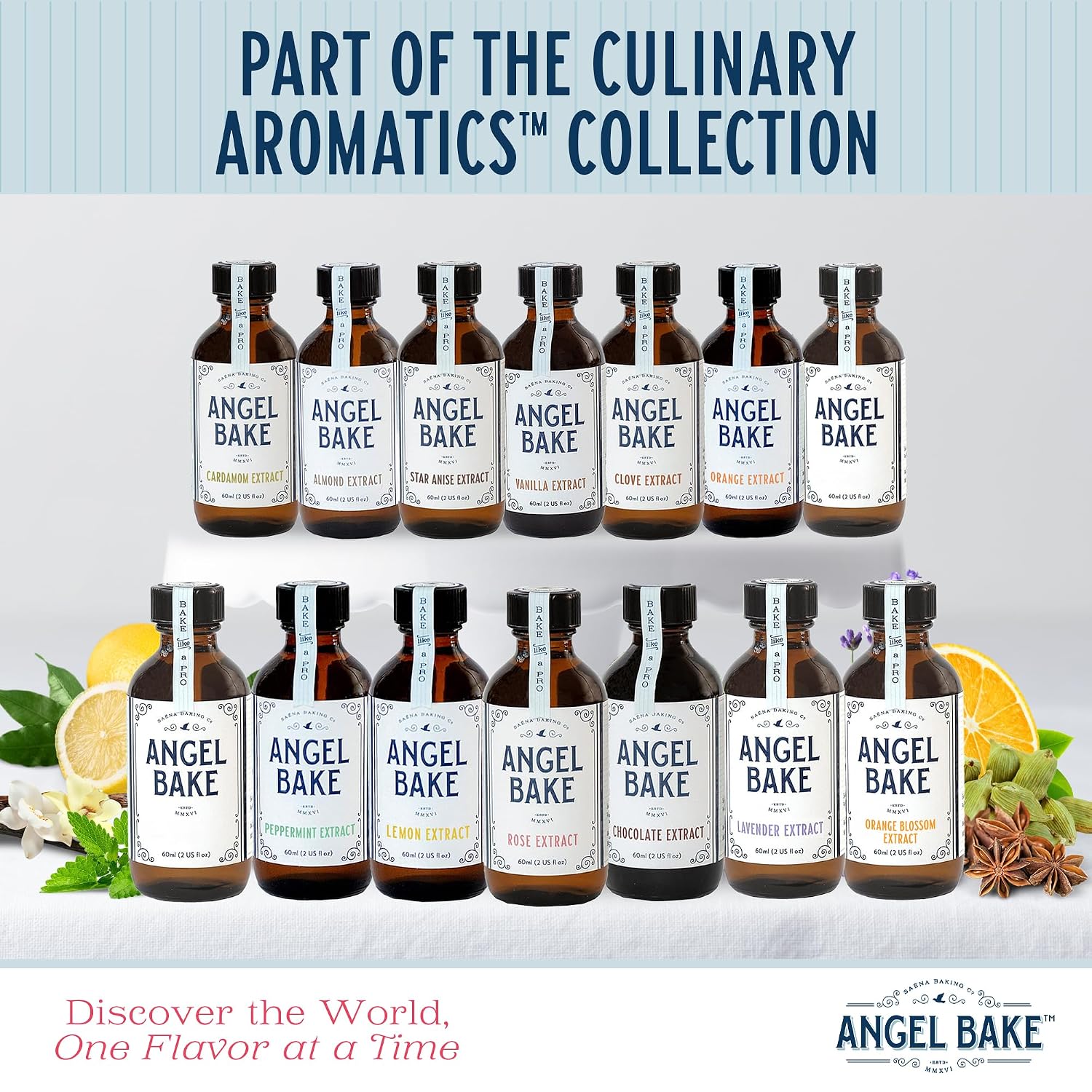
If you’ve ever bitten into a lavender shortbread that tasted like soap, or a rose cake that smelled like a department store counter, you’ve met the central challenge of floral extracts: the line between “elegant and aromatic” and “this tastes like perfume” is genuinely thin. Floral and fruit extracts — concentrated liquid flavorings made from real or nature-identical aromatic compounds suspended in an alcohol or water base — have gone from specialty-shop curiosities to a real presence in home and professional baking over the last few years. But unlike vanilla, which is forgiving and familiar, rose and lavender have almost no margin for dosing error. Berry extracts are more approachable but come with their own question: are they made from real fruit, or is that “strawberry” flavor engineered in a lab?
This guide is built for bakers who are past the “should I try this?” stage and are now asking the harder questions: which sets are worth the investment, how do the floral options compare on potency, what do berry bundles actually contain, and when does buying a set beat buying individual bottles? We’ll walk through the decision math, name the tradeoffs explicitly, and end with a clear framework for making your call.
What Makes Floral Extracts So Different From Vanilla (And Why That Matters for Dosing)
Vanilla is extracted from cured beans and carries a complex, rounded flavor profile dominated by vanillin — a compound that integrates easily into fat, sugar, and heat. Rose and lavender extracts work very differently. Their aromatic compounds — primarily geraniol and citronellol in rose, linalool and linalyl acetate in lavender — are intensely volatile and highly potent at low concentrations. As Fine Cooking’s overview of floral baking notes, these compounds can shift from background note to dominant flavor at surprisingly small incremental doses, which is why so many first-time floral bakers overshoot.
The practical implication: the dosing range for floral extracts is narrower than for any other extract category. A recipe calling for one teaspoon of vanilla can absorb a 20% variance without drama. That same variance applied to rose extract in a Swiss meringue buttercream will take you from “subtle and lovely” to “soap bar” in a fraction of a teaspoon. Reviewers of the Bakto Flavors floral set consistently surface what might be the most useful dosing warning in this entire category: “yum to perfume” — meaning the window between not enough and too much is small enough that you should treat every new floral extract as a new variable and dose up in drops, not fractions of teaspoons, until you’ve mapped the extract’s specific potency in your formula.
The Serious Eats piece on extract terminology is useful context here: what’s labeled a “flavoring” versus a “pure extract” versus a “natural flavor” matters because it signals concentration. A pure rose extract made from rosa damascena petals will typically be more potent per milliliter than a rose “flavoring” that uses nature-identical aromatic compounds diluted in a larger base. When you’re buying a set — where you may be getting multiple formats under one brand — read each label individually rather than assuming consistent dilution across the bundle.
Comparing the Main Sets: Bakto Floral, OliveNation Berry, and Standalone Florals
The Bakto Flavors Floral Variety Set
The Bakto set typically includes rose, lavender, jasmine, and one or two additional florals, making it the most comprehensive floral bundle available for home and small-production bakers. Across aggregated reviews, the rose and lavender are consistently the standout performers — owners report both as clean, recognizable, and potent enough that a small amount goes a long way. The jasmine, however, earns a recurring note in reviews: it underperforms relative to the other florals in the set. Multiple reviewers describe the jasmine as faint or flat, particularly in baked applications where heat dissipates delicate aromatics. This is worth knowing before you build a recipe around it. If jasmine is your primary target, the Bakto set may not be the right entry point — consider sourcing a single-origin jasmine extract separately and using the Bakto set for its rose and lavender strengths.
The value case for the Bakto set is clearest for bakers who want to explore the floral category before committing to larger individual bottles. If you’re developing a spring menu or testing a floral macaron line, the set gives you comparison material across multiple florals at a lower per-ounce commitment than buying four separate specialty bottles.
OliveNation Berry Six-Pack
The OliveNation berry set — typically strawberry, raspberry, blueberry, blackberry, peach, and one additional berry or stone fruit — earns consistent praise for a specific attribute that resonates strongly with clean-label and dietary-restricted buyers: no added sugar, no corn syrup. Reviewers who bake for keto, diabetic, or low-sugar dietary profiles specifically call this out as a differentiator. Most mass-market fruit flavorings include sweetener carriers that add caloric load and complicate sugar management in precision formulas. The OliveNation berry set uses an alcohol and water base, which keeps it functionally similar to a pure extract.
One buyer use case that shows up in reviews and is worth acknowledging for completeness: some purchasers of these berry sets use them for flavored water — specifically, drops in plain or sparkling water as a sugar-free flavoring. The math reviewers cite (roughly 16 drops per 8-ounce serving, at pennies per serving once you’ve bought the set) represents a completely different buyer persona from the baker, but it’s a real secondary use case for anyone buying the six-pack who bakes seasonally rather than daily.
For professional bakers managing ingredient transparency with customers, the clean label on the OliveNation berry set is a legitimate selling point you can communicate forward.
Standalone Rose and Lavender Extracts: The Individual-Bottle Case
One rose extract reviewer documented in buyer feedback noted she “researched a TON of options” before purchasing, specifically focused on price variation and potency differences across brands. That experience maps directly to what intermediate practitioners report: the standalone rose extract market has significant potency variance, and price is not a reliable proxy for strength. A $12 rose extract from a specialty retailer may outperform a $22 bottle from a natural grocery chain if the former uses a higher rosa damascena concentration.
For lavender, a concrete product detail that helps with buying decisions: look for dropper caps and colorless, alcohol-based formulations. A dropper cap signals the manufacturer expects you to dose in drops, not fractions of teaspoons — which is exactly how lavender should be used in most baked applications. Colorless means no added colorant that could tint your batter or buttercream unexpectedly. Reviewers of lavender extracts consistently flag these two physical attributes as signals of a well-formulated product.
King Arthur Baking Company’s guidance on specialty extracts recommends starting with half the quantity you think you need for any floral extract and adjusting upward — a rule that holds especially well for lavender in high-fat applications like shortbread or financiers, where the fat can amplify rather than mellow the aromatic intensity.
The Set vs. Individual Bottle Decision: Show the Math
By the numbers:
| Buying path | Typical cost | Effective cost per flavor | Best for |
|---|---|---|---|
| Bakto floral set (4–6 florals) | $18–$28 | $4–$6 per flavor | Exploration, seasonal menu testing |
| Individual specialty rose extract | $12–$22 per bottle | $12–$22 | High-volume single-flavor production |
| OliveNation berry six-pack | $24–$38 | $4–$6 per flavor | Clean-label bakers, multi-berry menus |
| Individual berry extract (single) | $8–$15 per bottle | $8–$15 | Known high-use single flavor |
The math favors sets when you’re in an exploration or menu-development phase and against sets when you’ve identified one or two flavors you’ll use consistently at volume. A small bakery that sells a lavender honey cake every week should buy lavender individually in a larger bottle — the per-ounce cost drops, and you’re not paying for jasmine you won’t use. A baker developing a spring collection who wants to test rose macarons, lavender financiers, and berry compote fillings simultaneously gets real value from the set format.
The Kitchn’s overview of specialty baking extracts makes a point that’s useful here: variety sets have a built-in waste risk if the baker doesn’t have recipes ready for all included flavors. Extracts have meaningful shelf lives (typically two to four years for alcohol-based, shorter for water-based), but they do degrade — and an unused bottle of jasmine extract sitting in a cabinet for two years is money that didn’t work. Buy sets when you have a plan for all the flavors, or when discovery is explicitly the goal.
Frequently Asked Questions
How do you keep floral extracts like rose and lavender from tasting like perfume in baked goods?
Dose in drops, not teaspoons, until you know the potency of your specific extract. The “yum to perfume” window is real and narrow. Fat-rich applications (buttercream, ganache, shortbread) can amplify floral intensity, so start lower in those formulas. Acid — a small amount of citrus zest or juice — can help balance floral notes and prevent them from reading as soapy.
How much rose extract should you use in Swiss meringue buttercream or macarons?
As a starting baseline, most experienced bakers recommend ¼ teaspoon or less per batch of Swiss meringue buttercream (roughly 3 cups finished). For macarons, where the shell is small and delicate, begin with 2–3 drops per batch of shells and adjust. King Arthur Baking Company advises that floral extracts in egg-based formulas should always be added after the fat is incorporated to avoid the alcohol base affecting protein structure.
Are the fruit extracts in OliveNation and Bakto sets made from real fruit or are they artificial?
This varies by product and requires label reading. “Natural flavor” on a fruit extract label (per FDA labeling standards as summarized in the Serious Eats extract explainer) means the flavor compounds are derived from natural sources — which can include the actual fruit, but also other natural sources that produce the same aromatic compound. “Pure” extract implies the flavor comes directly from the named source. The OliveNation berry set uses natural flavor bases; they are not “artificial” in the regulatory sense, but they are not necessarily cold-pressed from fresh berries either.
Can you use floral and berry extracts in drinks and water, or are they only for baking?
They work well in drinks. Alcohol-based extracts disperse cleanly in water and carbonated beverages. Some buyers use berry sets specifically for flavored water at a fraction of the cost of flavored drink products. The dosing for beverages is typically lower than for baking since there’s no fat or sugar to dilute the flavor.
Why are specialty extracts like rose and lavender so hard to find in grocery stores?
Demand has historically been low enough that grocery chains don’t carry them at shelf. They’re also high-volatility products — potency degrades if stored improperly, and high turnover is needed to keep product fresh. Specialty retailers and online suppliers are better positioned to stock them with appropriate conditions and turnover rates.
Do extract sets offer good value compared to buying individual bottles of the flavors you actually use?
If you’ll genuinely use all (or most) of the included flavors within the extract’s shelf life, yes. If you have one clear high-use flavor and the rest are speculative, individual bottles win on value. The set format trades per-unit cost savings for variety risk — it’s a good deal for exploration, a potential waste trap for focused production.
The Decision Framework
If you’re building a spring or seasonal menu and want to explore floral and berry profiles before committing: a floral set like Bakto and a berry set like OliveNation’s six-pack together give you a full palette at a reasonable per-flavor cost. Go in knowing jasmine may underperform.
If you’ve already identified lavender or rose as a signature flavor for your production: skip the set, buy a quality single-origin or concentrated standalone extract with a dropper cap, and invest in understanding that one extract’s potency curve in your specific applications.
If clean label and dietary compatibility matter to your customers: the OliveNation berry set’s no-sugar, no-corn-syrup formulation is a genuine differentiator worth the slightly higher per-ounce cost versus commodity fruit flavorings.
In all cases, treat your first use of any new floral extract like a new variable in a formula you haven’t balanced yet. Dose low, taste as you go, and add more rather than trying to reverse an overdose. Floral baking rewards patience and precision — and once you’ve found the right level, it’s one of the most distinctive things you can do with an extract.