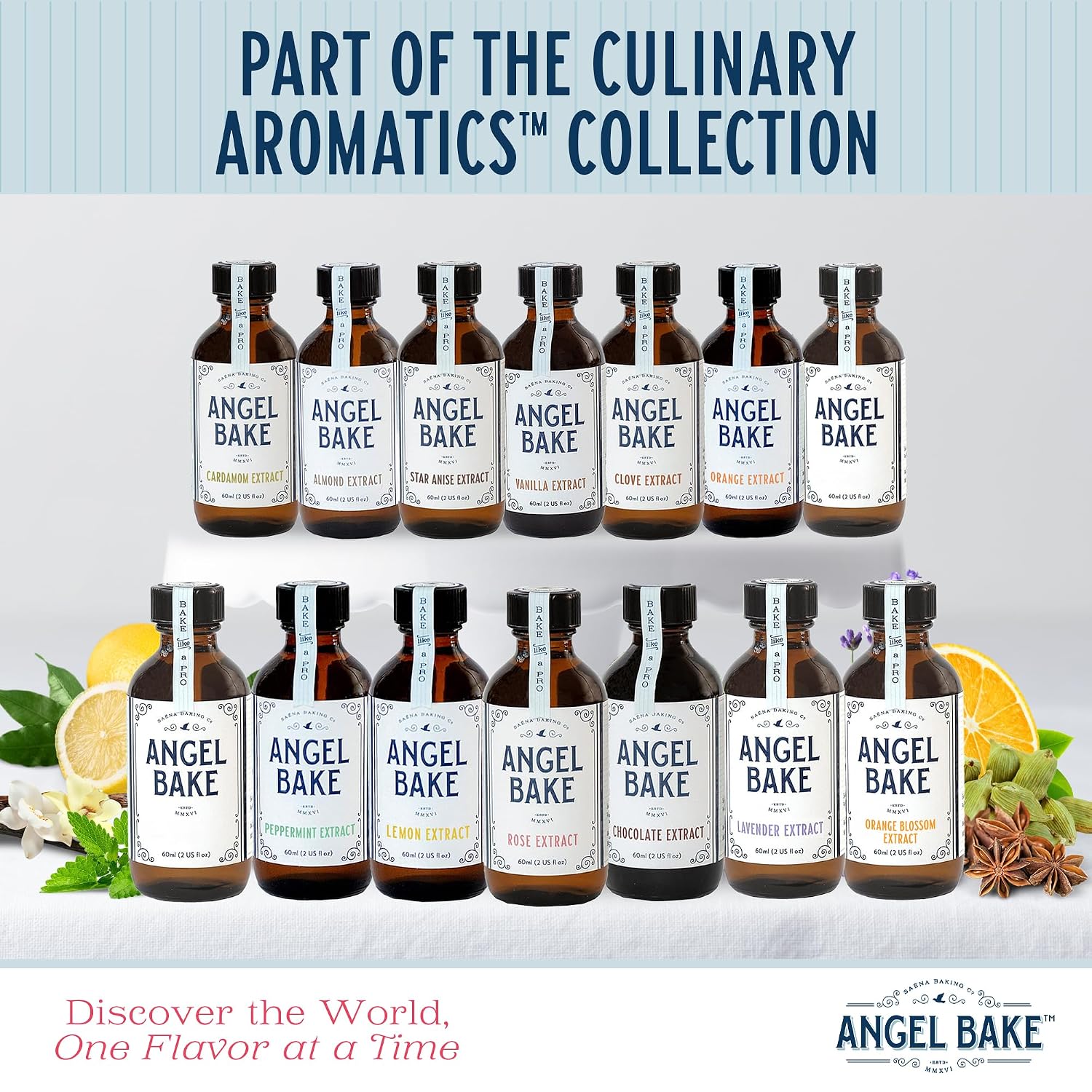
Floral and fruit extracts — liquid or paste concentrates that capture the flavor of roses, lavender, raspberries, and other botanicals — sit in a completely different operating zone than vanilla. Vanilla is forgiving: a little more than the recipe calls for rarely destroys a cake. Floral extracts are not forgiving at all. One extra drop of rose extract in a Swiss meringue buttercream can take a delicate dessert from elegant garden party to fabric softener. Berry extracts, meanwhile, can taste either like real sun-ripened fruit or like a children’s candy, depending entirely on what’s inside the bottle. This guide is for bakers who have already decided these extracts are worth exploring and now need a clear framework for buying them intelligently, dosing them precisely, and matching them to the right applications.
| EDITOR'S PICKPure Chocolate | Mid-tier[Bakto Flavors Natural Fruit Fla…](https://www.amazon.com/dp/B0DL7Y94XD?tag=greenflower20-20) | Budget pick[LorAnn SS Tropical Variety pack](https://www.amazon.com/dp/B08R43C3GM?tag=greenflower20-20) | |
|---|---|---|---|
| Bottle size | 2 oz | 1 oz | 0.0125 fl oz |
| Variety count | 4 | 6 | 4 |
| Natural | — | ✓ | — |
| Flavor type | Fruit, floral | Fruit | Tropical fruit |
| Price | $45.00 | $25.99 | $9.02 |
| See on Amazon → | See on Amazon → | See on Amazon → |
Why Floral and Berry Extracts Behave Differently from Vanilla
Vanilla extract is built around vanillin, a single dominant flavor compound that is relatively stable, diffuses slowly, and plays well with heat. Floral extracts — particularly rose and lavender — contain volatile aromatic compounds (meaning they evaporate quickly and easily) that behave more like perfume than food flavoring. This is not a metaphor: several aromatic compounds in rose and lavender extracts are literally shared with the fragrance industry. That’s what makes them beautiful at the right dose, and soapy or perfume-like at the wrong one.
Lavender extract reviewers at several specialty suppliers consistently flag one critical design detail: a dropper cap. This isn’t a marketing feature — it’s a functional necessity. Without a dropper, you’re at real risk of losing control of the pour. One buyer reported nearly emptying an entire bottle into a batch because the extract is so thin and potent. Their workaround, now widely cited in baker communities, is to use a clean chopstick or small skewer to transfer tiny amounts from the bottle to a measuring spoon. File that tip away before you ever open a bottle.
Berry extracts operate on a different set of concerns. The primary issue isn’t potency — it’s purity. Fruit flavor concentrates vary dramatically in composition. Some are essentially fruit-forward sugar syrups with corn syrup as the second ingredient. Others are clean alcohol-based extracts that read, according to aggregated buyer reviews compiled across specialty extract retailers, more like fruit liqueurs — complex, layered, and genuinely fruit-forward — than like artificial candy flavoring. That distinction matters enormously in applications like mousse, whipped cream, or Swiss buttercream where sugar balance is already tightly calibrated.
Per King Arthur Baking Company’s guide to flavor extracts, fruit-based flavors made without added sweeteners allow bakers to control sugar levels independently from flavor intensity — a meaningful advantage in professional-grade formulation.
The Dosing Framework: How to Avoid the “Soap and Perfume” Line
The most-repeated warning across specialty extract reviews — appearing in nearly identical language from multiple independent buyers of both floral extract sets and LorAnn emulsions — is some version of: “flavor is easily overdone; use sparingly until you get the right amount that doesn’t cross the line from yum to perfume.” This isn’t an accident. It’s a genuine category-wide characteristic of floral flavors.
Here is a practical starting framework built from manufacturer guidance, aggregated reviewer experience, and Fine Cooking’s coverage of working with floral flavors in pastry:
By the Numbers: Starting Dose Ranges for Floral Extracts
| Extract | Batch Size | Starting Dose | Upper Limit |
|---|---|---|---|
| Rose extract (pure) | 1 lb buttercream | ¼ tsp | ½ tsp |
| Lavender extract | 1 lb buttercream | ⅛ tsp | ¼ tsp |
| Rose in macaron shells | 12 shells | 1–2 drops | 4 drops |
| Lavender in baked custard | 1 cup custard | ⅛ tsp | ¼ tsp |
These are starting points, not recipes. Every extract brand has a different concentration — and concentrations can shift slightly batch to batch with botanical products. Always dose from the low end, taste, and build up incrementally. Critically: taste after at least five minutes of resting. Floral flavor compounds need time to diffuse through fat (butter, cream) before you can accurately assess intensity.
One practical note on lavender specifically: Pastry Arts Magazine’s coverage of specialty flavor concentrates in modern confectionery emphasizes that lavender “projects” in a way that intensifies as baked goods cool. A buttercream that tastes balanced warm can read as strongly floral once it reaches room temperature. Factor in a cooling-rest tasting step before you finalize your formula.
Rose Extract: Matching the Right Profile to the Right Application
Not all rose extracts are the same. There are three broad categories worth understanding:
Rose water is the most diluted form — essentially water infused with rose petals. It’s traditional in Middle Eastern and South Asian baking. Flavor is gentle and requires relatively high volume (1–2 tablespoons per batch) to be perceptible. Works well in delicate cakes, rice puddings, and anywhere water content doesn’t matter.
Rose extract (alcohol-based) is what most specialty suppliers sell when they label something simply “rose extract.” It’s significantly more concentrated than rose water — typically 4–6 times as potent — which is why dropper caps and careful dosing are so important. This format is ideal for buttercream, ganache, and macaron shells where adding liquid volume (as you’d have to with rose water) would destabilize the emulsion.
Rose emulsion (a water-soluble format where flavor compounds are suspended in a stable base rather than dissolved in alcohol) offers more consistency in high-sugar applications and is heat-stable, making it useful for cookies and cakes that spend time in a hot oven.
The research path taken by serious buyers before purchasing rose extract for Swiss meringue buttercream — comparing several options specifically for their concentration, ingredient purity, and compatibility with fat-based applications — reflects exactly the kind of format-matching decision that separates a successful floral dessert from a failed one. Serious Eats’ coverage of how flavor extracts are made notes that alcohol-based extraction captures more volatile aromatics than water-based infusion, which is why the flavor payoff-per-drop is so much higher in a true extract.
For macaron shells specifically: the buttercream filling can handle rose extract at the doses above, but applying any floral flavor directly to the shell batter itself requires extreme restraint — think 1–2 drops per dozen shells maximum, added to the meringue rather than the almond meal, for better dispersion.
Berry Extracts: Reading the Label Before You Buy
The label on a berry extract tells you almost everything you need to know before you taste it. Here are the three label signals that matter:
1. Sweetener disclosure. If corn syrup or sugar appears in the ingredient list, that extract will add measurable sweetness to your recipe. For most frostings and fillings, that’s not neutral — it shifts your sugar ratio. Multiple OliveNation berry extract buyers specifically call out the absence of sugar and corn syrup as a meaningful product attribute, precisely because they’re formulating at a level where sweetener balance matters.
2. “Natural flavor” vs. “artificial flavor.” Per the FDA’s flavor labeling regulations (cited in Serious Eats’ extract guide), “natural flavor” means the flavor compounds were derived from the actual source fruit — even if heavily processed. “Artificial flavor” means the compounds were synthesized entirely. Both can taste good. But in practice, aggregated buyer reviews consistently describe clean natural fruit extracts as reading like fruit liqueurs — layered, recognizable, nuanced — while artificial versions skew toward candy-like, one-dimensional sweetness. For professional applications, that distinction matters.
3. Concentration/extract ratio. Some products are labeled as “2x” or “3x” concentrated. These are more economical for bulk use but require adjusted dosing. A standard recipe calling for 1 teaspoon of raspberry extract will need only ½ teaspoon of a 2x product.
For no-bake applications — mousse, whipped cream, semifreddo — berry extracts generally perform beautifully. Unlike some baked applications where heat can drive off the most volatile flavor compounds, cold preparations let the full flavor profile express. The one note of caution: alcohol-based extracts can sometimes create a slight warming sensation at higher doses in cold, dairy-heavy preparations. If that’s a concern, look for water-based or emulsion versions for mousse applications.
The “Safest Entry Point” Decision Guide
If you’re new to floral extracts and trying to build intuition before applying them to a high-stakes order, here’s the decision tree based on aggregated reviewer experience and risk profile:
If you want the most forgiving floral flavor: Start with rose. Its flavor threshold (the dose at which it tips from pleasant to overwhelming) is somewhat wider than lavender’s, and its flavor reads as more “food” than “botanical” to most palates. Swiss meringue buttercream on a vanilla cake or almond cake is a safe first application.
If you want the most forgiving berry flavor: Raspberry or strawberry extracts are familiar enough to most palates that the feedback loop is faster — you know what “too much” smells like and can self-correct more intuitively. Start there before working toward less-familiar blackcurrant or elderflower.
If you’re ready for lavender: Commit to the dropper-or-chopstick discipline before you open the bottle. Lavender’s volatility means it projects further and evaporates faster than rose — reviewers consistently describe needing to work quickly and seal the bottle between uses to preserve potency. The payoff, when dosed well, is genuine: reviewers describe the flavor as “magnificent” and note its ability to project throughout a finished dessert without a sharp application.
Frequently Asked Questions
How much rose or lavender extract should I use in a batch of buttercream without it tasting like soap or perfume? For a one-pound batch of Swiss meringue or American buttercream, start at ¼ teaspoon of rose extract or ⅛ teaspoon of lavender. Let the frosted cake sit for at least 10–15 minutes before tasting — floral compounds need time to diffuse through fat. Add incrementally in single drops from there.
Are these fruit extracts sweetened, and will they affect the sugar balance of my recipe? Some are, some aren’t — and the difference is meaningful. Check the ingredient list before you buy. Products containing corn syrup or sugar will add sweetness that needs to be offset elsewhere in your formula. Clean, unsweetened extracts give you full control over flavor intensity without touching your sugar ratios.
Can I use floral extracts in hot beverages, or are they only for baking? Technically yes, but with caveats. Floral aromatic compounds evaporate rapidly at high temperatures, which means much of the flavor will dissipate in a steaming drink. The lavender extract reviewer who specifically praised the “projection” of their extract was describing a cold buttercream application, not a hot one. For beverages, a floral simple syrup or rose water will give you more stable, persistent flavor than a pure alcohol-based extract.
What is the difference between a natural fruit extract and an artificial fruit flavoring in terms of taste? Natural fruit extracts tend to deliver layered, recognizable flavor that resembles the actual fruit — closer to a quality fruit liqueur than a candy. Artificial flavorings are typically constructed around a single primary flavor compound and can read as sweeter and more one-dimensional. Both have applications, but for professional-grade pastry work where nuance matters, natural extracts generally provide a more convincing result.
Do berry extracts work in no-bake applications like mousse and whipped cream? Yes — and many bakers find no-bake applications are actually the best showcase for berry extracts, since the full volatile flavor profile isn’t driven off by heat. Use the standard starting doses and adjust based on fat content: higher-fat bases (heavy cream, mascarpone) may need slightly more extract to achieve the same intensity.
Which specialty extract is the safest to start with for someone new to floral flavors? Rose extract is the most forgiving entry point. Its flavor arc is more familiar to Western palates, its overdose threshold is slightly more generous than lavender’s, and it pairs intuitively with almond, vanilla, lychee, and white chocolate — all common building blocks in intermediate-level pastry. Master rose first, then work toward the more volatile lavender once you have your dosing intuition calibrated.