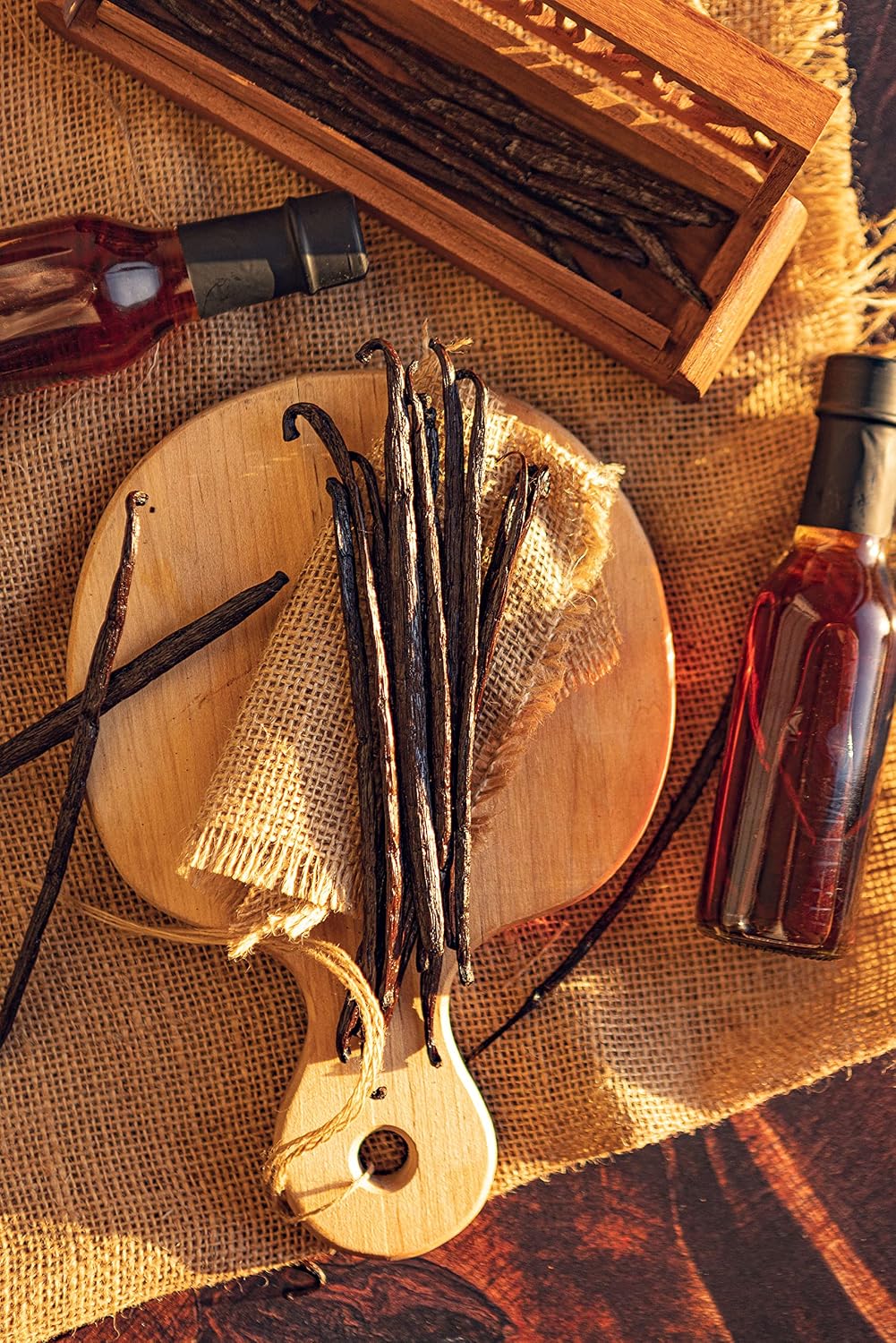
Making your own vanilla extract at home sounds fancy, but the concept is genuinely simple: you submerge split vanilla beans — the long, dark, seed-filled pods that grow on orchid vines — in alcohol, wait a few months, and the alcohol slowly draws out all the flavor compounds locked inside the bean. What you end up with is a deeply aromatic liquid you can use cup-for-cup wherever a recipe calls for vanilla extract. The part most guides gloss over is that the alcohol you choose is not neutral in this process. It brings its own flavor, its own sugar content, and its own aroma to the finished extract — and those variables matter a lot, especially if you’re making extract in volume, gifting jars at the holidays, or building a signature flavor for your baked goods. This guide breaks down the four most common spirit choices — vodka, rum, bourbon, and whiskey — with honest tradeoffs for each, so you can make a decision that fits your actual baking style.
| EDITOR'S PICK50 Organic Madagascar Vanilla B… | Mid-tier25 Organic Madagascar Whole Gra… | Budget pick26 Organic Madagascar Vanilla B… | |
|---|---|---|---|
| Count | 50 | 25 | 26 |
| Grade | A | A | B |
| Size | — | — | 4.5" - 5.5" |
| Non-GMO | — | — | ✓ |
| Price | $39.99 | $27.99 | $17.98 |
| See on Amazon → | See on Amazon → | See on Amazon → |
Why Your Spirit Choice Actually Changes the Extract
Here’s the mechanism worth understanding: vanilla beans contain hundreds of flavor compounds, but the headliner is vanillin — the molecule responsible for that warm, sweet, unmistakably “vanilla” smell. Alcohol is the solvent that pulls vanillin and its supporting compounds out of the bean cell walls through a process called maceration (just a fancy word for long-term soaking). The FDA, per its standard of identity for pure vanilla extract, requires a minimum of 35% alcohol by volume (ABV) to qualify as “pure” extract — and that floor exists precisely because lower-proof spirits don’t extract efficiently.
What this means practically: any spirit at or above 35% ABV will do the job of extraction. The question isn’t whether the alcohol works — it’s what flavor the alcohol deposits alongside the vanilla. Vodka is nearly flavorless. Rum brings molasses and tropical sweetness. Bourbon adds caramel and oak. Whiskey introduces grain and smoke. Each of those secondary flavors either reinforces or competes with your vanilla, depending on the application.
Per Serious Eats’ guide on homemade vanilla extract, the choice of base spirit is genuinely consequential in finished baked goods where vanilla is a primary flavor note — think custards, simple butter cakes, or shortbread — and much less consequential in strongly spiced or chocolatey recipes where vanilla plays a supporting role.
The Four Spirits, Side by Side
Vodka: The Neutral Baseline
Vodka’s near-flavorlessness is its defining asset for extract making. A 40% ABV (80-proof) plain vodka will extract efficiently and add almost nothing of its own character, which means the vanilla bean’s profile comes through unfiltered. If you’re working with a high-quality single-origin bean — say, Tahitian beans with their pronounced floral and cherry-anise notes, or a Madagascar Bourbon bean with its dense, creamy richness — vodka is the spirit that lets that origin character speak loudest.
The tradeoff is that “neutral” reads as “thin” to some palates. A vodka-based extract made with mid-range grocery-store beans can taste sharp and one-dimensional compared to a rum- or bourbon-based version made with equivalent beans. The Kitchn’s overview of homemade extract notes that bakers who prioritize pure, clean vanilla flavor in delicate applications like panna cotta or French buttercream consistently prefer vodka-based extracts for that reason.
Best for: Pastry applications where vanilla is the star and you want origin character to come through cleanly — custards, simple layer cakes, white chocolate ganache, French meringue buttercream.
Watch out for: The finished extract can taste noticeably sharper straight from the bottle than a rum or bourbon version. Give it at least three months, ideally six, before judging.
Rum: The Crowd Favorite for Gifting
Among experienced home extract makers, rum is the spirit that generates the most enthusiastic converts — and the pattern in long-run maker reviews is consistent: bakers who start with vodka and later try rum frequently don’t go back. The reason is layered aroma. Light rums add a subtle tropical sweetness without overwhelming the vanilla; dark rums bring deeper molasses and caramel notes that stack beautifully on top of vanilla’s natural warmth.
The molasses character in dark rum is particularly flattering to Madagascar Bourbon vanilla beans, which already carry brown-sugar undertones. The result is an extract that smells almost dessert-like straight from the jar — which is part of why rum-based vanilla extract has become a popular homemade holiday gift. Multiple long-term extract makers specifically mention Christmas gifting as a seasonal motivation for batching rum-based extract in late summer or early fall, so the extract has a full three to six months to mature before December.
King Arthur Baking’s vanilla extract guide points out that the slight sweetness rum introduces is rarely detectable in finished baked goods at standard extract usage levels (usually 1–2 teaspoons per recipe), making it a low-risk upgrade over vodka for most applications.
Best for: Cookies, pound cakes, banana bread, holiday baked goods, gifting jars, applications where warmth and sweetness complement the recipe’s existing flavor profile.
Watch out for: Very dark, heavily aged rums can overpower delicate recipes. A light or gold rum is the safer all-purpose choice if you’re making extract for a range of uses.
Bourbon: The Baker’s Spirit
Bourbon is essentially rum’s more complex American cousin for these purposes. It’s made from a grain mash that’s at least 51% corn, aged in new charred oak barrels — and that aging process deposits vanilla, caramel, and oak compounds into the spirit before your beans ever touch it. When you make vanilla extract with bourbon, you’re layering vanilla-forward spirit with vanilla beans, and the compound effect can be genuinely exceptional.
Fine Cooking’s breakdown of vanilla flavor compounds notes that the vanillin bakers taste in their extracts is chemically identical to the vanillin that forms naturally in oak barrels during bourbon aging — which is why bourbon-based vanilla extract can taste almost supernaturally “vanilla” even before the beans have fully steeped. This makes bourbon a smart choice if you’re working with Grade B beans (more on those below) and want to compensate for slightly lower oil content in the bean itself.
The caution here is proof. Many popular bourbons run 40–50% ABV, which works fine. Some craft or cask-strength bourbons go 60%+ ABV, which can slow extraction or produce a harsher initial taste. Standard 80-proof bourbon is the reliable starting point.
Best for: Brown butter cakes, caramel desserts, cookie recipes with brown sugar, recipes where caramel-oak complexity is an asset rather than a distraction.
Watch out for: Bourbon’s assertive flavor can clash with very delicate applications — a subtle Tahitian vanilla floral profile can get buried. Also watch the proof if you’re selecting craft bottles.
Whiskey: For the Intentional Baker
Whiskey is the most variable category here — Scotch, Irish, rye, and American whiskeys each bring distinct character, and that variability is both the appeal and the complication. Rye whiskeys introduce a spicy, slightly peppery note. Scotch adds smoke (sometimes very prominently). Irish whiskeys tend toward lighter, fruitier profiles that behave more like a floral rum.
This is the spirit choice for extract makers who want a signature extract that doesn’t taste like anyone else’s — but it demands intentionality. If you choose a lightly peated Irish whiskey to make extract for shortbread, you’re making a craft decision that can pay off beautifully. If you grab a heavily peated Scotch without thinking about where the extract will land, you may find the finished cookies taste more like a bonfire than a bakery.
Serious Eats’ extract guide specifically flags that whiskey-based extracts work best when the baker has a defined end use in mind, rather than as an all-purpose pantry staple.
Best for: Signature house extracts, savory-adjacent desserts, recipes with spice profiles (gingerbread, molasses cookies), bakers who want a genuinely distinctive extract.
Watch out for: Very smoky or heavily peated whiskeys can produce extract that’s difficult to use broadly. Start with a light Irish whiskey or a mild American rye if you’re new to whiskey-based extraction.
By the Numbers: Quick Planning Reference
| Spirit | Recommended ABV | Flavor Add | Best Bean Pairing | Steeping Minimum |
|---|---|---|---|---|
| Vodka | 40% (80-proof) | Neutral | Tahitian, single-origin Madagascar | 8 weeks (12+ preferred) |
| Rum (light/gold) | 40% (80-proof) | Molasses, tropical sweetness | Madagascar Bourbon | 8 weeks (16+ for dark rum) |
| Bourbon | 40–50% | Caramel, oak, vanilla | Grade B Madagascar | 10–12 weeks minimum |
| Whiskey | 40–50% | Spice, fruit, or smoke (varies) | Madagascar, Indonesian | 10–12 weeks minimum |
Note: All spirits should be at minimum 35% ABV to meet FDA’s pure extract standard and ensure efficient extraction.
Frequently Asked Questions
What is the best alcohol to use for homemade vanilla extract — vodka, rum, bourbon, or brandy?
There’s no single best answer, but there is a best answer for your use case. Vodka is the most versatile starting point because its neutral flavor lets the vanilla bean’s character come through undiluted. Rum — particularly a light or gold rum — is the most widely loved by experienced makers who want a warmer, more layered result. Bourbon adds caramel-oak complexity that flatters brown sugar-forward recipes. Brandy (not covered in depth above) behaves similarly to rum — fruity and slightly sweet — and is a legitimate fourth option worth exploring. If you’re making one all-purpose extract, start with 80-proof vodka or a light rum. If you’re making extract to gift or to define a signature flavor, rum or bourbon are worth the experiment.
How many vanilla beans do you need per bottle of homemade extract?
The FDA standard for pure vanilla extract requires 13.35 ounces of vanilla beans per gallon of 35% ABV alcohol — which scales to roughly 3 beans per 4-ounce bottle or 6–8 beans per 8-ounce bottle. In practice, most home makers use a bit more than the FDA minimum for fuller flavor. The commonly cited planning figure among experienced batch makers is 50 Grade B beans yielding approximately 8 standard 8-ounce jars of extract — a useful number when you’re ordering beans in bulk and calculating cost per jar.
What is the difference between Grade A and Grade B vanilla beans for making extract?
Grade A beans (also called “gourmet” or “prime” beans) are plumper, more moist, and higher in essential oil content — they’re priced accordingly and optimized for use whole or split as a visual garnish (in crème brûlée, for example) or in applications where appearance matters. Grade B beans (sometimes called “extraction grade”) are thinner and drier, with slightly less visual appeal, but still contain substantial vanillin and flavor compounds that release fully during maceration. For extract making, Grade B beans are genuinely the practical choice for most bakers — their lower moisture content can actually produce more concentrated flavor per dollar spent. The claim that Grade B is somehow inferior for extraction is a myth worth retiring. Reviewers consistently confirm that quality Grade B beans described as “not dry” — still pliable, not brittle — perform excellently in long maceration.
How long does homemade vanilla extract need to steep before it is ready to use?
Eight weeks is the widely cited minimum for a usable extract, but most experienced makers describe the extract as noticeably better at 3–4 months and genuinely excellent at 6 months or more. Bourbon and whiskey-based extracts benefit from extra steeping time because the spirit’s own complexity needs time to integrate with the bean compounds. If you’re making extract as a holiday gift, a late-summer batch (August or September) gives you a full 3–4 months before gifting season — which is exactly the timeline multiple seasonal batch-makers report as their standard approach.
Can you use Tahitian vanilla beans instead of Madagascar beans for homemade extract, and will it taste different?
Yes, and the flavor difference is meaningful. Madagascar Bourbon vanilla beans (the most widely available variety) produce an extract with a dense, creamy, traditional vanilla profile — sweet, warm, and round. Tahitian vanilla beans (Vanilla tahitensis rather than Vanilla planifolia) produce an extract with distinctly floral, fruity, and cherry-anise notes that some bakers describe as almost perfume-like. In a vodka-based extract, that Tahitian floral character comes through clearly and can be a genuinely interesting variable in recipes like a white chocolate ganache or a floral shortbread. In a rum or bourbon base, the Tahitian profile gets somewhat absorbed by the spirit’s own sweetness. If you want the Tahitian character to express itself, pair it with a neutral vodka base and give it a long steep.
How do you tell if vanilla beans are fresh enough to use for extraction when they arrive?
The most reliable freshness indicators reviewers consistently flag: the beans should be pliable and bend without snapping, not brittle or cracked along their length. They should smell intensely of vanilla — sweet, deep, and slightly fermented — when you open the package. Vacuum-sealed packaging is a practical freshness proxy that experienced buyers look for before they even open the bag; multiple reviewers cite intact vacuum seals as a meaningful quality signal when ordering beans online. Beans that arrive dry and rigid have lost essential oil content and will produce thinner extract. Beans with visible mold (versus the white vanillin crystallization, called “frosting,” which is actually a positive freshness sign) should be returned.
Making your own extract is one of the most satisfying small investments you can make in your baking pantry — the cost per batch drops dramatically compared to commercial bottles, the quality ceiling is genuinely higher, and the ability to choose your own bean origin and your own spirit base means you’re building something nobody else has. The clearest decision rule: if you want a clean, versatile, origin-forward extract, start with 80-proof vodka and a quality Grade B Madagascar or Tahitian bean. If you want a warmer, more complex extract with gifting appeal, light or gold rum is the upgrade worth trying. And if you bake a lot of caramel-forward, brown sugar-heavy recipes, a bourbon base will feel like it was made for the work.