Almond extract is one of those pantry ingredients that looks simple on the outside — a small brown bottle, a few dollars, maybe two inches tall — but hides a surprisingly complicated decision inside. Extract here means a concentrated flavoring made by soaking almonds (or in some versions, synthesizing a key aromatic compound) in alcohol or another carrier, so that just a few drops pack enough punch to perfume an entire batch of cookies. The big fork in the road is whether that flavor comes from a natural source or from a lab-made version of the same molecule, and whether you care about the difference. Spoiler: sometimes you should, sometimes you really shouldn’t, and the answer depends almost entirely on what you’re baking and how much of it you’re making. This article walks through the pure-versus-imitation question with real tradeoffs and actual numbers, covers the emulsion format that’s become a serious alternative, and ends with a clear size-buying decision framework so you’re not stuck with a two-gallon jug of something you hate.
Pure vs. Imitation: What You’re Actually Buying
The flavor compound responsible for that sharp, cherry-like, intensely nutty aroma in almond extract is called benzaldehyde. That’s true whether you’re holding a bottle labeled “pure” or one labeled “imitation” — both are delivering benzaldehyde to your batter. The difference is the source.
Pure almond extract traditionally derives benzaldehyde from natural sources: the pits of stone fruits like peaches, apricots, or bitter almonds — the variety grown specifically for flavoring, not snacking. By FDA definition, a “pure” extract must draw its characterizing flavor from the named natural ingredient. King Arthur Baking Company, in their ingredient guide “Almond Extract: Everything You Need to Know,” notes that pure almond extract typically contains water, alcohol (usually around 35%), and bitter almond oil — a concentrated oleoresin extracted through pressing or steam distillation. Because the source material is agricultural, supply fluctuates, and so does price.
Imitation almond extract uses synthetic benzaldehyde — the same molecule, made via chemical synthesis rather than plant extraction. Serious Eats, in their overview of baking science and extracts, points out that synthetic benzaldehyde is indistinguishable at the molecular level from its natural counterpart. The real differences show up in three places: intensity, the presence of trace aromatic compounds that pure versions carry alongside benzaldehyde, and behavior in certain applications.
The Bitterness Problem — and Who Gets It Wrong
One of the most common complaints about almond extract — especially pure versions — is unexpected bitterness. Here’s why it happens: pure bitter almond oil contains trace compounds beyond benzaldehyde, and at even slightly elevated doses, those compounds register as sharp or astringent on the palate. Cook’s Illustrated, in their taste test of almond extracts, found that pure almond extracts have a narrower “sweet spot” — a very small dosage window between “too faint” and “medicinal.” Imitation extract tends to be more forgiving because synthetic benzaldehyde is isolated, without those secondary compounds.
The practical fix: with pure extract, start at half the called-for amount and scale up in quarter-teaspoon increments. With imitation, standard recipe measurements are a safer starting point.
Brand-by-Brand Breakdown: Four Options Across Every Budget
Rather than pretending this is a controlled lab evaluation, what follows is drawn from patterns across aggregated product reviews and editorial coverage from Cook’s Illustrated, King Arthur Baking Company, The Kitchn, and Fine Cooking — the accumulated signal from thousands of home bakers and professionals who’ve used these bottles across real recipes.
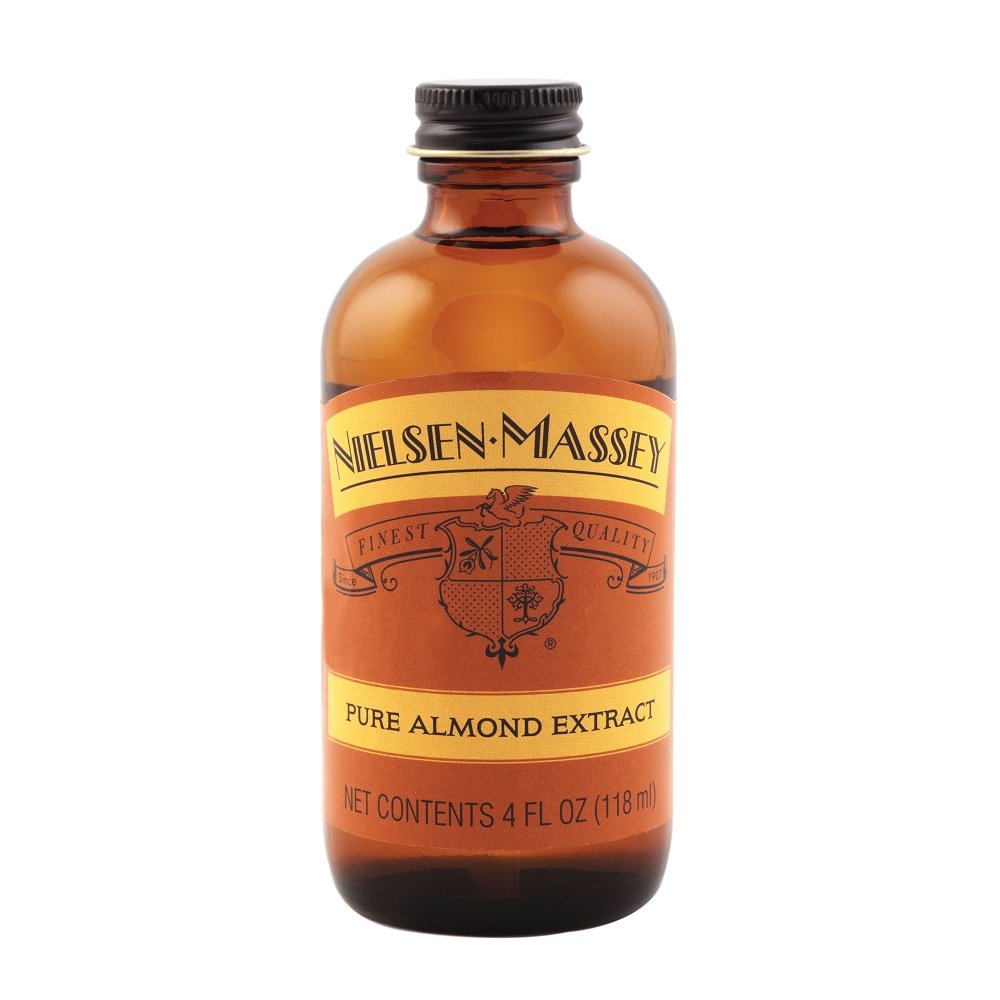
Nielsen-Massey Pure Almond Extract
Nielsen-Massey Pure Almond Extract draws the most superlatives in aggregated reviews of any almond extract on the market. Phrases like “best on the market” and “the only one I’ll use” appear with unusual frequency. Several reviewers explicitly mention owning five or more competing brands simultaneously — a strong signal this is the benchmark product comparison-shoppers use as a reference point. It performs well beyond traditional baking contexts, including sweet potato casseroles and savory glazes, which confirms a flavor profile versatile enough to survive applications outside the sugar-and-butter comfort zone. Nielsen-Massey uses cold-processing to preserve aromatic complexity — a manufacturing approach consistent with the fuller flavor profile that professional and home bakers consistently describe.
Best for: recipes where almond is the starring flavor — macarons, marzipan, financiers, almond pound cake.
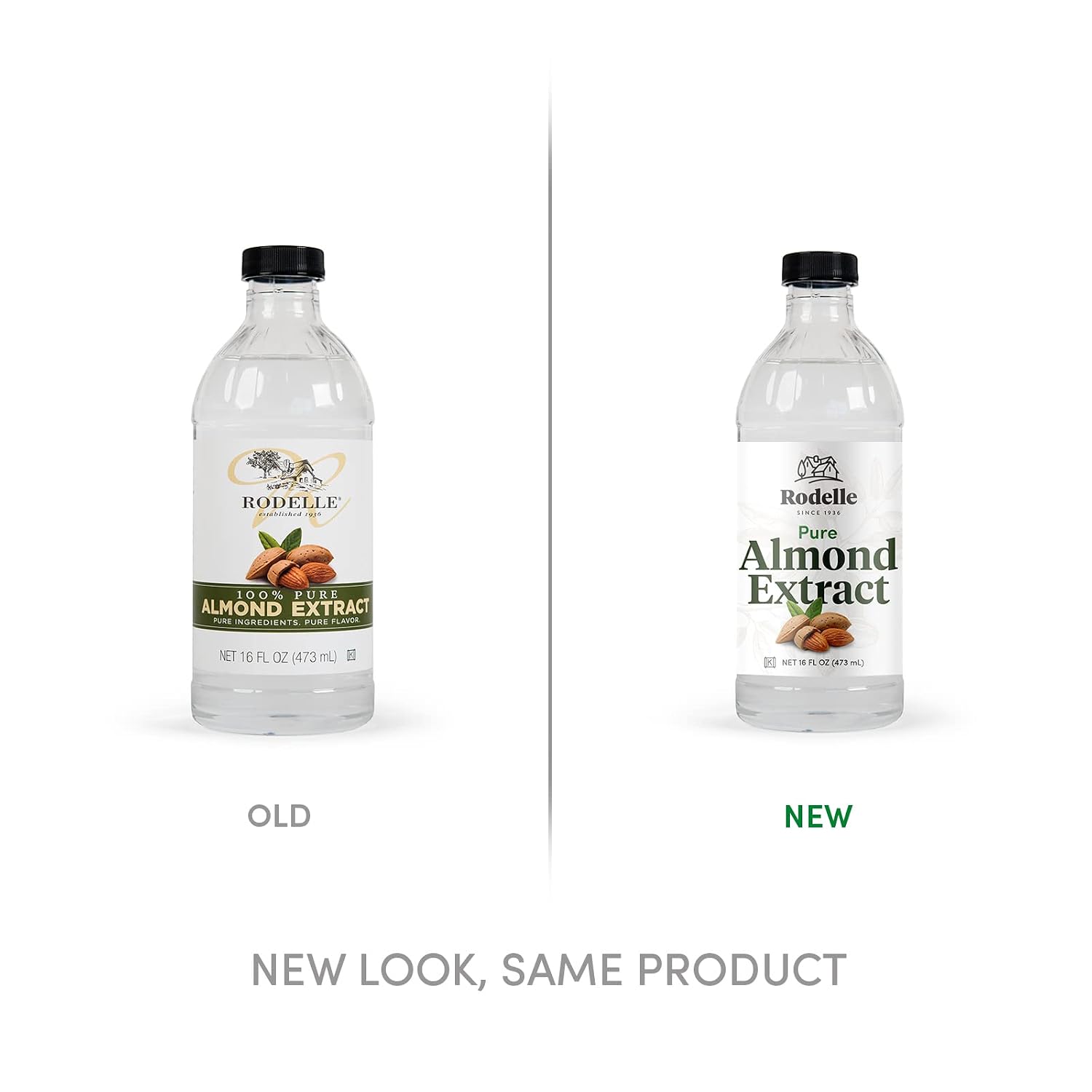
Rodelle
$19.99
In stock on Amazon
Check price on AmazonRodelle Pure Almond Extract
Rodelle Pure Almond Extract earns consistent praise for value relative to Nielsen-Massey. The recurring word in reviews is “subtle.” That’s genuinely double-edged: bakers working with strongly flavored batters — dark chocolate, heavy spice blends — appreciate that it doesn’t overwhelm. Bakers making a white or almond-forward cake where the extract needs to carry the flavor occasionally find they need to use more to achieve the same impact. If you’re making traditional Swedish visiting cake or a Battenberg where almond is the point, account for this and plan to dose slightly higher than the recipe suggests.
Best for: bakes where almond plays a supporting role alongside bold competing flavors.
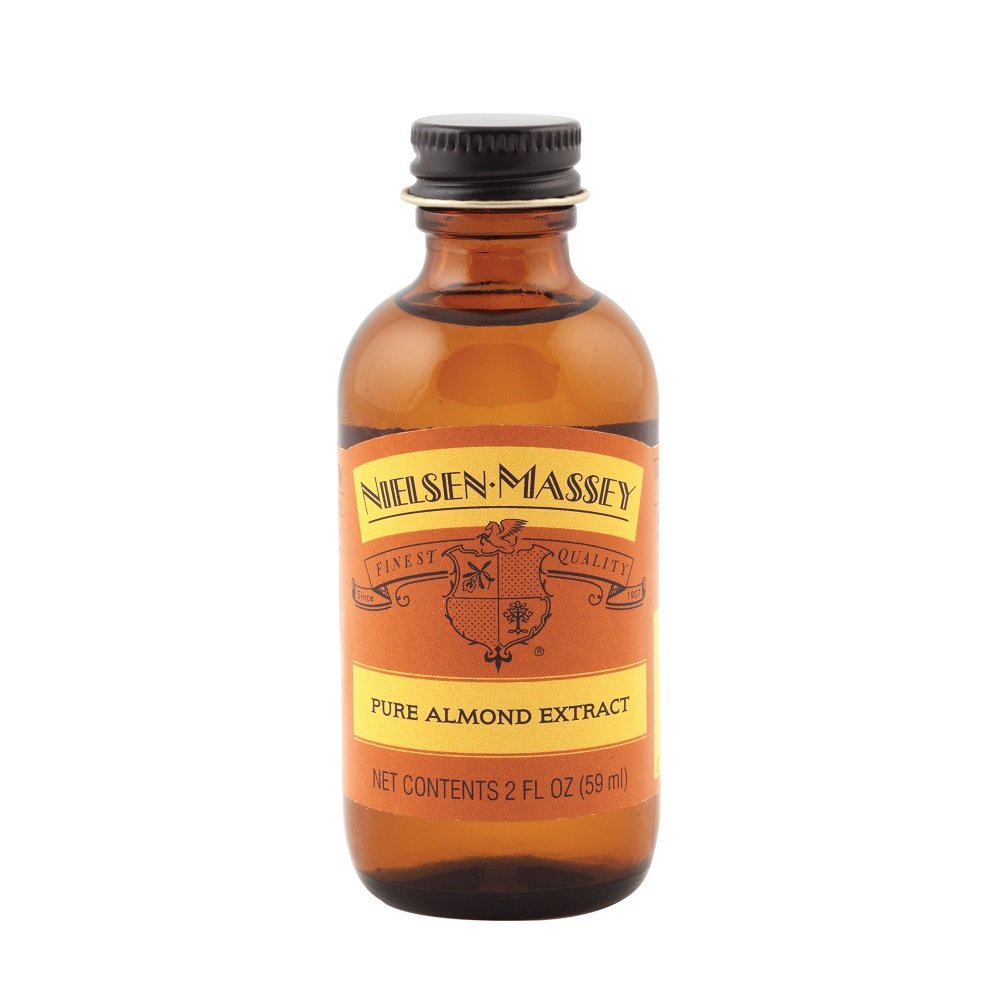
Nielsen-Massey
$12.99
In stock on Amazon
Check price on AmazonMcCormick Imitation Almond Extract
McCormick Imitation Almond Extract is the most widely available and the lowest-cost option. Reviewers consistently highlight its predictability and clean mixing behavior. Fine Cooking, in their coverage of flavor extracts and emulsions titled “Flavor Extracts and Emulsions: What’s the Difference?”, notes that imitation extracts often outperform pure in high-heat, long-bake applications because synthetic benzaldehyde is more heat-stable and less prone to the off-note volatility that can occur when natural trace compounds degrade at oven temperatures. If you’re baking sheet after sheet of almond biscotti at high volume, this reliability matters more than origin story.
Best for: high-heat, high-volume baking where consistency trumps aromatic complexity.
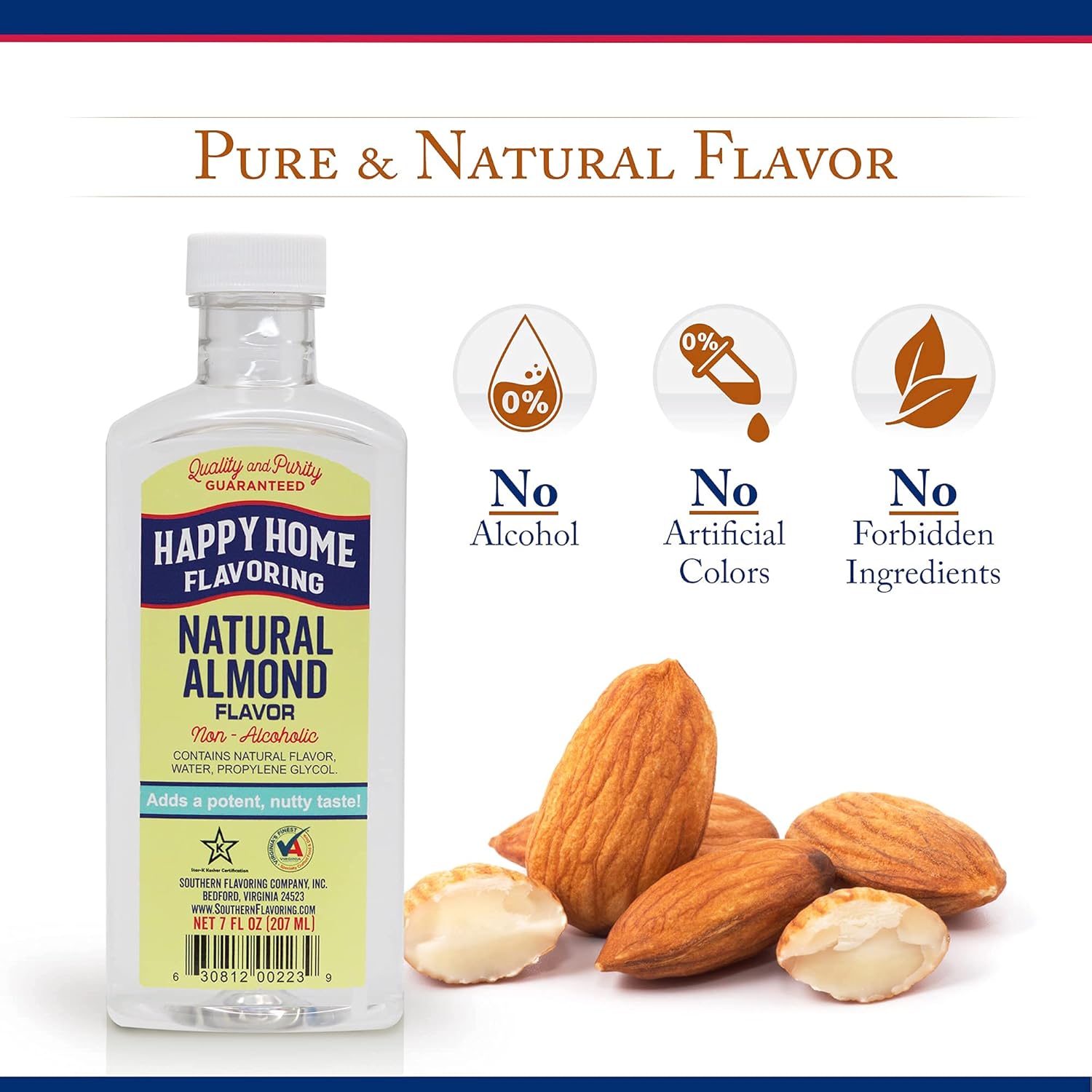
Happy
$9.99
In stock on Amazon
Check price on AmazonLorAnn Almond Bakery Emulsion
LorAnn Almond Bakery Emulsion has a more focused but passionate following. The most frequently cited use case — almost to the point of being a calling card — is wedding cakes, specifically the classic American almond-flavored white cake. Emulsion-format flavorings are water-based rather than alcohol-based, which means they don’t bake off during high-heat exposure the way alcohol-based extracts can. Fine Cooking’s overview of extract formats explains that emulsions hold flavor through the oven because there’s no alcohol to flash off, leaving flavor compounds more intact in the finished crumb. Reviewers note a truer almond flavor in finished cake compared to alcohol-based versions.
The trade-off: emulsions can alter texture in delicate batters and don’t dissolve into alcohol-based preparations — ganaches made with spirits, buttercreams incorporating a liqueur component — as cleanly as an alcohol-based extract does.
Best for: white cake, layer cake, and high-temperature applications where flavor retention is the priority.
Nielsen-Massey
$12.99
In stock on Amazon
Check price on AmazonThe Size Decision: A Framework with Real Math
This is where a lot of bakers overspend or, worse, buy too small and run out mid-project.
By the Numbers
| Format | Typical Size | Approximate Price Range | Cost per teaspoon |
|---|---|---|---|
| Nielsen-Massey Pure | 2 oz (≈ 12 tsp) | $10–$15 | ~$0.90–$1.25 |
| Rodelle Pure | 4 oz (≈ 24 tsp) | $8–$12 | ~$0.33–$0.50 |
| McCormick Imitation | 2 oz (≈ 12 tsp) | $4–$6 | ~$0.33–$0.50 |
| LorAnn Emulsion | 4 oz (≈ 24 tsp) | $7–$11 | ~$0.29–$0.46 |
| Bulk Pure (Professional) | 1 gallon | $80–$160 | ~$0.19–$0.38 |
Rodelle
$19.99
In stock on Amazon
Check price on AmazonNielsen-Massey
$12.99
In stock on Amazon
Check price on AmazonHappy
$9.99
In stock on Amazon
Check price on AmazonNote: retail prices observed as of mid-2026; bulk pricing reflects professional-grade pure almond extract from specialty suppliers.
For home bakers baking one to three times per month: A 2–4 oz bottle of your chosen brand will last two to four months at standard usage. Don’t buy the 8 oz “value” size of something you haven’t tried yet — almond extract’s intensity means a batch you don’t like is a batch you’ll smell every time you open the pantry.
For small-batch professional bakers and confectioners: If almond is a core flavor in your lineup — macarons, marzipan, financiers, signature cookies — the math on bulk purchasing shifts meaningfully. At gallon pricing from a professional supplier, cost per teaspoon drops by roughly 60–70% versus retail pure extract. The break-even point on a gallon versus 4 oz retail bottles is approximately 32 retail-equivalent bottles. If you’re going through more than two 4 oz bottles per month, gallon purchasing is almost certainly worth evaluating.
For first-time buyers: Purchase the smallest available size of anything new. Almond extract is intense, polarizing, and highly formula-dependent. A 1 oz or 2 oz bottle is the right discovery vehicle before committing to a larger size.
Frequently Asked Questions
Is pure almond extract actually better than imitation for baking? Not categorically. Pure extract carries more aromatic complexity from trace compounds alongside benzaldehyde, which some bakers prefer in delicate applications — shortbread, panna cotta, light frosting. But that complexity is also where bitterness risk lives. For high-volume, high-heat, or strongly flavored applications, imitation extract’s consistency is a genuine advantage, not a compromise. The Kitchn, in their guide “What Is Almond Extract and How Do You Use It?”, consistently notes that the best choice depends on the specific application rather than a universal hierarchy between pure and imitation.
Why does almond extract taste bitter sometimes, and how do you avoid it? Bitterness is almost always a dosage issue with pure extract, or a formulation interaction where acidic components — lemon juice, buttermilk, vinegar — amplify the astringency of natural trace compounds. Start with half the recipe’s suggested amount when using pure extract for the first time in a new formula. If a recipe was developed using imitation extract, it may have been calibrated for a higher dose — reduce further when substituting pure.
Can you use almond extract in drinks and smoothies, or is it just for baking? Almond extract works in cold applications — smoothies, milkshakes, cocktails, and flavored syrups — though the alcohol carrier in most extracts means it disperses best in other liquid-heavy preparations rather than fat-heavy ones. For non-alcoholic beverages, a non-alcoholic almond flavoring or emulsion may blend more smoothly and evenly.
What is the difference between almond extract and almond bakery emulsion? Both deliver almond flavor. Extract uses an alcohol carrier; emulsion uses a water-based suspension. Fine Cooking’s coverage of emulsions, in “Flavor Extracts and Emulsions: What’s the Difference?”, notes they hold flavor better through high-heat baking because there’s less alcohol flash-off in the oven. Emulsions can, however, add slight viscosity to delicate batters. For most baked goods, they’re interchangeable at a 1:1 ratio; for mousse, custard, or alcohol-dependent preparations, an extract is the cleaner technical choice.
How much almond extract should you actually use per recipe? Standard guidance from King Arthur Baking Company places most recipes at ¼ to ½ teaspoon per standard batch — roughly 24 cookies or one 9-inch cake. Pure extract: start at the low end. Imitation: the standard range is reliable. Emulsions: slightly higher doses (½ to ¾ teaspoon) may be needed to achieve equivalent impact, because emulsions are typically formulated at lower intensity than alcohol-based extracts.
Does non-alcoholic almond flavoring perform the same as alcohol-based extract in baked goods? For most finished baked goods — cookies, cakes, quick breads — performance is comparable, and bakers with long-term use histories report no meaningful difference in final flavor. The application-specific caveat: alcohol-based extracts disperse more readily in fat-heavy preparations such as buttercreams and chocolate coatings, because alcohol acts as an emulsifier. In those cases, non-alcoholic versions may require more thorough incorporation or a small technique adjustment.
The Decision Rule
If almond flavor is the star — macarons, marzipan, Battenberg, almond pound cake — invest in Nielsen-Massey Pure or LorAnn Emulsion depending on your bake temperature and carrier preference. Don’t optimize for price here; the flavor is the product.
If almond is a supporting note in a complex bake — chocolate cake, spiced cookies, fruit tarts — Rodelle Pure or McCormick Imitation will do the job reliably for less money.
If you’re baking high volume professionally: run the cost-per-teaspoon math on bulk pure extract from a professional supplier. At gallon scale, quality and economy stop being in conflict.
If alcohol is off the table: a glycerin-based or propylene glycol-based non-alcoholic almond flavoring is the right lane. Bakers with multi-decade loyalty to non-alcoholic formulations confirm these products hold up over time across a wide range of baked applications.