Almond extract is one of those pantry ingredients that looks identical from bottle to bottle — small, dark glass, a few ounces — but performs wildly differently depending on the brand, the format, and the recipe you’re dropping it into. If you’ve ever followed a recipe exactly and gotten a flat, barely-there almond note, or pushed the bottle a half-teaspoon too far and ended up with something that tasted like cough syrup, you already know the stakes. This article breaks down the five most commonly purchased almond extract brands by flavor intensity and format — liquid extract, emulsion, and imitation — so you can make a deliberate choice for your next bake instead of grabbing whatever’s on the shelf. We’ll also sort out when “pure” is actually better and when it isn’t, because the answer is more nuanced than the label suggests.
| EDITOR'S PICKRodelle Pure Almond Extract | Mid-tierNielsen-Massey Pure Almond Extr… | Budget pickHappy Home Natural Almond Flavo… | |
|---|---|---|---|
| Volume | 16 Fl Oz | 2 Fl Oz | 7 Fl Oz |
| Type | Pure Extract | Pure Extract | Natural Flavoring |
| Gluten Free | ✓ | — | — |
| Kosher | ✓ | — | ✓ |
| Made in USA | ✓ | — | — |
| Non-Alcoholic | — | — | ✓ |
| Price | $19.99 | $12.99 | $9.99 |
| See on Amazon → | See on Amazon → | See on Amazon → |
What “Pure,” “Imitation,” and “Emulsion” Actually Mean on the Label
Before ranking anything, it’s worth locking down what these three format terms mean, because they genuinely affect how a product behaves in the oven.
Pure almond extract is made from bitter almond oil — or sometimes peach or apricot kernels, which contain the same primary aromatic compound, benzaldehyde — dissolved in alcohol, typically at 35% or higher. The alcohol acts as a carrier and a preservative. King Arthur Baking Company, in their ingredient guide “Understanding Extracts and Flavorings,” notes that pure extracts tend to be more volatile: they lose some potency in long bakes at high heat, but the initial intensity, especially in cold or lightly baked applications, is noticeably sharper and more complex.
Imitation almond extract uses synthetically produced benzaldehyde — the same molecule, but made in a lab rather than distilled from a plant source. Cook’s Illustrated, in their piece “Taste Test: Pure vs. Imitation Extracts,” found that in baked goods, trained tasters often cannot reliably distinguish pure from imitation. Imitation versions also dissolve more readily in water-based batters because they are typically lower in alcohol or use a different solvent, which matters in applications like royal icing, glazes, or light syrups.
Almond emulsion is the professional baker’s format: the flavor is suspended in a water-based emulsion rather than an alcohol base. The Kitchn, in their piece “Almond Extract: What It Is and How to Use It,” explains that emulsions are more heat-stable than alcohol-based extracts, meaning the flavor holds through a longer bake. They also do not flash off an alcohol note in the early minutes of baking, which many bakers find produces a cleaner final flavor.
By the numbers:
- Pure extract: ~35% alcohol base, highest initial intensity, most volatility in high-heat bakes
- Imitation extract: synthetic benzaldehyde, lower alcohol, better water solubility, typically 50–70% of the price of pure
- Emulsion: water-based, heat-stable, professional-grade, typically 2–3× the cost per ounce of standard grocery extracts
The Five Brands, Ranked and Compared
1. Nielsen-Massey Pure Almond Extract
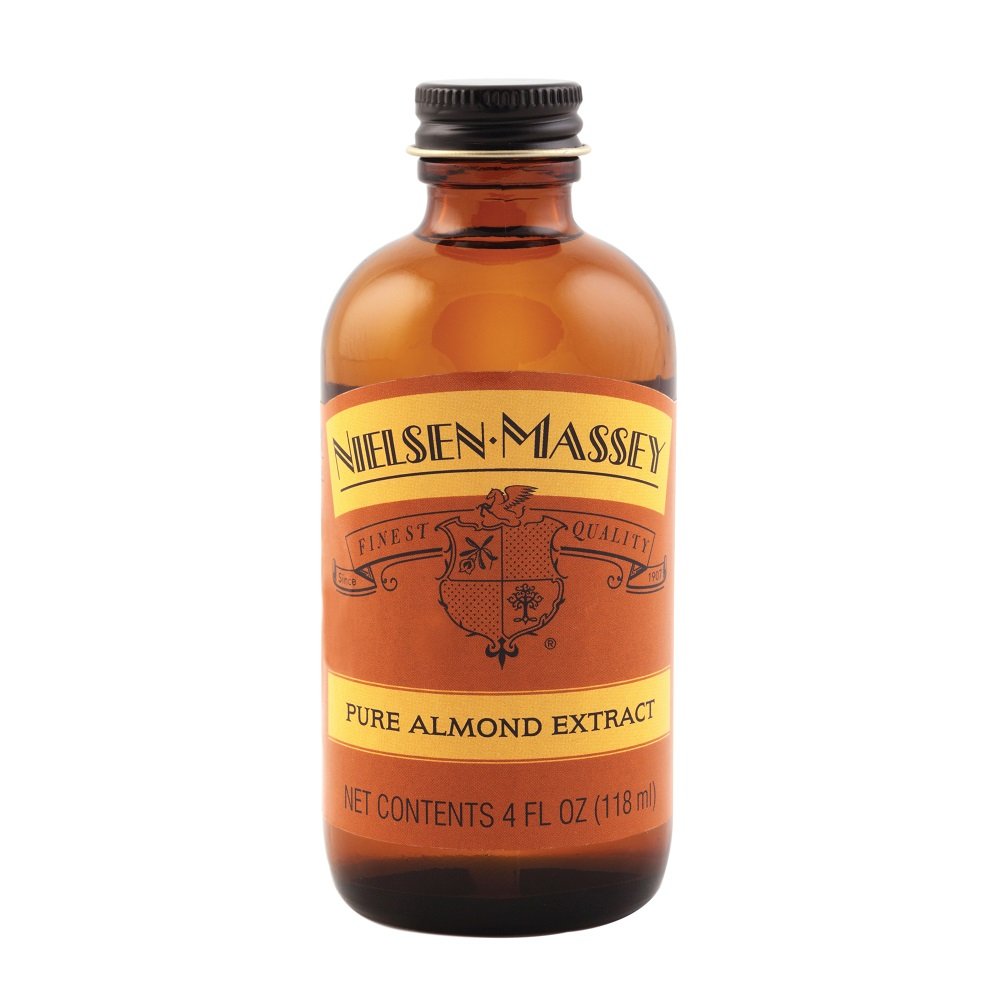
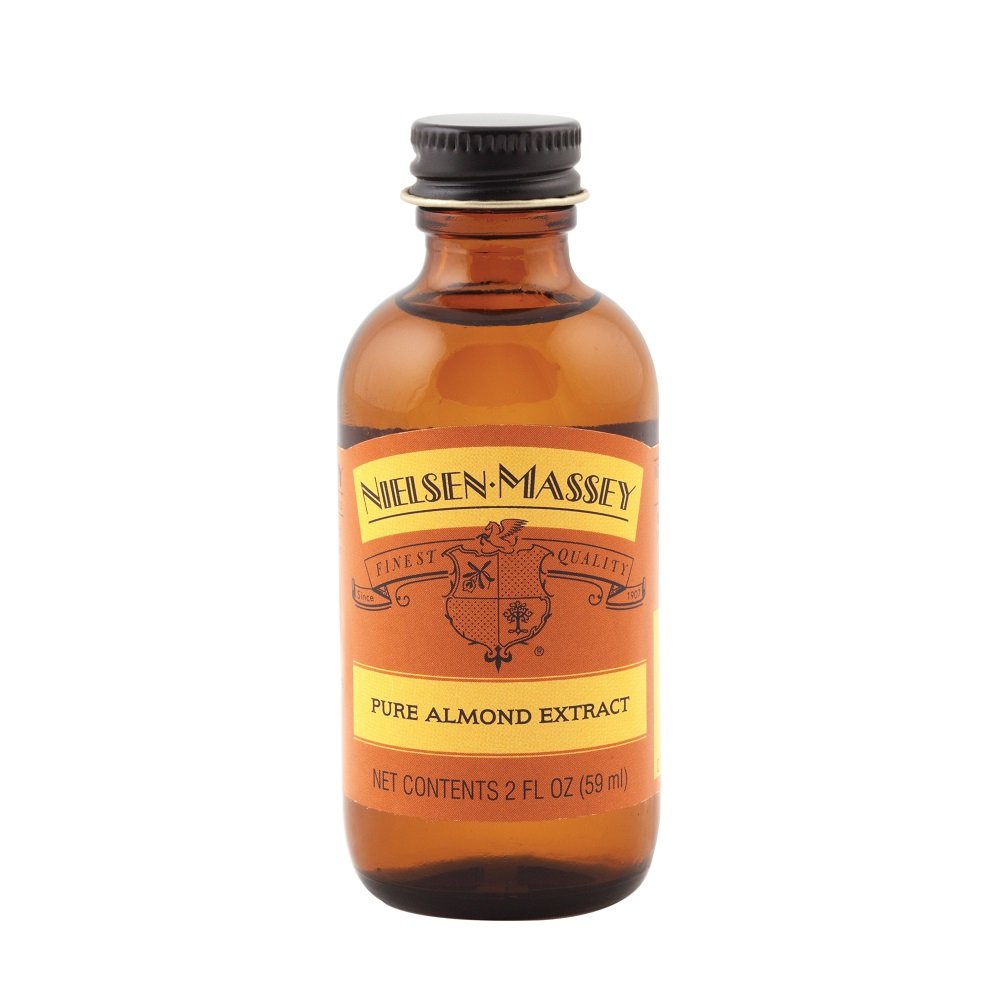
Nielsen-Massey is the brand serious baking resources return to as a reference point. Serious Eats, in their overview “The Best Almond Extract,” treats Nielsen-Massey as a benchmark that other brands get measured against — which tells you something meaningful about its standing in the category. Reviewers and baking enthusiasts consistently describe it as the most intense option available among widely distributed brands, and the pattern is clear: it is the bottle people reach for when the recipe actually matters.
The intensity comes with a real tradeoff: you need to be precise. In an assertive recipe — amaretti cookies, Bakewell tart, almond-forward layer cake — Nielsen-Massey at the standard recipe quantity delivers exactly what you want. In a delicate application, like a white chocolate buttercream where almond is a background note, you may want to dial back by 20–25% from whatever the recipe calls for, particularly if it was developed with a milder grocery-store brand.
Because the intensity-per-drop is higher, the effective cost per bake is lower than the unit price suggests. A bottle goes further when you need less of it.
Best for: Amaretti, marzipan, frangipane, almond pound cake, any recipe where almond is the primary flavor and intensity is the point.
Rodelle
$19.99
In stock on Amazon
Check price on Amazon2. Rodelle Pure Almond Extract
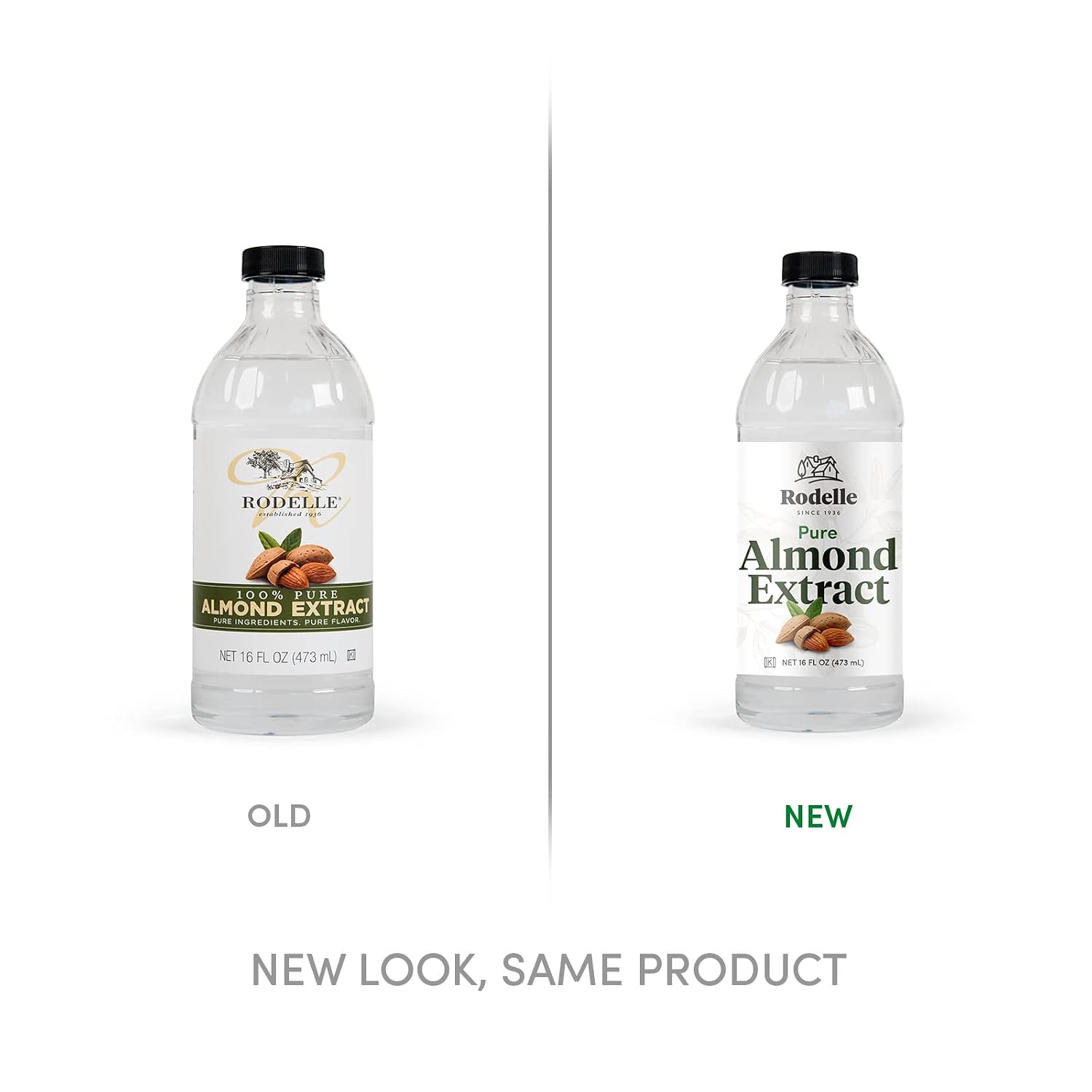
Rodelle is the brand most commonly found at warehouse stores and larger-format grocery outlets, and the pattern in owner reviews is consistent: bakers appreciate the value that comes with a large-format bottle, but describe the flavor as “subtle.” That word appears often enough across aggregated feedback that it is worth taking seriously — especially if you are working on an assertive recipe.
“Subtle” is a virtue when almond is a supporting note rather than the star. If you are adding a small amount to a vanilla cake to round out the flavor, or making a batch of cookies where almond is one of four or five flavor cues, Rodelle’s gentler intensity actually protects you from overshooting. But if you are making amaretti — where the entire cookie is almond — the word “subtle” is a warning. You would need to push the quantity meaningfully beyond recipe guidance, which can throw off your liquid ratios.
Best for: Background almond notes in vanilla cakes, sugar cookies, and almond-flavored frostings where oversteering is a greater risk than understeering.
Nielsen-Massey
$12.99
In stock on Amazon
Check price on Amazon3. McCormick Culinary Imitation Almond Extract
Here is the counterintuitive entry in this ranking. McCormick’s imitation almond extract consistently generates a pattern in reviews that challenges the default assumption that pure is always superior: bakers specifically note that the imitation version reads as less bitter than pure and dissolves more cleanly in water-based applications.
This is chemistry, not marketing. Synthetically produced benzaldehyde does not carry the trace compounds from bitter almond oil that can introduce a sharp, medicinal edge in certain recipes. The result is a cleaner, rounder flavor in applications that are primarily water-based: glazes, light syrups, royal icing, or any preparation where you want a smooth finish without the alcohol flash-off of an extract.
Cook’s Illustrated, in their piece “Taste Test: Pure vs. Imitation Extracts,” reinforces this conclusion: in blind bake tests, the performance gap between pure and imitation narrows significantly once heat is applied. If your recipe is a straightforward baked good and cost per batch is a real consideration, imitation extract from a reliable brand is a genuinely defensible choice — not a compromise you need to apologize for.
Best for: Water-based glazes, royal icing, cold preparations, and high-volume baking where cost per batch matters more than top-end complexity.
Happy
$9.99
In stock on Amazon
Check price on Amazon4. LorAnn Almond Emulsion
LorAnn’s almond emulsion occupies a different category than the liquid extracts above. It is the format professional bakeries reach for when the bake is long, the oven temperature is high, and the cake has to taste a specific way on a specific day — a wedding, a milestone birthday, a tiered celebration cake where failure is not an option.
The emulsion format’s heat stability is its primary advantage. In a multi-layer cake that spends 45–60 minutes at 325–350°F, an alcohol-based extract loses a measurable percentage of its volatile flavor compounds during the bake. An emulsion does not. What you put in is closer to what you get out. The Kitchn, in their piece “Almond Extract: What It Is and How to Use It,” notes that professional bakeries often default to emulsions precisely because they reduce recipe variability — the flavor is consistent across batches and across different oven environments.
LorAnn emulsions also carry a slightly “baked” flavor quality that pastry professionals describe as more natural-tasting in finished cakes: less of the sharp top note you sometimes get from a pure extract, more of the warm, rounded almond tone that reads as genuine bakery quality.
Best for: Wedding cakes, tiered celebration cakes, high-oven-temperature applications, and any bake where flavor retention through a long bake time is the priority.
Rodelle
$19.99
In stock on Amazon
Check price on Amazon5. Happy Home Almond Extract
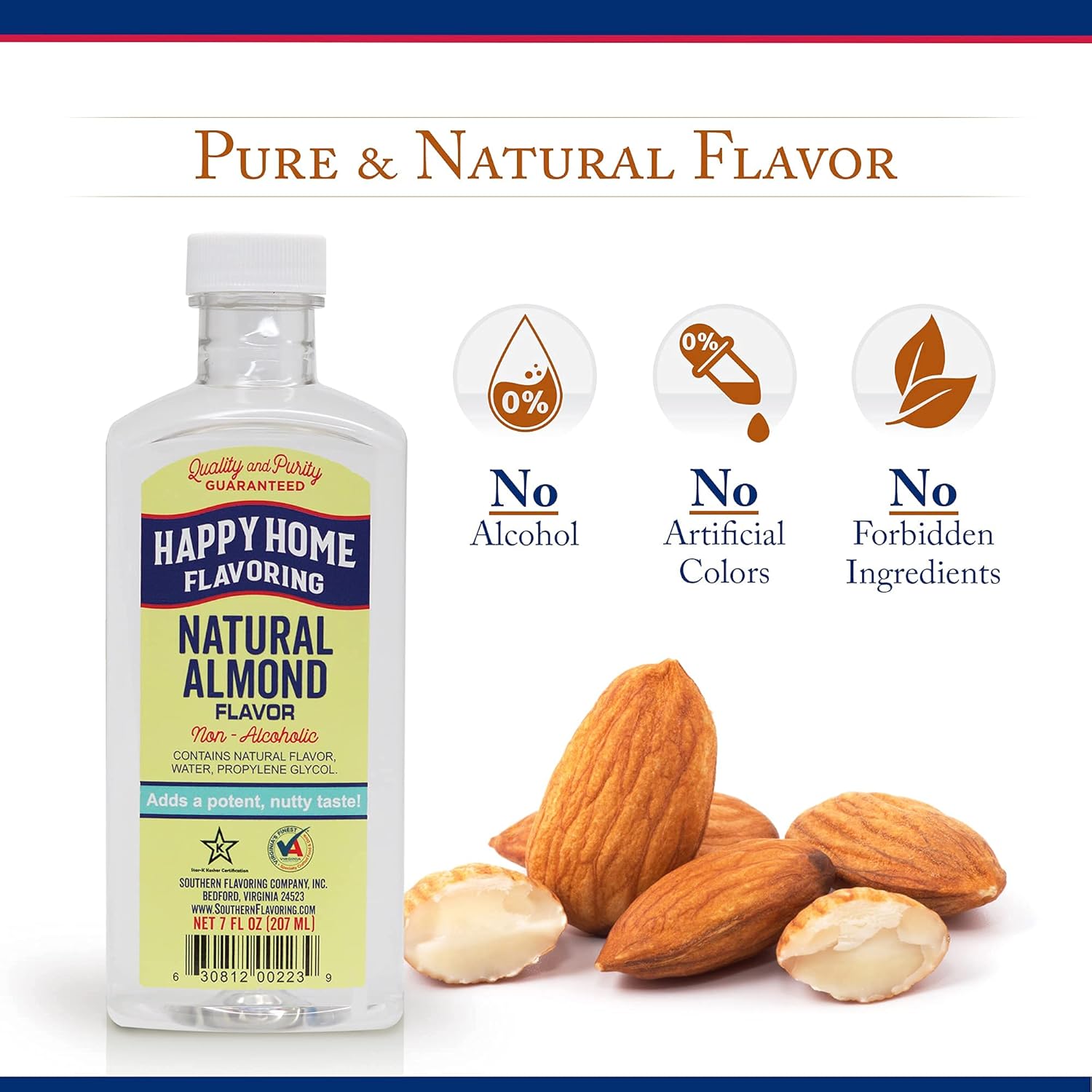
Happy Home earns its place in this ranking because of a pattern that is difficult to dismiss: a cohort of bakers who have purchased it continuously for decades. Long-term loyalty in a category where brand switching is easy and cheap signals something real about consistent, predictable performance.
The intensity ceiling is lower than Nielsen-Massey, and Happy Home does not court premium positioning. But for bakers whose family recipes were developed around this brand’s flavor profile, switching is not an upgrade — it is a recalibration that requires adjusting quantities across every recipe they own. Consistency has real value when your benchmarks were built around a specific flavor. A cookie that tastes exactly right for forty years is not a small thing.
Best for: Long-standing family recipes calibrated to this brand’s flavor level; bakers who prioritize batch-to-batch consistency over maximum intensity.
Nielsen-Massey
$12.99
In stock on Amazon
Check price on AmazonFrequently Asked Questions
Is pure almond extract always better than imitation for baking?
No — and this is one of the most useful recalibrations a home baker can make. Cook’s Illustrated, in their piece “Taste Test: Pure vs. Imitation Extracts,” found that in fully baked applications, tasters could not reliably distinguish pure from imitation. Imitation extract’s synthetic benzaldehyde is the same flavor compound, and in most baked goods the trace complexity of natural-source extract is largely lost in the oven. Where pure extract genuinely wins: cold preparations, no-bake fillings, and recipes where extract is added after heat, because its complexity survives intact.
When should I use almond emulsion instead of almond extract?
Use an emulsion when your bake time exceeds 40 minutes, your oven temperature is high, or you need the flavor to survive without the flash of an alcohol-based carrier. Emulsions are also preferable in buttercreams and frostings that will be refrigerated and then served cold — the flavor profile is more stable across temperature swings. The Kitchn, in their piece “Almond Extract: What It Is and How to Use It,” notes that professional bakeries default to emulsions because they reduce variability, which is exactly what you need in high-stakes applications.
Why does almond extract taste bitter in some recipes but not others?
Bitterness comes from two sources: the concentration of benzaldehyde (too much in a recipe with a delicate acid balance reads as medicinal), and the trace compounds present in pure extract derived from bitter almond oil. In recipes with high sugar content or significant fat, these compounds are masked. In lean, water-forward recipes — a simple syrup, a light glaze, a thin royal icing — they come through sharply. The fix is either reducing the quantity or switching to an imitation extract, which delivers cleaner benzaldehyde without the additional trace compounds.
How much Nielsen-Massey should I use if my recipe was developed with a standard grocery-store brand?
As a starting rule, reduce by about 20–25% when substituting Nielsen-Massey for a milder brand like Rodelle or a generic store brand. If a recipe calls for 1 teaspoon and was developed with a moderate-intensity extract, start at ¾ teaspoon with Nielsen-Massey and assess your batter where it is safe to do so. You can always add more; you cannot remove what is already in.
Are non-alcoholic almond flavorings a valid substitute in all recipes?
Non-alcoholic formats — glycerin-based or water-based flavorings — work in both hot and cold applications, but with caveats. In baked goods, the glycerin carrier can affect texture in sensitive formulas such as macarons or delicate sponge cakes, where even a small additional liquid changes the structure. In cold preparations and no-bake recipes, they are often a direct swap. If you are avoiding alcohol for dietary or religious reasons, non-alcoholic formats are a valid solution — but test in a small batch first for any recipe where liquid ratio is critical to the final texture.
The decision rule: If almond is the primary flavor and intensity is the point, Nielsen-Massey is the benchmark. If you are baking in volume and almond is a supporting note, Rodelle or McCormick Culinary imitation keeps costs rational without meaningful quality loss. If the bake is long, the event is high-stakes, or you need flavor that survives the oven, LorAnn’s emulsion format is the professional move. Match the format to the application — not just the label to the price point.