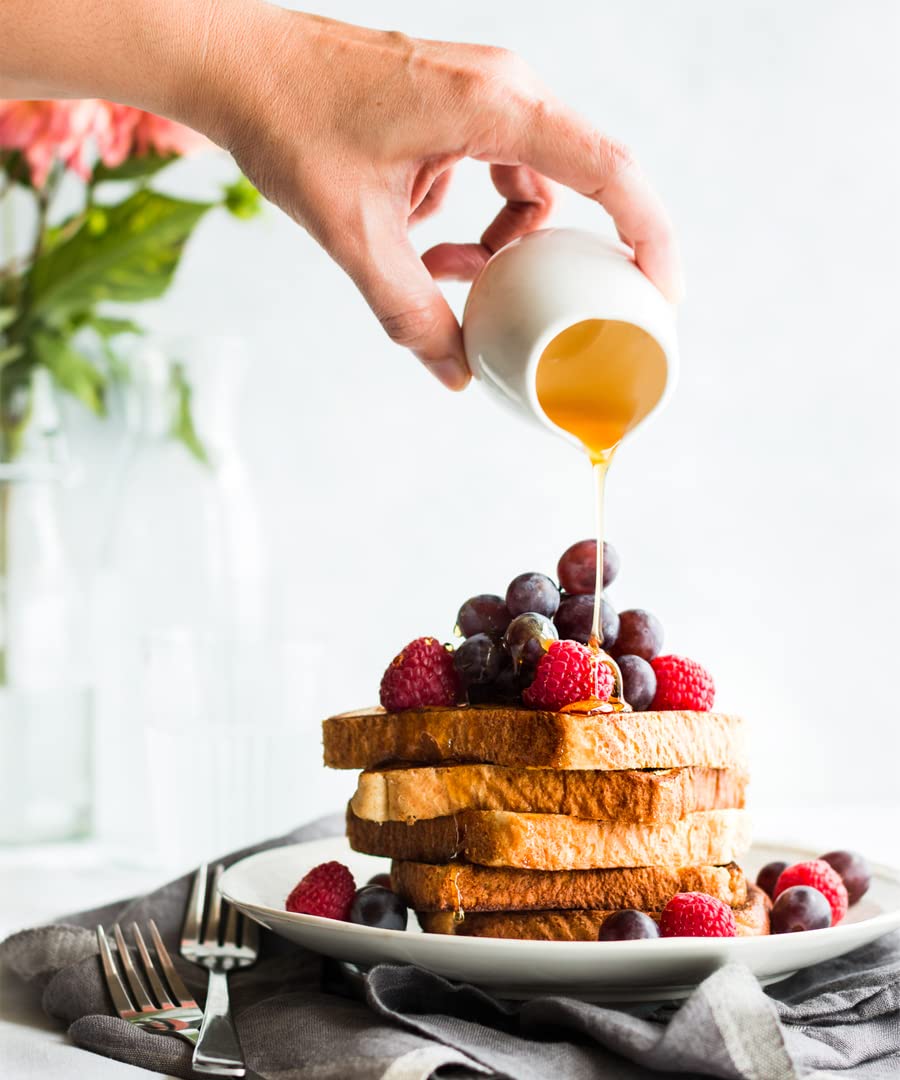
Vanilla extract — the amber liquid that gives baked goods their warm, familiar sweetness — is almost always made by soaking vanilla beans in alcohol, which acts as a solvent to pull out flavor compounds and then as a preservative to keep them shelf-stable. That’s standard pure extract, and it’s excellent. But alcohol isn’t always welcome: some households avoid it for religious or personal reasons, some parents prefer to keep it away from kids’ foods, and anyone who has ever stirred regular vanilla into a cold protein shake knows that sharp, almost medicinal alcohol edge that doesn’t cook off the way it would in a 350°F oven. Alcohol-free vanilla flavorings were developed for exactly these situations. This guide explains how they work, where they shine, where they fall short, and which specific products reviewers reach for again and again — so you can make a confident swap without guessing.
| EDITOR'S PICKBack To Basics Pure Vanilla Ext… | Mid-tier[Nielsen-Massey Madagascar Bourb…](https://www.amazon.com/dp/B0FMKKZ4YM?tag=greenflower20-20) | Budget pick[McCormick Vanilla Extract](https://www.amazon.com/dp/B005MIWPGC?tag=greenflower20-20) | |
|---|---|---|---|
| Form | Liquid | Paste | Liquid |
| Volume | 33 fl oz | 4 fl oz | 2 fl oz |
| Source | Mexican | Madagascar | Madagascar |
| Price | $39.95 | $23.17 | $7.00 |
| See on Amazon → | See on Amazon → | See on Amazon → |
How Alcohol-Free Vanilla Is Actually Made (and Why It Matters)
Standard pure vanilla extract derives its depth from two things working together: the aromatic compounds locked inside the vanilla bean, and the alcohol that extracts and suspends them. The FDA’s standard of identity (Title 21, Part 169) requires pure vanilla extract to contain at least 35% alcohol by volume. That alcohol isn’t incidental — it’s doing real chemical work.
When you remove alcohol from the equation, manufacturers have to solve the same extraction and preservation problem with different chemistry. The most common approaches are:
Glycerin-based extraction. Vegetable glycerin — a thick, slightly sweet, colorless liquid derived from plant oils — can dissolve many of the same flavor compounds as ethanol. The result is a viscous, sweet-smelling vanilla flavoring that’s genuinely alcohol-free. Glycerin also has a mild sweetness of its own, which changes the flavor profile slightly in delicate applications.
Water-process extraction (Mexican-style). Some producers, particularly in Mexico, extract vanilla using water as the primary solvent, sometimes with light processing aids. The result smells less aggressive straight from the bottle — reviewers of the Back to Basics brand consistently note this — but performs cleanly in food. One Back to Basics reviewer explains at length that water-process extraction is a distinct, legitimate method rather than a corner-cut, and that the milder bottled scent actually signals cleaner flavor delivery once it hits your recipe. This is worth understanding: the alcohol smell you’re used to in standard extract is the carrier announcing itself, not the vanilla flavor itself.
Flavor concentrates in non-alcohol bases. Some products labeled “non-alcoholic vanilla flavoring” are really concentrated vanilla flavor suspended in glycerin or water. These may or may not contain actual vanilla bean extract; check the label for “vanilla bean extractives” or “vanilla extract” in the ingredients versus just “natural vanilla flavor.”
The trace-alcohol question. Here’s the part that surprises most shoppers: “non-alcoholic” on a food label does not legally mean zero alcohol. The FDA’s threshold for “non-alcoholic” labeling in flavorings is below 0.5% ABV. Some glycerin-based vanillas land right at or just under that threshold due to trace amounts in the vanilla oleoresin (the concentrated, oil-based flavor fraction) used in formulation. This matters if you are avoiding alcohol entirely for health, religious, or recovery reasons — in which case, contact the manufacturer directly and ask for their COA (Certificate of Analysis) showing actual ethanol content. Simply Organic’s customer service is frequently cited in reviews as responsive to exactly this question.
Where Alcohol-Free Vanilla Actually Outperforms Standard Extract
The performance gap between standard and alcohol-free vanilla isn’t uniform. In baked goods that hit high temperatures for 20+ minutes, the distinction narrows considerably — alcohol volatilizes in the oven, and many reviewers can’t tell a finished muffin or cookie apart. The gap opens up significantly in cold and raw applications, and that’s exactly where alcohol-free vanilla earns its keep.
Smoothies and protein shakes. This is the use case that dominates alcohol-free vanilla reviews across Simply Organic and Watkins Organic. One Simply Organic reviewer who conducted a multi-week search for the best vanilla for protein shakes describes the flavor as “very close to a single-scoop vanilla ice cream shake” — a specific, evocative benchmark that standard extract doesn’t reliably hit in cold liquid. The alcohol in a standard extract, undiluted by heat, can taste sharp and even medicinal against a cold, high-protein base. Glycerin-based vanilla integrates more smoothly.
Yogurt and overnight oats. These no-cook preparations benefit from the same logic. A small amount of standard extract in yogurt can deliver an off-note that reads as “chemical” to sensitive palates. Watkins Organic draws consistent praise in reviews from people who use it in yogurt precisely because the flavor reads as vanilla rather than vanilla-plus-alcohol.
Children’s foods. Parents reducing alcohol exposure in kids’ foods find alcohol-free vanilla useful in homemade applesauce, fruit purees, and cold preparations. In baked goods, the difference is academic — but the peace of mind matters to many families.
Raw desserts and no-bake preparations. Energy balls, raw cheesecakes, chocolate truffles that don’t set over heat — these are applications where standard extract’s alcohol content never cooks off. Alcohol-free vanilla performs cleanly here.
One genuine tradeoff: depth in complex baked goods. King Arthur Baking’s published guidance on vanilla notes that alcohol functions as a flavor carrier, helping volatile aromatic compounds disperse evenly through a batter. In a complex, layered preparation — a multi-tiered cake with buttercream and a custard filling — some pastry professionals report that glycerin-based vanilla feels slightly “flat” relative to a high-quality pure extract. This isn’t a dealbreaker in most home and small-bakery applications, but it’s worth knowing before you build your entire celebration cake around a new-to-you product.
By the Numbers: Quick Format Reference
| Application | Standard Extract | Alcohol-Free Vanilla | Verdict |
|---|---|---|---|
| Baked goods (350°F+, 20+ min) | Excellent | Very good | Swap 1:1; difference narrows with heat |
| Smoothies / cold drinks | Harsh edge possible | Clean integration | Alcohol-free wins clearly |
| Yogurt / raw preparations | Off-note risk | Clean | Alcohol-free wins clearly |
| Complex pastry (custard, ganache) | Best depth | Slightly flat | Standard extract preferred |
| Kids’ foods, alcohol-avoided diets | Works technically | Purpose-built | Alcohol-free preferred |
Products Reviewers Actually Reach For
Simply Organic Non-Alcoholic Vanilla generates the most detailed user narratives of any product in this category. Reviewers are unusually specific: the protein shake benchmark recurs frequently, and several owners describe it as their permanent pantry staple for cold applications. The glycerin base integrates smoothly, and the vanilla flavor reads as full rather than sweet-and-thin.
Watkins Organic Alcohol-Free Vanilla draws nearly identical use cases in reviews — yogurt, smoothies, drizzling on foods where standard extract would taste sharp. Watkins has a long heritage in household extracts (the company dates to the 1860s), and their organic formulation has attracted a loyal following among shoppers who prioritize both organic certification and alcohol-free status simultaneously.
Back to Basics Mexican Water-Process Vanilla occupies a slightly different niche. Reviewers who gravitate here tend to have done genuine label-reading homework — several describe comparing extraction methods before purchasing. The water-process approach produces a milder bottled scent, which some shoppers initially misread as weakness. In food, reviewers consistently report clean vanilla delivery without a glycerin sweetness undertone. This makes it a strong candidate for applications where you want pure vanilla flavor without added sweetness (think savory-leaning preparations, or a delicate panna cotta where glycerin’s sweetness would tip the balance).
The Serious Eats review team’s analysis of vanilla extract categories notes that non-alcoholic options perform best when matched to the right application — a point that aggregated reviewer patterns consistently confirm.
Frequently Asked Questions
Does alcohol-free vanilla taste as strong as regular extract in baked goods?
In most baked applications, the difference is smaller than you’d expect. Alcohol-free vanilla can be substituted 1:1 by volume in most recipes, and at high oven temperatures the gap in aromatic delivery narrows significantly. Where you’ll notice a difference is in delicate, complex preparations — think a French buttercream where every flavor note is exposed — where standard high-quality extract delivers marginally more depth. For everyday baking: swap freely.
Is there any alcohol at all in “non-alcoholic” vanilla flavorings?
Possibly a trace amount. FDA labeling rules permit the “non-alcoholic” designation for products below 0.5% ABV, so some products may contain a small residual from the vanilla oleoresin used in formulation. If you need confirmed zero-alcohol content — for medical, religious, or recovery reasons — contact the manufacturer and request a Certificate of Analysis. Most reputable brands will provide one.
Can I substitute alcohol-free vanilla 1:1 in recipes that call for pure extract?
Yes, in the vast majority of recipes. The 1:1 swap works reliably in cookies, cakes, muffins, pancakes, and most no-bake preparations. The one nuance: glycerin-based vanilla adds a very slight sweetness (glycerin is mildly sweet by nature), so in extremely delicate preparations you may want to reduce added sugar by a small amount — though most home bakers won’t taste the difference.
Why does my regular vanilla extract smell so strongly of alcohol straight from the bottle?
Because it’s required to be at least 35% alcohol by volume — that’s the FDA’s legal minimum for labeling it “pure vanilla extract.” The alcohol smell straight from the bottle is the ethanol announcing itself, not a sign of poor quality. Once it hits a hot batter or custard, much of that alcohol volatilizes, and the vanilla flavor compounds (primarily vanillin, plus supporting aromatic molecules) are what remain. The Kitchn’s explainer on vanilla extract types covers this mechanism clearly.
Is water-process Mexican vanilla the same thing as alcohol-free vanilla?
Not exactly — though there’s overlap. Water-process extraction uses water rather than alcohol as the primary solvent, producing a naturally low- or no-alcohol result. But not all alcohol-free vanillas are water-processed (many are glycerin-based), and not all Mexican vanillas are water-processed or alcohol-free. The Back to Basics brand is the clearest example of water-process Mexican vanilla that is also genuinely alcohol-free. Read the ingredient list: if it lists vanilla bean extractives and water without ethanol or alcohol, you’re looking at a water-process product.
Which alcohol-free vanilla works best in cold drinks and smoothies?
Based on aggregated reviewer patterns, Simply Organic Non-Alcoholic Vanilla is the most consistently praised for cold applications. Multiple reviewers describe its performance in protein shakes as delivering genuine vanilla ice cream flavor rather than a thin extract note. Watkins Organic is a close second for the same use cases. If you want to avoid glycerin’s mild sweetness in a drink, Back to Basics water-process is worth trying — though it’s less frequently reviewed in cold-drink contexts specifically.
The Decision Rule
If your primary use is cold preparations — smoothies, yogurt, protein shakes, raw desserts — alcohol-free vanilla isn’t a compromise; it’s the right tool. Standard extract was designed for a job that involves heat and dilution; when neither is present, the alcohol edge works against you. Simply Organic and Watkins Organic are the most field-validated options for this use case.
If you’re baking for children or alcohol-avoiding households, the swap is straightforward — go 1:1 with either glycerin-based product and don’t overthink it.
If you’re working on complex pastry where vanilla is a lead flavor note — a vanilla bean custard tart, a high-stakes génoise, a white chocolate ganache — standard pure extract from a quality single-origin source will still outperform glycerin-based alternatives on depth and complexity. Save the alcohol-free option for the cold components of the same dessert (a fresh berry coulis, a yogurt cream) where it genuinely excels.
The short version: match the tool to the temperature. Alcohol-free vanilla isn’t lesser — it’s optimized for a different thermal environment than the one standard extract was built for.